
Between 1977 and 1990, Peter Lynch ran the Fidelity Magellan Fund and delivered an average annual return of 29.2% — without a single losing year across thirteen years of managing money for outside investors. The fund grew from $18 million in assets to $14 billion. Lynch beat the S&P 500 in eleven of those thirteen years and produced a cumulative return that turned every dollar invested at the start into roughly twenty-eight dollars by the time he retired.
But here is the most important and most overlooked fact about Lynch’s record: the average investor in the Magellan Fund during that same period earned a fraction of what Lynch delivered. Studies conducted after Lynch retired found that a significant portion of Magellan investors actually lost money over stretches of the fund’s run — because they bought after strong performance and sold after weak quarters, repeating the single most destructive behavior pattern in investing.
Lynch built one of the greatest fund records in history. Most of the people who owned the fund didn’t benefit from it. His story teaches two entirely separate lessons: how to find great investments, and how most people fail to hold them.
Who is Peter Lynch?
Peter Lynch was born on January 19, 1944, in Newton, Massachusetts. He is 82 years old in 2026. His childhood was shaped by a loss that pushed him toward work earlier than most of his peers: his father was diagnosed with brain cancer when Lynch was seven and died when Lynch was ten, leaving his mother to support the family alone.
At eleven, Lynch started caddying at Brae Burn Country Club in Newton to help with household expenses. He would continue caddying through his college years, and in the process, he happened to carry the bag for D. George Sullivan — the president of Fidelity Investments. Sullivan was impressed enough with the young caddie to later help him land a summer internship at Fidelity while Lynch was in college.
Lynch attended Boston College, where he earned a bachelor’s degree in 1965. His major was not finance or economics or mathematics. He studied history, psychology, and philosophy — a combination he later credited as far more useful for investing than formal financial training. He then served two years in the U.S. Army, returned to earn an MBA from the Wharton School at the University of Pennsylvania, and rejoined Fidelity in 1969 as a permanent research analyst.
By 1974, he was Fidelity’s Director of Research. In May 1977, at 33, he was handed management of the Magellan Fund — a small, obscure fund with $18 million in assets that was still closed to new investors. It would remain the job he held until he walked away in May 1990, at 46.
The Magellan years: 1977 to 1990
When Lynch took over Magellan, it had roughly $18 million under management. When he left thirteen years later, it had $14 billion — making it, at that point, the largest mutual fund in the world.
The performance behind that growth was extraordinary by any measure. The 29.2% average annual return compounded over thirteen years means that an investor who put $10,000 into Magellan on the day Lynch took over would have had approximately $280,000 when he retired. The S&P 500 over the same period returned approximately 15% annually — itself an excellent stretch for the U.S. stock market. Lynch beat it by 14 percentage points per year for over a decade.
He owned an enormous number of stocks at once — at various points, Magellan held over 1,400 individual positions. Lynch believed that the more ideas you had, the better your odds of finding the ten-baggers — his term for stocks that increase tenfold in value — that would drive the fund’s performance. He famously said that if he was wrong on half his picks, it didn’t matter, as long as the winners more than compensated.
He worked six to seven days a week. He visited companies constantly — factories, stores, headquarters, trade shows — trying to understand businesses from the inside before the numbers showed up in analyst reports. He also listened to his family.
His wife Carolyn mentioned she liked a new product she’d seen at the supermarket: L’eggs pantyhose, packaged in distinctive egg-shaped containers and displayed at checkout stands rather than hosiery departments. Lynch investigated the company behind it — Hanes — and it became one of his best investments. His daughters’ enthusiasm about a new fast food restaurant chain in California led him to investigate Taco Bell. He drove a Volvo and loved it, which led him to research the company and confirm the investment case. He noticed Dunkin’ Donuts stores filling up as Howard Johnson’s emptied out — and bought Dunkin’ Donuts.
This was not accidental. It was Lynch’s core investment philosophy in action.
“Invest in what you know”: the philosophy
Lynch’s most famous idea is also his most misunderstood. “Invest in what you know” is frequently interpreted as “buy stocks of companies whose products you like.” That is not what Lynch meant — and the distinction matters enormously.
What Lynch argued was that ordinary people, going about their daily lives, regularly encounter evidence of business success before Wall Street analysts do. You notice that a restaurant is always packed. You discover that your colleagues are all switching to the same software. Your teenager becomes obsessed with a brand that you haven’t heard of yet. These observations are not the basis for a buy decision — they are the starting point for research.
Lynch’s process was to use everyday observation to generate ideas, then rigorously investigate the underlying business. He wanted to understand what drove the company’s revenue, how it compared to competitors, whether management was intelligent and honest, whether the valuation left room for the stock to double or triple. The idea you got from your wife’s grocery shopping or your teenager’s sneakers was a tip-off worth following, not a reason to immediately invest.
The edge Lynch believed amateur investors possessed over professional analysts was real, but it was informational rather than analytical. A fund manager covering fifty industries simultaneously cannot know that the Dunkin’ Donuts near your office is always packed at 7 a.m. and that the Howard Johnson’s across the street is often empty. You can. That local observation, if it reflects a genuine and growing business trend rather than a local anomaly, can lead you to a great investment months before institutional money arrives.
The six categories: how Lynch organized the stock universe
Lynch didn’t just rely on gut instinct. He developed a systematic framework for understanding the companies he was evaluating, built around six categories:
Slow growers are large, established companies in mature industries — utilities, large retailers, long-established manufacturers. Their earnings grow roughly in line with the overall economy. Lynch owned them occasionally for their dividends but generally found them unexciting for capital appreciation.
Stalwarts are large, well-known consumer brands — companies like Coca-Cola, Johnson & Johnson, Procter & Gamble — that grow at a modest but consistent rate and don’t go bankrupt in recessions. Lynch used them as ballast: they wouldn’t make him rich, but they wouldn’t collapse either. He looked for stalwarts trading at fair prices and expected 30% to 50% gains over a few years.
Fast growers were Lynch’s favorites — small, aggressive companies expanding rapidly into new markets, often in industries that weren’t themselves fast-growing. A fast-growing chain restaurant or retail concept, for instance. Lynch looked for fast growers with strong balance sheets, consistent growth rates of 20% to 25% annually, and room to expand. These were his ten-bagger candidates.
Cyclicals are companies whose revenues rise and fall in predictable patterns tied to economic cycles — car manufacturers, airlines, steel producers, chemical companies. Lynch found cyclicals difficult and warned that amateur investors often confuse them with stalwarts, buying at the peak of the cycle rather than the trough.
Turnarounds are companies in trouble — potentially heading toward bankruptcy, losing money, under severe competitive pressure — that Lynch believed could recover. He owned Chrysler during its near-death experience in the early 1980s, when the conventional wisdom was that the company would not survive. He read the balance sheet carefully, concluded the company had enough cash to survive and enough product backlog to eventually recover, and made a fortune when it did.
Asset plays are companies whose published financial statements significantly understate the value of something they own — real estate, a patent portfolio, a subsidiary, natural resources. Lynch looked for situations where the stock price was below the liquidation value of the company’s assets.
The Magellan Paradox
Here is the fact that Lynch himself has described as the most important lesson from his career, and it has nothing to do with picking stocks.
Studies conducted by Fidelity and by financial researchers after Lynch retired found that the average investor in the Magellan Fund earned significantly less than Lynch’s 29.2% annual return. A widely cited analysis found the typical Magellan investor earned something in the range of 7% annually during Lynch’s tenure — roughly the long-run return of the S&P 500, and a fraction of what the fund itself returned.
The explanation is straightforward but painful. Investors bought Magellan heavily after its best periods of performance, paying high prices for units when enthusiasm was at its peak. They sold Magellan after disappointing stretches — exactly when the fund was cheapest and subsequent returns would be highest. They repeated the pattern Lynch warned against: treating a long-term investment vehicle as a short-term speculation.
Lynch himself had down quarters. Magellan underperformed the S&P 500 in 1977, 1984, and 1987. Each time, investors who reacted to short-term performance and sold would have locked in underperformance and missed the subsequent recoveries that made Lynch’s record what it was.
The Magellan Paradox is the most powerful available evidence for a simple but difficult principle: having a great investment strategy is necessary but not sufficient. Staying in the strategy when it feels uncomfortable is what separates the investors who actually earn the return from the investors who own the fund and don’t.
Why he quit at 46
On May 31, 1990, at 46 years old, Peter Lynch retired from managing the Magellan Fund. He was at the height of his abilities. The fund was the largest in the world. He had not had a single losing year.
He has explained his reasons consistently across multiple interviews: he was working six to seven days a week and missing his family. His daughters were growing up. His wife Carolyn was managing the household without him. He had been to more company headquarters than birthday parties, more earnings presentations than school plays. He decided that was not how he wanted to spend whatever years were left before his children were grown and gone.
He has described the decision as one he has never regretted.
Lynch remained active at Fidelity in an advisory capacity, mentoring younger analysts and portfolio managers, but never returned to managing outside money professionally. He and Carolyn subsequently devoted significant energy to philanthropy through the Lynch Foundation, which has donated over $180 million to education, cultural institutions, and medical research. Carolyn Lynch died of leukemia in 2015. Lynch married Mary Beth Donahue in 2019.
His net worth is estimated at approximately $450 million — remarkable not for its size relative to the fund he managed, but for the discipline it represents: Lynch made a deliberate choice to stop accumulating professional success at the moment when most people in his position would have kept going.
The books Peter Lynch wrote
Lynch translated his investment philosophy into three books, all written with financial journalist John Rothchild.
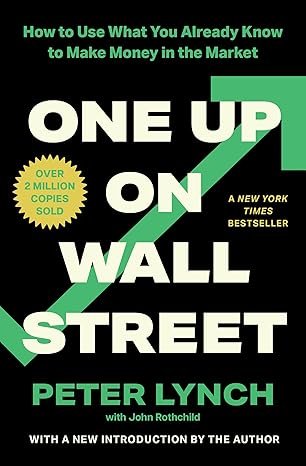
One Up On Wall Street (1989) is the essential text — Lynch’s direct case that individual investors have advantages over professional fund managers, structured around his philosophy of investing in what you know and the six-category framework. It remains one of the best-selling investing books ever written and is included in our list of the best books about investing.
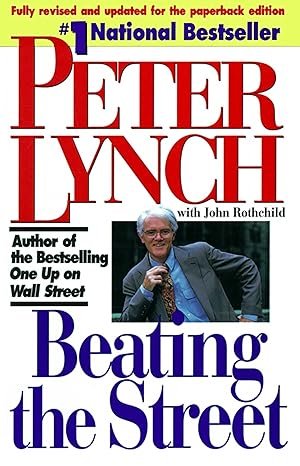
Beating the Street (1993) is more practical and less philosophical — Lynch walks through actual portfolio construction decisions from his Magellan years, examining specific companies he owned and explaining the reasoning behind each. For readers who want to see how Lynch’s principles translated into actual stock selection, this is the more useful of the two.
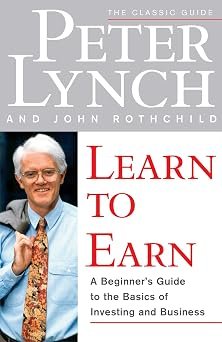
Learn to Earn (1995) was written specifically for younger and beginning investors, covering the basics of how markets work, what a stock actually represents, and why investing matters. It’s the most accessible of the three.
What investors can still learn from Peter Lynch
Lynch retired over thirty years ago and never managed public money again. The specific stocks he bought no longer exist in their original form. The markets have changed. Institutional algorithms now process price data faster than any human can. And yet his core principles remain as applicable today as they were in 1985.
Observation is not a substitute for research — it is the beginning of research. Noticing that a store is always crowded is not a reason to buy the stock. It is a reason to investigate whether the business behind that observation is genuinely good, growing, and reasonably priced.
The six categories are still a useful map. Every company you look at can be placed in one of Lynch’s six buckets, and each bucket has different expectations and different risk profiles. Knowing which category you’re buying changes how you should evaluate and hold the position.
Behavior matters more than intelligence. The Magellan Paradox is not a historical curiosity. It is replicated in fund after fund, strategy after strategy, decade after decade. The average investor consistently underperforms the average fund because they trade emotionally. The single highest-return action most investors could take is not to find a better fund — it is to stop selling the one they already own.
Retirement is not the endpoint of a good investing life. Lynch retired rich enough not to need more money, and then spent the second half of his career giving most of it away. He understood that the accumulation phase was a means to an end, not the end itself.
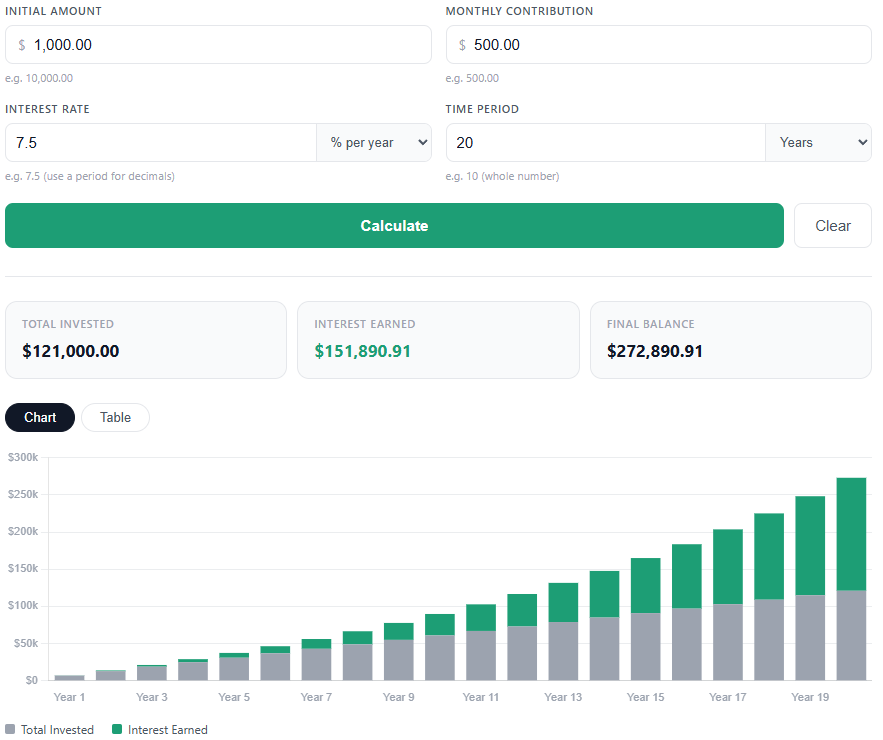
If you want to see how Lynch’s principles about compounding and long holding periods translate into actual numbers for your own situation, our Compound Interest Calculator lets you model the effect of consistent, patient investing across 10, 20, and 30-year horizons — the timeframes Lynch always said were the ones that mattered.
Frequently Asked Questions
Who is Peter Lynch? Peter Lynch is an American investor born on January 19, 1944, in Newton, Massachusetts. He managed the Fidelity Magellan Fund from 1977 to 1990, delivering 29.2% average annual returns and growing the fund from $18 million to $14 billion in assets. He retired at 46 to spend more time with his family and subsequently devoted significant energy to philanthropy.
What were Peter Lynch’s returns at the Magellan Fund? Lynch delivered 29.2% average annual returns over 13 years (1977–1990), beating the S&P 500 in 11 of those 13 years with no down years. The cumulative return turned $1 invested at the start into approximately $28 at his retirement. The fund grew from $18 million to $14 billion in assets, making it the largest mutual fund in the world when Lynch stepped down.
What is Peter Lynch’s net worth? Lynch’s net worth is estimated at approximately $450 million. Notably, he and the Lynch Foundation have donated more than $180 million to charity — to education, medicine, and cultural institutions — making his philanthropy nearly as large as his retained wealth.
What does “invest in what you know” actually mean? Lynch’s phrase means that everyday observations — a crowded store, a product your family loves, a restaurant concept expanding rapidly in your city — are starting points for investment research, not buy signals in themselves. The idea is that ordinary investors encounter evidence of business success before institutional analysts do, giving them a genuine informational edge. But that edge only materializes if the observation is followed by rigorous research into the underlying company.
What is a “ten-bagger”? A term Lynch coined for a stock that increases tenfold in value from its purchase price. Lynch believed that finding one or two ten-baggers in a portfolio could more than compensate for several losing positions, and that patient, long-term holding — rather than frequent trading — was the path to finding them.
What is the Magellan Paradox? The Magellan Paradox refers to the finding that the average investor in Lynch’s fund earned far less than the 29.2% Lynch delivered — roughly 7% annually in some analyses — because they consistently bought after strong performance and sold after weak quarters. It illustrates that owning a great strategy is not the same as benefiting from it; staying in the strategy through difficult periods is what actually captures the return.
What books did Peter Lynch write? Lynch wrote three books with financial journalist John Rothchild: One Up On Wall Street (1989), his core philosophy on finding investment ideas in everyday life; Beating the Street (1993), a more practical account of actual stock selection decisions from his Magellan years; and Learn to Earn (1995), an introduction to investing written for beginners.
Sources and Further Reading
- Wikipedia — Peter Lynch: https://en.wikipedia.org/wiki/Peter_Lynch
- Fidelity Investments — The Magellan Fund history and Peter Lynch biography: https://www.fidelity.com
- Investopedia — Peter Lynch biography and Magellan Fund performance: https://www.investopedia.com/terms/p/peterlynch.asp
- Britannica — Peter Lynch: https://www.britannica.com/biography/Peter-Lynch
- Peter Lynch and John Rothchild — One Up On Wall Street (1989, Simon & Schuster): https://amzn.to/4yXrBqf
- Peter Lynch and John Rothchild — Beating the Street (1993, Simon & Schuster): https://amzn.to/4c67NqT
- Peter Lynch and John Rothchild — Learn to Earn (1995, Simon & Schuster): https://amzn.to/4wJXDVk
- Jack Schwager — The New Market Wizards (1992, HarperCollins) — includes extended Lynch interview: https://amzn.to/4wNhMKg
- Investing Time Daily — The Best Books About Investing: https://investingtimedaily.com/best-books-about-investing/
- Investing Time Daily — Compound Interest Calculator: https://investingtimedaily.com/calculators/compound-interest-calculator-free/
Disclaimer: We get a small fee if you buy through our links at no extra cost to you.