Updated August 17, 2026. This article has been updated to reflect Michael Burry’s most recent disclosures on Cassandra Unchained, including new short positions in Nebius Group and Caterpillar, a doubling of his Palantir short after the stock surged 64%, and his comparison of the current AI buildout to the 2005 housing market — one year before the crash. Original publication: June 22, 2026.
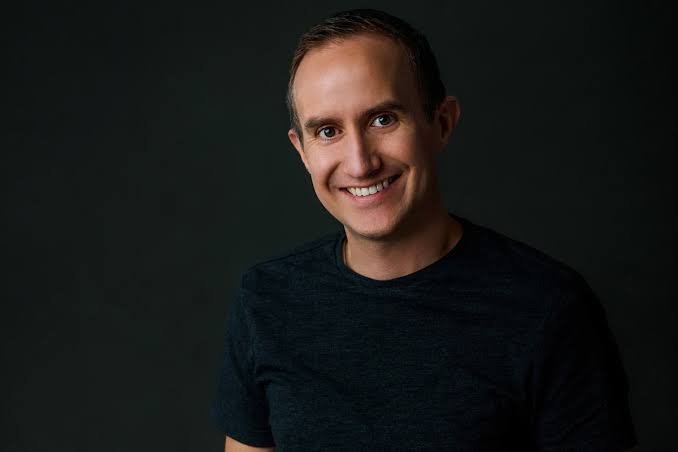
Michael Burry made his name betting against the entire U.S. housing market in 2007, a trade so improbable it became a movie. In late 2025, he closed his hedge fund, walked away from the SEC’s regulatory oversight, and started publishing his investment views on a paid newsletter instead. A few months later, he disclosed one of the largest bearish positions of his career — aimed squarely at the two stocks most associated with the AI boom: Nvidia and Palantir.
This is a breakdown of what Burry is actually betting on right now, why he’s betting against it, what the other side of the trade looks like, and what — if anything — an everyday investor should take from it.
Who is Michael Burry?
Before Nvidia and Palantir, before “the AI bubble,” Michael Burry was already one of the most closely watched investors in the world — and for a very specific reason: he has a track record of identifying market excess years before it becomes obvious to everyone else.
Burry founded Scion Capital in 2000, funded by a small inheritance and loans from his family. Trained as a physician before turning fully to investing, he built his early reputation as a meticulous value investor in the mold of Benjamin Graham — reading footnotes in financial filings that other analysts skipped entirely. Around 2005, that same obsessive attention to detail led him into the mortgage market, where he discovered that subprime loans bundled into bonds were far riskier than their ratings suggested. He bet against them using credit default swaps, a trade few understood and even fewer believed in. When the housing market collapsed in 2007 and 2008, that bet paid off — both for him and for his investors. The trade was later depicted in the 2015 film The Big Short, where Christian Bale played a version of Burry.
After 2008, he closed Scion to outside investors and managed his own capital privately for several years, focusing on unconventional assets like water rights and farmland. He reopened Scion Asset Management in 2013 and, over the following decade, built a reputation for contrarian, often uncomfortable calls — flagging excess in everything from special purpose acquisition companies (SPACs) to electric vehicle valuations to the meme-stock mania of 2021, when he was an early GameStop investor who exited before the stock’s now-famous short-squeeze rally.
Burry shut down his hedge fund — then got louder
Here’s the detail that makes Burry’s current positioning different from any portfolio breakdown you’ve read before: he no longer runs a fund that’s required to disclose its holdings to regulators.
In a letter to investors dated October 27, 2025, Burry announced he was liquidating Scion Asset Management and returning capital, writing that his sense of value in the markets had not been “in sync” with where prices were heading. By November 10, the SEC’s database listed Scion’s registration as terminated. Days later, he launched a subscription newsletter called Cassandra Unchained — a reference to the Greek mythological figure cursed to speak true prophecies that no one believed, and a nod to a nickname Warren Buffett reportedly gave him during congressional testimony about the 2008 financial crisis. The newsletter reportedly added more than 20,000 paying subscribers within its first day.
Why this matters for understanding his current portfolio: as a registered investment adviser, Burry was legally required to disclose his major U.S. equity holdings every quarter through SEC Form 13F — a filing that, by his own account, was frequently misread by financial media and occasionally moved markets on incomplete information. Without that registration, he’s no longer obligated to file anything. Every position size, every percentage, every headline number about his current portfolio comes from what he chooses to publish on Substack — not from a regulator-verified filing.
That’s an important distinction this article makes carefully throughout: Burry’s last verified 13F, covering the quarter ending September 30, 2025, showed eight holdings worth roughly $1.38 billion, including put options on Palantir and Nvidia alongside call options on Pfizer and Halliburton, plus a position in Molina Healthcare. Everything described below from 2026 onward is Burry’s own voluntary disclosure — credible given his track record, but not independently auditable the way a 13F filing is.
What Burry is betting against: Nvidia and Palantir
In a May 2026 post on Cassandra Unchained, Burry disclosed that as much as 80% of his portfolio was allocated to put options on Nvidia and Palantir — a position with an estimated notional value near $1.1 billion, roughly double the size of the bearish bet he first disclosed in his final 13F filing.
The specifics, as he described them: put options tied to 1,000,000 shares of Nvidia with a $110 strike price expiring in 2027, and a layered short position on Palantir combining put options at a $100 strike expiring in December 2026 with additional puts at a $50 strike expiring in mid-2027, alongside direct short positions in the stock. He also disclosed bearish bets against the Philadelphia Semiconductor Index (SOXX) and the Nasdaq 100 (QQQ), plus a short position in Oracle — together representing roughly another 9.5% of the portfolio.
One caveat worth understanding before any of these numbers feel more dramatic than they are: notional value is not the same as capital at risk. Notional value represents the value of the underlying shares the options reference — not what Burry actually paid for the contracts. An options analysis of his Palantir position, for instance, found that buying puts on a stock trading around $140 with a $50 strike requires the stock to fall by roughly two-thirds before the contracts pay off at all — meaning the actual premium spent to place the bet is a small fraction of the eye-catching headline number. Financial media has a documented habit of reporting notional value as if it were the size of the wager itself; Burry has publicly objected to this characterization of his own trades more than once.
The thesis: why Burry thinks this is a bubble
Burry’s argument isn’t simply “AI stocks are expensive.” It’s more specific, and it rests on three connected claims he’s laid out across several Cassandra Unchained posts in 2026.
First, demand is concentrated. According to Burry’s analysis, a handful of hyperscalers — Microsoft, Google, Amazon, and Meta — account for roughly half of Nvidia’s data center revenue. That concentration means a relatively modest change in any single customer’s capital spending plans could produce an outsized hit to Nvidia’s reported revenue. Burry has calculated that a 20% cut to Microsoft’s AI capital expenditure alone would shave more than 4% off Nvidia’s total revenue.
Second, the depreciation math may be flattering earnings. Burry argues that major cloud providers have quietly extended the useful life they assume for GPUs and data center hardware — which spreads the cost of that hardware over more years and reduces the depreciation expense hitting earnings today. If AI chips become technologically obsolete faster than these extended schedules assume, he argues, companies could eventually be forced to write down billions in assets, creating a gap between reported profits and economic reality. He has estimated this accounting choice could understate industry-wide depreciation by roughly $176 billion between 2026 and 2028.
Third, the financing behind the buildout is riskier than it appears. Burry has pointed to a February 2026 Moody’s Ratings report finding that the five major hyperscalers carry a combined $662 billion in data center lease commitments that have been signed but not yet started — obligations that, under standard accounting rules, don’t appear on balance sheets until the leases activate. He’s argued that figure equals roughly 113% of those companies’ combined adjusted debt today, and that in a market downturn, it would create strong incentive for several large customers to walk away from AI infrastructure commitments simultaneously — what he calls a “bullwhip effect” running through the AI supply chain.
The recurring comparison in Burry’s writing is to Cisco during the dot-com era — not because he thinks Nvidia’s business is fraudulent, but because Cisco was also the indispensable infrastructure provider of its boom, sold to everyone building the internet, and still lost roughly 80% of its value once growth expectations reset. “It is clearly Cisco,” Burry wrote in response to Nvidia’s public pushback on his accounting arguments.
He has also raised concerns about how some AI infrastructure deals are financed — pointing to structures where insurance companies route retirement and annuity assets into the capital stack behind AI data center buildouts, exposing retirees to risk they may not realize they’re carrying. He’s described some of these financing structures, including aspects of Elon Musk’s AI ventures, in blunt terms — calling at least one deal “fugazi,” his word for something fake.
The other side: what Nvidia and the bulls say
Nvidia has pushed back directly on parts of Burry’s argument. According to reporting on the dispute, the company sent a memo to Wall Street analysts disputing his characterization of stock-based compensation and depreciation accounting.
The numbers Nvidia has reported make the bull case difficult to dismiss outright. In its fiscal Q1 2027 results (reported in May 2026), the company posted revenue of $81.6 billion, up 85% year over year, with data center revenue alone reaching $75.2 billion, up 92%. Nvidia guided for $91 billion in the following quarter, authorized an $80 billion share buyback, and raised its quarterly dividend twenty-five-fold. Wall Street had expected $78.8 billion in revenue — Nvidia beat that by nearly $3 billion.
Notably, the stock fell anyway — about 1.5% in after-hours trading the night of the report, then another 4.3% over the following week, despite the beat and the raised guidance. That reaction is itself part of the story analysts are watching: when a company beats estimates by billions, raises its dividend dramatically, and the stock still falls, it suggests the market’s expectations had already priced in even more.
Supporters of the AI infrastructure buildout also point to a genuine diversification trend: hyperscaler concentration in Nvidia’s data center revenue has been declining, with enterprise and sovereign AI deployments filling a growing share of the gap. The Philadelphia Semiconductor Index was up roughly 65% for 2026 at the time of Burry’s most recent posts — a performance that, on its own, represents a significant cost for anyone holding a short position against it.
And there’s a track record argument worth stating plainly because Burry himself would not dispute it: he called the market overvalued in 2023, and it rose roughly 131% in the time since. Being early to a structural argument and being right about timing are two different things, and the cost of being wrong on a short position — which has theoretically unlimited downside, unlike a long position — can be severe.
What Burry is buying, not just shorting
A detail that’s easy to miss in the bubble-warning headlines: Burry isn’t simply short the entire market. According to his 2026 disclosures, he has built long positions in Microsoft, increased existing stakes in MSCI, PayPal, and Adobe, and added beaten-down names like Mercado Libre and Lululemon — companies he’s described as offering value after being unfairly caught up in broader AI-related selling pressure or sector rotation.
He’s also previously taken a position in physical gold (purchasing shares of Sprott Physical Gold Trust) as a hedge, and in early 2026 reportedly agreed with fellow investor Bill Ackman’s bullish view on Fannie Mae and Freddie Mac — a reminder that Burry’s framework is built around finding mispriced risk in either direction, not around being permanently bearish.
This matters for how readers should interpret the “AI bubble” headlines: Burry’s actual portfolio, as he’s described it, is a concentrated bet that a specific corner of the market — AI infrastructure leaders trading at historically extreme multiples — is mispriced, combined with smaller positions elsewhere that reflect ordinary value-investing judgment, not blanket pessimism.
August 2026 update: Burry doubles down as the market goes the other way
If there was any expectation that Palantir’s strong earnings or the AI infrastructure sector’s continued momentum might cause Burry to reduce his short positions, August 2026 answered that question directly: he did the opposite.
Between August 6 and August 12, Burry disclosed a series of moves on Cassandra Unchained that significantly expanded his bearish bets — even as the stocks he was shorting were rising sharply against him.
Palantir: worth “under $1” long-term, according to Burry
Palantir reported what multiple analysts called one of the most impressive quarters in the company’s history — strong revenue growth, expanding margins, and accelerating U.S. government contract wins. The stock surged 64% from its June low of approximately $106 to $175 by early August, creating significant mark-to-market losses for anyone who had been short since June.
Burry’s response, disclosed on August 10, was to add to his position. He purchased additional Palantir put options expiring in March 2027 and December 2026, with strike prices in the low-to-mid $100 range, taking advantage of implied volatility having fallen to multi-month lows to rebuild his bearish position at cheaper option prices. He also increased his direct short position in Palantir stock at $175. In a Cassandra Unchained post on August 12, he stated his view that Palantir is worth “under $1” on a long-term fundamental basis — a claim that implies he believes the stock, currently trading near $175, is overvalued by more than 99%.
New short: Nebius Group — “shooting fish in a barrel”
On August 6, Burry disclosed a new short position in Nebius Group (NBIS), an AI cloud infrastructure company, at $211.77. He described the trade bluntly in his post: “a bit like shooting fish in a barrel.” The same post disclosed a new short in Oracle. His characterization of Nebius as a straightforward short was tested almost immediately: Nebius reported Q2 2026 revenue of $582.3 million, up 454% year over year, and the stock surged 34% in a single day.
Expanded shorts: Caterpillar and SOXX
Burry increased his short position in Caterpillar at $844, noting in his post that “data center plans are already aging.” Caterpillar manufactures heavy equipment used in construction — including the construction of AI data centers — so his short reflects a bet that data center buildout activity will slow before the heavy machinery involved finishes paying for itself. He also increased his short in the iShares Semiconductor ETF (SOXX) at $533, broadening his sector bet beyond individual names.
On the long side: Molina Healthcare
Burry added to his Molina Healthcare position at $198, bringing it back to roughly the size of his largest positions. Molina Healthcare (MOH) provides managed care services to government-sponsored health programs and has fallen approximately 54% from its high. Burry has repeatedly stated his conviction in Molina’s long-term value, describing it as a business whose fundamentals have been obscured by headline-driven selling pressure.
The 2005 analogy: Burry compares the AI boom to the year before the housing crash
In his August 11 post, Burry extended his historical comparison beyond Cisco — for the first time explicitly drawing a parallel to 2005, one year before the housing market began to unravel. He pointed to Goldman Sachs’s position in that period: the bank was holding a $3 billion complex mortgage investment that looked as though it was about to collapse following Burry’s famous short bet. But Goldman managed to sell its position before the losses materialized — and “the flood gates opened to 2006,” in Burry’s words.
His implication is direct: Wall Street is currently in the process of distributing AI infrastructure risk to others before the losses arrive, just as it distributed mortgage risk in 2005 and 2006. Burry has previously argued that insurance companies and pension funds are being routed into the capital stack of AI data center projects. The 2005 parallel suggests he sees the current moment as the point in the cycle just before distribution becomes impossible — when the music stops and the last holders are stuck.
Where the bulls push back — and what’s actually happened to the stocks
The core challenge to Burry’s thesis in August 2026 is not theoretical — it is the price action of the stocks he is shorting.
Palantir stock is up approximately 35% over the month of August alone, representing a painful stretch for any short position. Nebius surged 34% in a single day. CoreWeave — another AI infrastructure company — reported that A100 contracts (an Nvidia chip first released in 2020) are being signed through 2029, directly challenging Burry’s argument that GPU depreciation schedules are being extended beyond what is economically justified. If a nine-year-old GPU still commands meaningful economics through 2029, the hardware obsolescence Burry anticipated is not materializing on the timeline he described.
Options traders can be early, and short sellers can be right about a thesis but wrong about timing. Burry was roughly two years early on the housing short before it began to pay off. Whether August 2026 represents the beginning of a similar validation or the beginning of a painful unwind remains, genuinely, unknown — which is the honest answer to the question most readers are asking.
What this means for individual investors
Whether or not Burry is right about Nvidia, the more useful lesson from his 2026 positioning isn’t about which stock to buy or sell — it’s about how to think about concentration risk and valuation discipline.
Notice when a handful of customers can move an entire industry’s revenue. Burry’s concentration argument about hyperscalers applies as a general principle, not just to Nvidia: when a business depends heavily on a small number of large counterparties, a small change in any one of their plans can produce an outsized effect.
Separate notional value from capital at risk. This applies to your own portfolio, too. If you ever use options, the headline size of a position (notional value) and what you’re actually risking (the premium paid) are very different numbers — and financial media routinely conflates them.
Track records cut both ways. Burry’s housing call in 2008 was extraordinary. His record since then — on the market broadly, on Tesla, on various recession calls — has been considerably more mixed. Following any single investor’s conviction, regardless of their past success, isn’t a substitute for understanding the reasoning behind a position and deciding whether it applies to your own circumstances and time horizon.
Concentration cuts both ways too. An 80% allocation to two correlated short positions is an extraordinarily concentrated bet — appropriate, perhaps, for an investor managing only his own capital with deep conviction and no outside redemption pressure, and far less appropriate for most individual portfolios that benefit from diversification precisely because none of us can be certain which narrative will turn out to be right.
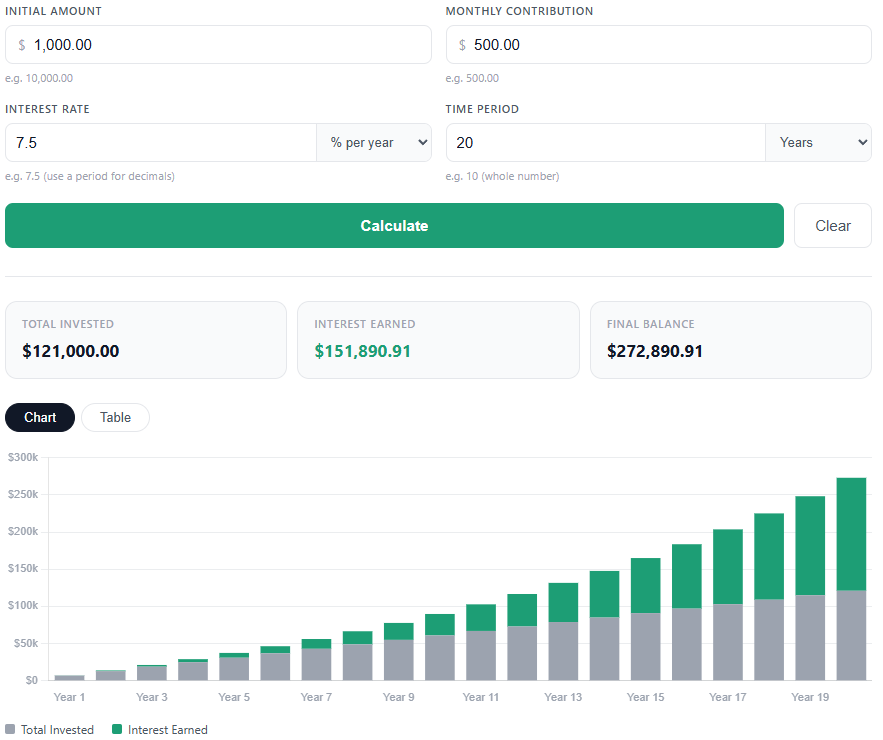
If you want to see how concentration and time horizon affect long-term outcomes in your own numbers rather than in someone else’s headlines, our Compound Interest Calculator lets you model different return scenarios — including more volatile, concentrated ones — against the simpler, diversified approach that investors like Morgan Housel and John Bogle have written about extensively.
Frequently Asked Questions
What is Michael Burry’s portfolio currently invested in? As of his August 2026 disclosures on Cassandra Unchained, Burry’s largest disclosed positions are put options and direct short positions against Nvidia and Palantir. In August, he added new short positions in Nebius Group and expanded his shorts in Caterpillar, Oracle, and the iShares Semiconductor ETF (SOXX). He also increased his Molina Healthcare long position. He has called Palantir worth “under $1” long-term and has compared the current AI infrastructure buildout to 2005 — one year before the housing market crash.
Does Michael Burry still file 13F reports with the SEC? No. Burry deregistered Scion Asset Management with the SEC in November 2025 after announcing he would liquidate the fund and return capital to investors. His last verified 13F filing covered the quarter ending September 30, 2025. Every position disclosed since then has come through his own voluntary newsletter posts, not a regulatory filing.
Why is Michael Burry betting against Nvidia? Burry’s thesis centers on three claims: that Nvidia’s data center revenue is concentrated among a small number of large customers, that major cloud providers may be understating depreciation costs on AI hardware by extending its assumed useful life, and that hundreds of billions in data center lease commitments sit off balance sheet until they activate, creating financing risk he compares to the dot-com era’s Cisco.
Has Michael Burry been right about the AI bubble? As of August 2026, the market has largely moved against Burry’s positions in the short term. Palantir is up approximately 35% in a single month, Nebius surged 34% in one day after a strong earnings report, and Nvidia’s revenue growth continues to beat expectations. Burry has not covered — he doubled down, expanding his Palantir short at $175 after the stock surged 64% from its June lows. Whether this is the correct response to temporary price action or the beginning of a painful extended loss depends on whether the AI infrastructure buildout continues to grow into its current valuations. Burry himself has remained public and consistent in his view that it won’t.
What is Cassandra Unchained? Cassandra Unchained is the subscription newsletter Michael Burry launched in November 2025 after closing his hedge fund. Named after the Greek mythological prophetess cursed to speak true predictions no one believed, it became one of Substack’s fastest-growing finance publications, reportedly adding more than 20,000 paying subscribers within its first day.
Is Michael Burry a billionaire? No. Despite his fame from “The Big Short,” Burry’s personal net worth has been estimated at over $300 million — significant, but well below billionaire status.
Should I copy Michael Burry’s trades? This article does not recommend buying or selling any specific security. Burry’s positions reflect his own risk tolerance, time horizon, and conviction as someone managing personal capital without outside investors. A concentrated options bet appropriate for one investor’s circumstances is not automatically appropriate for another’s. Consult a licensed financial advisor before making investment decisions based on any individual investor’s public positions.
Sources and Further Reading
- Wikipedia — Michael Burry biography and career timeline: https://en.wikipedia.org/wiki/Michael_Burry
- CNBC — Michael Burry of “Big Short” fame deregisters Scion Asset Management: https://www.cnbc.com/2025/11/13/michael-burry-of-big-short-fame-deregisters-scion-asset-management.html
- TheStreet — Michael Burry says Palantir is worth “under $1” long-term (August 12, 2026): https://www.thestreet.com/investing/stocks/pltr-palantir-stock-michael-burry-says-surging-ai-giant-is-worth-under-1-long-term-despite-strong-q2-2026-earnings
- The Motley Fool — Michael Burry Just Shorted Palantir Again — He Thinks It’s Headed Below $1 (August 2026): https://www.fool.com/investing/2026/08/12/michael-burry-just-shorted-palantir-again-he-think/
- Moneywise / Yahoo Finance — Michael Burry adds to Nvidia and Palantir shorts while loading up on Molina Healthcare (August 12, 2026): https://ca.finance.yahoo.com/news/michael-burry-adds-nvidia-palantir-184500402.html
- BigGo Finance — Michael Burry Shorts Nebius at $211.77, Calls AI Infrastructure Bets “Like Shooting Fish in a Barrel” (August 6, 2026): https://finance.biggo.com/news/811b8269-20ff-4f33-afd5-cfa5a64b302c
- 24/7 Wall St. — Michael Burry Is Short Nebius and Palantir. Both Are Now Soaring (August 2026): https://247wallst.com/investing/2026/08/12/michael-burry-is-short-nebius-and-palantir-both-are-now-soaring-his-short-thesis-looks-broken/
- Cassandra Unchained (Michael Burry’s Substack) — Trading Posts, July–August 2026: https://michaeljburry.substack.com/t/trading-posts
- 13F.info — Scion Asset Management LLC filing history (last verified 13F): https://13f.info/manager/0001649339-scion-asset-management-llc
- Investing Time Daily — Compound Interest Calculator: https://investingtimedaily.com/calculators/compound-interest-calculator-free/