
Charlie Munger didn’t hand out an official syllabus. What he left instead is decades of recordings: answers to shareholder questions at Berkshire Hathaway and Wesco Financial annual meetings, going back to at least 1994, where he’d casually mention whatever he was reading that year — sometimes for thirty seconds, sometimes for five uninterrupted minutes.
This article is built entirely from those moments. Every title below is something Munger is on record recommending, with the meeting or interview it came from whenever that’s documented. No “probably read this” guesses, no titles repeated from one blog to the next without a traceable source.
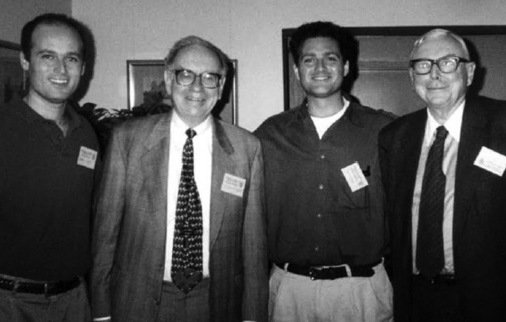
Who was Charlie Munger?
Charlie Munger was born in Omaha, Nebraska, in 1924 — the same city where, in 1959, he met a 29-year-old Warren Buffett at a dinner party and struck up a friendship that would last over sixty years. Before investing, his path wandered: he studied mathematics at the University of Michigan, trained as a meteorologist at Caltech during World War II, and earned his law degree from Harvard without ever finishing an undergraduate degree. He practiced real estate law in Los Angeles through his thirties before stepping away from law entirely in 1965 to invest full time.
Munger became vice chairman of Berkshire Hathaway in 1978 and held the role for 45 years. He’s widely credited with pushing Buffett beyond Benjamin Graham’s strict “cigar butt” value investing — buying mediocre businesses purely because they were statistically cheap — toward paying a fair price for truly great businesses with lasting competitive advantages. Berkshire’s 1972 purchase of See’s Candies is the example Buffett has pointed to for decades as the moment that shift took hold.
He also ran Wesco Financial as chairman and CEO from 1984 to 2011 and chaired the Daily Journal Corporation, whose annual meetings became almost as closely followed by investors as Berkshire’s own — largely because Munger, freed from needing to coordinate an answer with Buffett, tended to speak more freely there. He died on November 28, 2023, in Santa Barbara, California, at age 99, just over a month before his 100th birthday.
How this list was built
Every entry below traces back to something Munger said on the record — at a Berkshire Hathaway annual meeting, a Wesco Financial annual meeting, or a documented interview — going back to the earliest meeting transcripts available from 1994. Where a direct quote exists, it’s included. Where the connection is documented but the original wording isn’t preserved, that’s noted instead.
One title on this list, Damn Right!, deserves a different framing than the rest: it’s a biography written about Munger by journalist Janet Lowe, not a book he recommended. It’s included because it’s frequently — and incorrectly — listed alongside his actual recommendations, and we think it’s more useful to explain that distinction than to either omit it silently or repeat the error.
Disclosure: Some of the links in this post are affiliate links. If you make a purchase through these links, we may earn a small commission at no extra cost to you
Charlie Munger’s Recommended Books
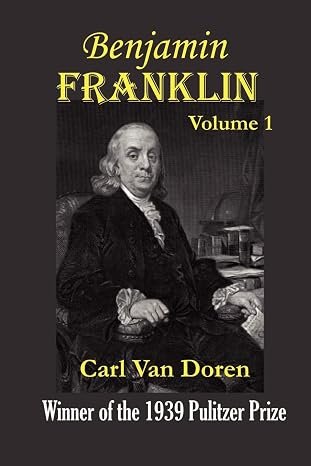
1. Benjamin Franklin — Carl Van Doren
Munger returned to this 1938 Pulitzer Prize–winning biography again and again across his life, calling it the definitive account of the founder he admired most. At the 1994 Berkshire Hathaway annual meeting, he said: “I am rereading a book I really like, which is Van Doren’s biography of Benjamin Franklin… We’ve never had anybody quite like Franklin in this country. Never again.”
Munger saw Franklin as the model for the kind of person he tried to become — a curious generalist who taught himself science, business, diplomacy, and writing, and who treated self-improvement as a lifelong project rather than a phase. Van Doren’s biography, built heavily from Franklin’s own letters and journals, gives a more textured and less hagiographic portrait than Franklin’s own autobiography does.
Buy on Amazon: https://amzn.to/4gDO2Kh
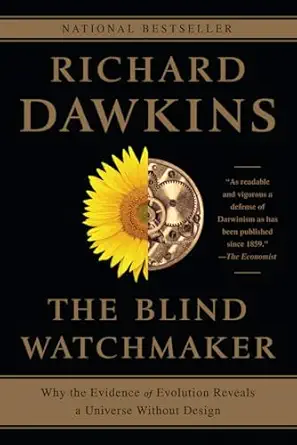
2. The Blind Watchmaker — Richard Dawkins
Munger described Dawkins’s evolutionary biology writing — this book alongside The Selfish Gene — as transformative reading, the kind that forces you to discard ideas you’d held your whole life. The Blind Watchmaker makes the case that natural selection, an unguided process with no foresight, can nonetheless produce the appearance of design — Dawkins’s direct rebuttal to the argument that complex biological structures require a conscious designer.
For Munger, the value wasn’t theological. It was a demonstration of how an apparently simple mechanism, applied relentlessly over enough time, produces results that look intentional and engineered. That’s a pattern he saw constantly in markets and business — outcomes that look like someone planned them, when really they emerged from competition and selection pressure operating without anyone directing the outcome.
Buy on Amazon: https://amzn.to/4eqHOvZ
3. Damn Right! — Janet Lowe
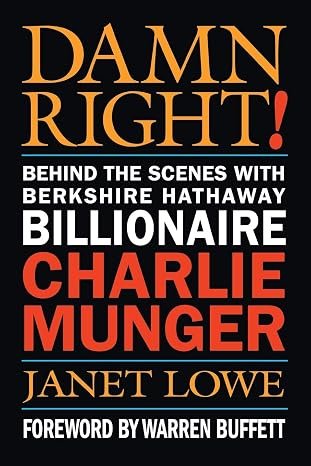
A note on framing, since this one is different from the rest of the list: Damn Right! is a biography of Munger himself, written by journalist Janet Lowe and published in 2000 — not a book he recommended to others. It’s worth including here because it gets misattributed as a “Munger recommendation” across several other reading lists online, and we’d rather correct that than repeat it.
What the book actually offers is a close account of Munger’s life and investment philosophy from an outside reporter’s perspective, built on interviews with Munger, his family, and his colleagues — useful as a companion to the books he genuinely did recommend, since it provides the biographical context for why certain titles resonated with him.
Buy on Amazon: https://amzn.to/43Ox1pl
4. Deep Simplicity — John Gribbin
At the 2004 Wesco Financial annual meeting, Munger recommended this book on chaos theory and complexity science with a characteristically dry warning: “Not everyone will like Deep Simplicity. It’s pretty hard to understand everything, but if you can’t understand it, you can always give it to a more intelligent friend.”
Gribbin’s book explains how simple physical rules — at the level of atoms, weather systems, or living cells — can produce complex, unpredictable behavior at a larger scale, and how complexity scientists look for patterns that recur across wildly different systems. It’s a dense read, by Munger’s own admission, but it reinforced a principle he applied constantly: that the same small number of underlying mechanisms shows up again and again across completely unrelated fields, once you know what to look for.
Buy on Amazon: https://amzn.to/3SXvQBw
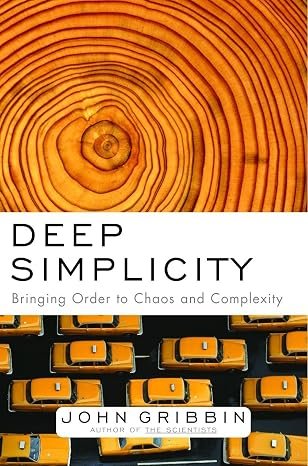
5. Genome: The Autobiography of a Species in 23 Chapters — Matt Ridley
Science writer Matt Ridley structures this book around the 23 pairs of human chromosomes, using each one as a window into a different aspect of genetics, evolution, and what DNA actually tells us about disease, behavior, and history. It’s one of several Ridley and Dawkins titles Munger pointed to repeatedly as essential reading in evolutionary biology — a field he considered indispensable to his broader “latticework” of mental models, on the reasoning that incentive structures and competitive selection show up as clearly in genetics as they do in markets.
Buy on Amazon: https://amzn.to/44cO2tD
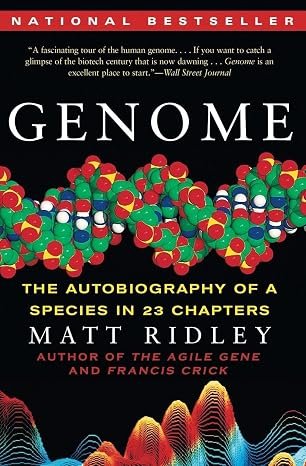
6. Guns, Germs, and Steel — Jared Diamond
Munger read this book twice — something he said he rarely did with any title — and praised not just its conclusions but Diamond’s method: “It’s a marvelous book. And the way the guy’s mind works would be useful in business. He’s got a mind that is always asking why. Why, why, why. And he’s very good at coming up with answers.”
Diamond’s central argument is that geography and environment — not any inherent difference between peoples — explain why some societies developed agriculture, writing, and metalworking before others: which wild plants and animals happened to be available to domesticate, and which way a continent’s mountain ranges run. For Munger, the real lesson was methodological: the best explanations almost always pull from multiple disciplines at once, and the habit of relentlessly asking “why” until you reach a root cause outperforms settling for the first plausible answer.
Buy on Amazon: https://amzn.to/3QJkFvw
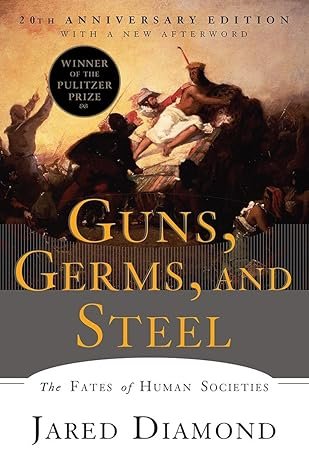
7. How the Scots Invented the Modern World — Arthur Herman
Herman’s argument is that the Scottish Enlightenment of the 18th century — thinkers like Adam Smith, David Hume, and Adam Ferguson — produced an outsized share of the ideas underlying modern democracy, free markets, and scientific method, despite Scotland’s small population and relative poverty at the time. Munger’s appreciation for this book fits his broader fascination with Adam Smith specifically, whom he considered one of history’s sharpest thinkers — not just for the “invisible hand,” but for Smith’s deeper warnings about monopoly, cronyism, and misaligned incentives that get less attention than his more famous ideas.
Buy on Amazon: https://amzn.to/4vtmSKG
8. Ice Age — John and Mary Gribbin
Munger’s praise for this book was unambiguous: “The best work of science exposition and history that I’ve read in many years!” The Gribbins trace the scientific detective work behind discovering that Earth has cycled through repeated ice ages, and what that history suggests about long-term climate patterns.
The book’s appeal for Munger likely had less to do with climate specifically than with the process it documents: scientists piecing together a counterintuitive conclusion from scattered, ambiguous physical evidence — glacial striations, ocean sediment cores, ancient pollen records — a model of the patient, multidisciplinary reasoning he tried to apply to investing.
Buy on Amazon: https://amzn.to/4eHYoGz

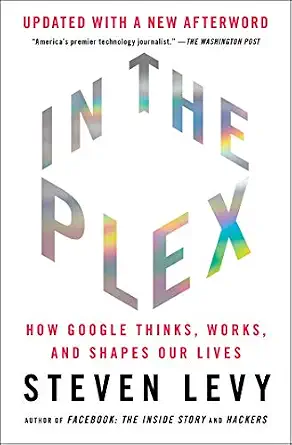
9. In the Plex: How Google Thinks, Works, and Shapes Our Lives — Steven Levy
A notable departure from history and biology, and proof that Munger’s reading didn’t stop evolving with age: this 2011 book by technology journalist Steven Levy goes inside Google’s engineering culture, hiring philosophy, and decision-making — and Munger, well into his eighties at the time, reportedly enjoyed it specifically because of his long-standing fascination with engineering cultures and how unconventional management structures can outperform traditional corporate hierarchies.
It’s a useful reminder that Munger’s “read everything” habit wasn’t limited to history and science classics — he kept following contemporary business stories closely, even ones far outside Berkshire’s traditional circle of competence.
Buy on Amazon: https://amzn.to/4vxa8TB
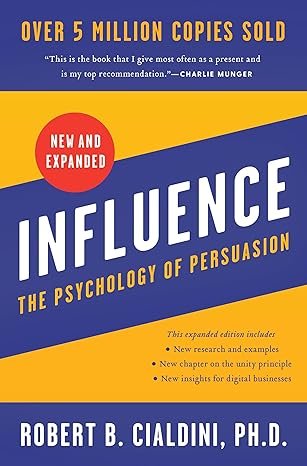
10. Influence: The Psychology of Persuasion — Robert Cialdini
The most famous book-related story in Munger’s career: he was reportedly moved enough by Cialdini’s research that he sent the author a share of Berkshire Hathaway Class A stock as a personal thank-you. Influence became a fixture Munger referenced at nearly every Berkshire and Wesco annual meeting for years.
Cialdini, a social psychologist, catalogs the specific mental shortcuts — reciprocity, social proof, authority, scarcity, commitment and consistency, liking — that make people comply with requests they might otherwise decline. Munger treated these biases as central to understanding markets: boards that defer to a confident CEO, investors who buy because everyone else is buying, analysts who anchor to a number just because it was said first. All of it traces back to the mechanisms this book names precisely.
Buy on Amazon: https://amzn.to/4xS8vS4
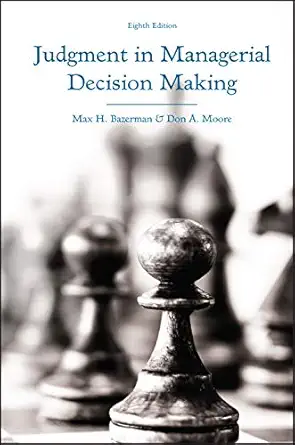
11. Judgment in Managerial Decision Making — Max Bazerman
At the 1995 Berkshire Hathaway annual meeting, Munger pointed an audience member toward this Harvard Business School textbook with characteristic understatement: “There’s a textbook which is called, I think, Judgment in Managerial Decision Making. And it’s used in some of the business schools, and it’s actually quite a good book.”
Bazerman combines behavioral decision theory with organizational research to map out the specific, predictable ways managers misjudge risk, overweight recent information, and fall into bias under pressure. It’s less a famous title than a working tool — the kind of unglamorous textbook that Munger valued precisely because it organized decision-making errors into a usable framework rather than just describing them anecdotally.
Buy on Amazon: https://amzn.to/4ajPxcQ
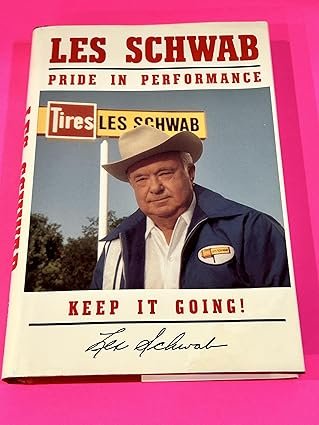
12. Les Schwab: Pride in Performance, Keep It Going — Les Schwab
At the 2004 Berkshire Hathaway annual meeting, Munger gave this one of his more direct, no-caveat endorsements: “If you want to read one book, read the autobiography of Les Schwab. He ran tire shops… and made a fortune by being shrewd in a tough business by having good systems. He made hundreds of millions selling tires.”
Schwab built one of the largest independent tire retailers in the United States from a single shop in Prineville, Oregon, largely through profit-sharing incentive structures that made employees behave like owners. Munger’s well-documented obsession with incentives — “show me the incentive and I will show you the outcome” — found a clean, concrete case study in Schwab’s own account of building that system from scratch.
Buy on Amazon: https://amzn.to/3QL92nQ
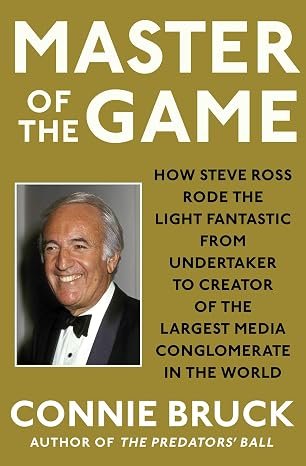
13. Master of the Game — Connie Bruck
Munger praised this biography of media executive Steve Ross — who built Kinney National Company into Warner Communications and later helped engineer its merger into Time Warner — for both its storytelling and its subject: “I very much enjoyed Connie Bruck’s biography Master of the Game… she’s a very insightful writer and it’s a very interesting story.”
Ross’s career was built on bold, often unconventional deal-making across entertainment, media, and parking-lot businesses (his first company), and Bruck’s reporting captures both the ambition and the ethical gray areas that came with it — the kind of unsentimental, character-driven business history Munger consistently gravitated toward over more theoretical management books.
Buy on Amazon: https://amzn.to/4oNXfC2
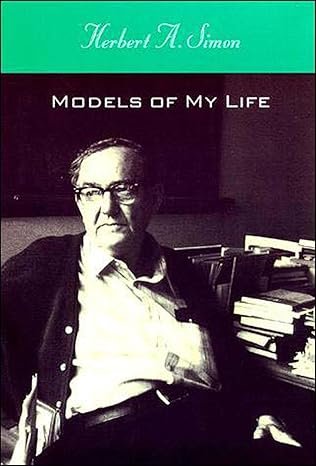
14. Models of My Life — Herbert Simon
Herbert Simon won the Nobel Prize in Economics for his theory of “bounded rationality” — the idea that real people make decisions with limited information and limited cognitive capacity, not the perfectly rational calculations classical economics assumes. His autobiography traces how he carried that thinking across an unusually wide range of fields: economics, political science, computer science, and psychology.
Simon is one of the clearest real-world examples of exactly the kind of “multidisciplinary generalist” Munger held up as the ideal thinker — someone who built a working knowledge of several disciplines well enough to move fluidly between them, rather than mastering one field so deeply that every problem started looking like a nail.
Buy on Amazon: https://amzn.to/3SocG7S
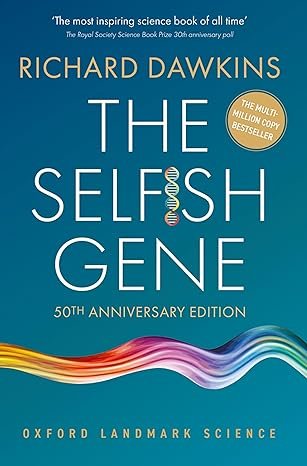
15. The Selfish Gene — Richard Dawkins
Munger said he had to read this book twice before he fully grasped it — a rare admission from someone famous for moving through several books a week: “I had to read The Selfish Gene twice before I fully understood it. And there were things I believed all my life that weren’t so, and I think it’s just wonderful when you have those experiences.”
Dawkins’s argument — that genes, not individual organisms, are the actual unit natural selection acts on, with organisms functioning as vehicles built to propagate them — gave Munger a framework for thinking about incentives and competition that extended well past biology. His repeated line about incentives owes a clear debt to this kind of evolutionary reasoning: behavior that looks irrational on the surface usually makes sense once you correctly identify what it’s actually optimizing for.
Buy on Amazon: https://amzn.to/4oNgnQB
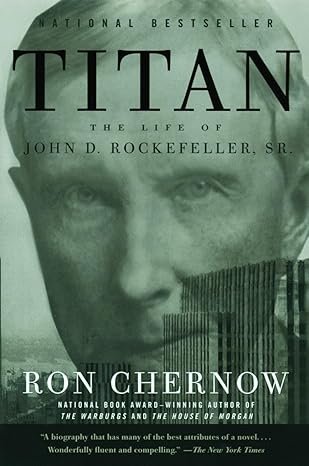
16. Titan: The Life of John D. Rockefeller, Sr. — Ron Chernow
Recommended at the 2008 Berkshire Hathaway annual meeting and discussed again at Wesco meetings in 2007 and 2009, Munger’s appreciation for this biography came with a personal admission: “I must confess that I am a hopeless lover of biographies and autobiographings. With that caveat in mind I found this book on the life of Mr. Rockefeller intriguing… I found myself contrasting the situations of Standard Oil and Microsoft often.”
Chernow traces Rockefeller’s rise from bookkeeper to founder of Standard Oil and, at his peak, the richest man in modern history, alongside the philanthropy and ruthlessness that defined him in roughly equal measure. Munger’s interest was specifically in Rockefeller as a case study in industry consolidation and long-term capital allocation — seeing a market’s structure more clearly than competitors did, then having the patience to build a dominant position over decades.
Buy on Amazon: https://amzn.to/4g10wLX
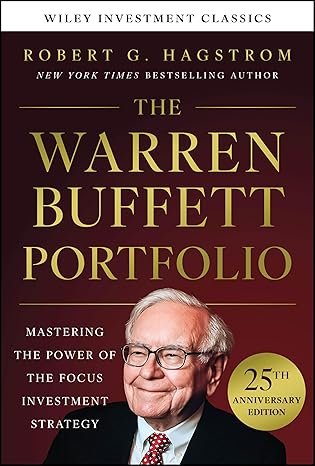
17. The Warren Buffett Portfolio — Robert Hagstrom
A more conventional inclusion on this list: a book specifically about the investment approach Munger himself helped shape, recommended by both Buffett and Munger on separate occasions. Hagstrom’s book focuses specifically on portfolio concentration — Berkshire’s preference for owning a relatively small number of businesses extremely well rather than diversifying broadly — and the statistical and psychological case for why a concentrated approach can outperform over long periods, provided the underlying judgment is sound.
It functions less as an introduction to Munger and Buffett’s thinking (several other books on this list serve that role better) and more as a focused deep dive into one specific, often misunderstood piece of their approach: why they were comfortable holding so few positions when conventional finance theory argues strongly for broad diversification.
Buy on Amazon: https://amzn.to/4vNmpn7
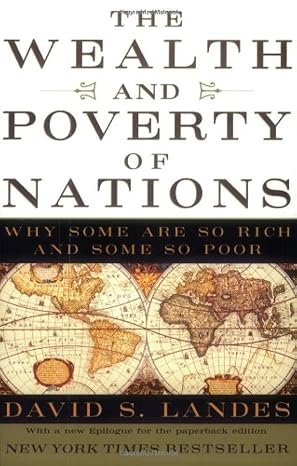
18. The Wealth and Poverty of Nations — David Landes
Munger’s enthusiasm for this economic history was unreserved: “That is a fabulous book. Most of the people who are here will not be able to put it down. I mean, for a book about an economic development, it captures the human background in a very interesting way.”
Landes tackles one of the largest questions in economics — why some nations became wealthy while others didn’t — and resists single-factor explanations, weaving together culture, geography, institutions, and historical accident into an argument that no one variable fully explains the gap. It’s a natural complement to Guns, Germs, and Steel on this list: both books reward readers willing to sit with genuinely multi-causal explanations rather than the simpler, single-cause stories that are easier to repeat but less often true.
Buy on Amazon: https://amzn.to/4xHZV89
How to start: a reading order
Eighteen books is a lot. Here’s how the team at Investing Time Daily would sequence them if you’re starting from zero.
Start with the people (books 1, 12, 13, 16): Benjamin Franklin, Les Schwab, Master of the Game, and Titan are all biographies of people who actually built something — the most concrete, least abstract entry point into how Munger thought about business and character together.
Then the psychology (books 10, 11, 14): Influence, Judgment in Managerial Decision Making, and Models of My Life cover the mental shortcuts, decision errors, and multidisciplinary thinking Munger considered foundational to good judgment.
Then the science (books 2, 4, 5, 6, 8, 15): The Blind Watchmaker, Deep Simplicity, Genome, Guns, Germs, and Steel, Ice Age, and The Selfish Gene are the books furthest from “investing” on the surface, and exactly the kind of reading Munger argued built the broader judgment investing actually requires.
Then the wider economic lens (books 7, 17, 18): How the Scots Invented the Modern World, The Warren Buffett Portfolio, and The Wealth and Poverty of Nations connect the ideas back to markets, institutions, and Berkshire’s own approach specifically.
Save book 3 for context, not instruction: Damn Right! is worth reading once you already know Munger’s recommendations — it explains why he made them.
Put the ideas into practice
Munger’s emphasis on patience and long holding periods wasn’t a slogan — it was backed by decades of Berkshire’s actual results. Our free Compound Interest Calculator lets you model that same kind of long-term thinking with your own numbers: adjust the rate of return, the time horizon, and the monthly contribution to see exactly how consistency compounds over 10, 20, or 30 years — the timeframes Munger consistently said mattered most.
Frequently Asked Questions
What books did Charlie Munger actually recommend? This article covers 18 titles Munger is on record recommending at Berkshire Hathaway or Wesco Financial annual meetings, or in documented interviews, dating back to at least 1994. They range from biographies (Benjamin Franklin, Titan, Master of the Game) to evolutionary biology (The Selfish Gene, The Blind Watchmaker) to applied psychology (Influence, Judgment in Managerial Decision Making).
Is Damn Right! by Janet Lowe a book Charlie Munger recommended? No — it’s a biography written about Munger, not a recommendation he made. It’s frequently misattributed as one of “his” recommended books across other reading lists online. We included it on this list specifically to correct that confusion rather than repeat it.
What is the most famous book Charlie Munger recommended? Influence: The Psychology of Persuasion by Robert Cialdini is the most documented case — Munger reportedly sent Cialdini a share of Berkshire Hathaway Class A stock as a personal thank-you, and referenced the book repeatedly at shareholder meetings over many years.
Why did Charlie Munger recommend so many science books instead of investing books? Munger built what he called a “latticework of mental models” — the belief that good judgment requires drawing on ideas from multiple disciplines (psychology, biology, physics, economics, history) rather than relying on any single framework. Books on evolutionary biology, chaos theory, and genetics weren’t tangents from his investing philosophy — he considered them central to it.
What’s the difference between Benjamin Franklin’s own autobiography and the Van Doren biography Munger recommended? Munger specifically praised Carl Van Doren’s 1938 Pulitzer Prize–winning biography of Franklin, not Franklin’s own autobiography. Van Doren’s account draws on Franklin’s letters and journals to build a fuller, more textured portrait than Franklin’s self-written account alone provides.
How is Charlie Munger different from Warren Buffett as an investor? Munger is widely credited with pushing Buffett away from Benjamin Graham’s strict “cigar butt” approach — buying statistically cheap, mediocre businesses — toward paying a fair price for high-quality businesses with durable competitive advantages. Berkshire’s 1972 acquisition of See’s Candies is the example Buffett has repeatedly cited as the turning point.
When did Charlie Munger die? Charlie Munger died on November 28, 2023, in Santa Barbara, California, at age 99 — just over a month before his 100th birthday. He served as vice chairman of Berkshire Hathaway for 45 years, from 1978 until his death.
Sources and Further Reading
- Farnam Street — Charlie Munger Recommended Books: https://fs.blog/charlie-munger-recommended-books/
- GetRead — Every Book Charlie Munger Has Ever Recommended At The Berkshire Hathaway Annual Meeting: https://getread.app/every-book-charlie-munger-has-ever-recommended-at-the-berkshire-hathaway-annual-meeting.html
- The Ways to Wealth — The Charlie Munger Reading List (50 Book Recommendations): https://www.thewaystowealth.com/investing/charlie-munger-reading-list/
- New Trader U — Charlie Munger’s Favorite 10 Authors: https://www.newtraderu.com/2026/02/20/charlie-mungers-favorite-10-authors-the-thinkers-who-shaped-his-mind/
- Wikipedia — Charlie Munger biography and career: https://en.wikipedia.org/wiki/Charlie_Munger
- Investing Time Daily — The Best Books About Investing: https://investingtimedaily.com/best-books-about-investing/
- Investing Time Daily — Compound Interest Calculator: https://investingtimedaily.com/calculators/compound-interest-calculator-free/