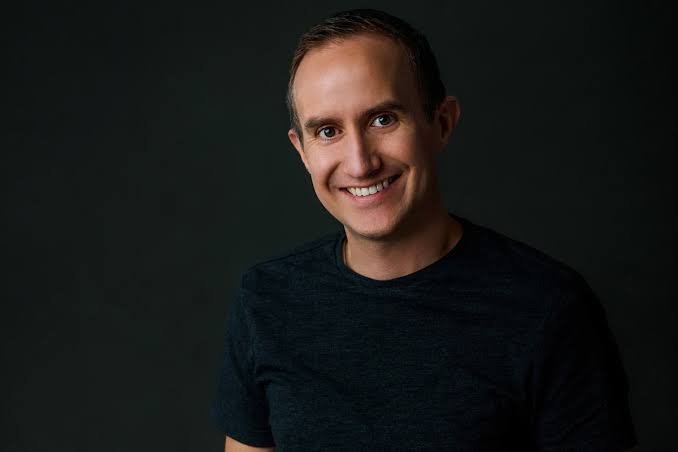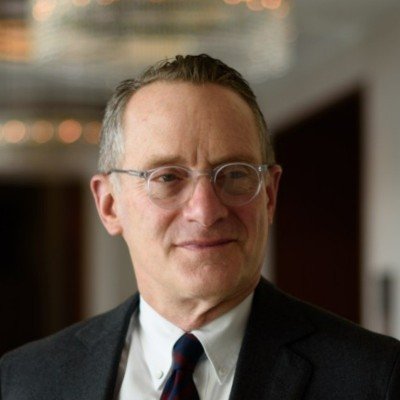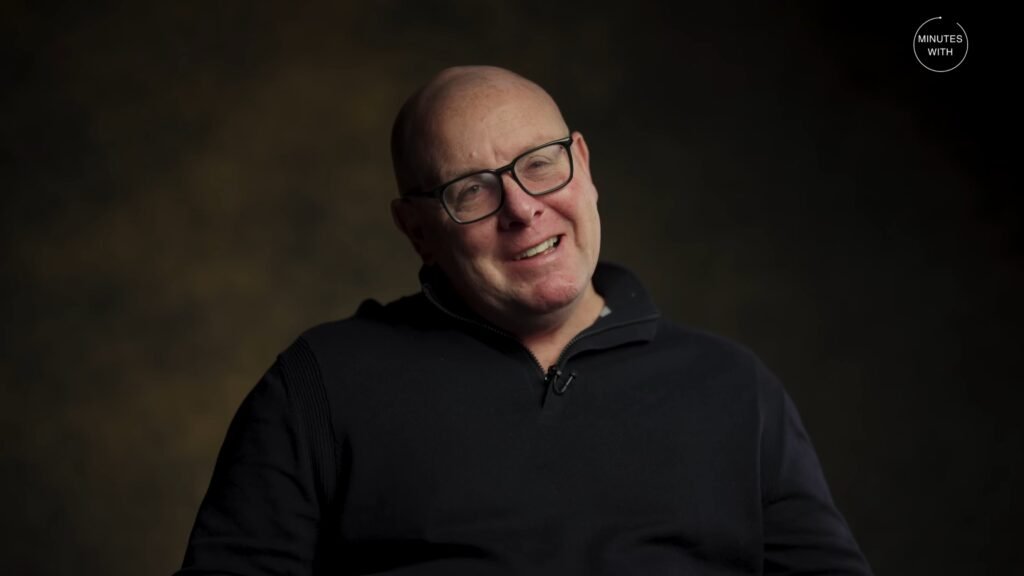
On June 1, 2026, Warren Buffett picked up his phone and told CNBC something that no Berkshire Hathaway watcher had ever heard him say about another person before.
“Greg did that faster than I could have done it, smoother than I could have done it, and I never talked to the CEO. He has launched.”
The deal Buffett was describing was Berkshire’s $6.8 billion acquisition of Taylor Morrison Home Corp., the country’s sixth-largest homebuilder — the first major acquisition since Gregory Edward Abel became CEO of Berkshire Hathaway on January 1, 2026. Abel had completed the deal entirely on his own, without Buffett’s involvement, without Buffett’s blessing on the counterpart, and without leaning on the legend who built everything he’d just inherited.
After 60 years of Warren Buffett, Berkshire has a new pilot. And the first thing most investors want to know is: who exactly is Greg Abel?
Who is Greg Abel?
Greg Abel was born on June 1, 1962, in Edmonton, Alberta, Canada — making him 63 years old in 2026. His father worked for Levitt-Safety, a supplier of firefighting and environmental equipment. His mother was a homemaker. He grew up in a modest, working-class household in Western Canada, far from the world of finance.
He attended the University of Alberta, where he earned a Bachelor of Commerce in accounting with honors, graduating in 1984. Unlike Warren Buffett, who was drawn to markets and securities from childhood, Abel’s early professional training was entirely operational and financial — he became a certified public accountant and joined PricewaterhouseCoopers, first in Edmonton and then in San Francisco.
That accounting background would define how Abel thinks about business. Where Buffett built his reputation as a capital allocator — someone who decides where to put billions and then largely steps back — Abel is, at his core, an operator. He understands how large industrial enterprises actually function at the level of rates, regulations, and infrastructure, not just price-to-earnings multiples.
In 1992, he joined CalEnergy, an energy company. In 1996, CalEnergy acquired an English utility company and Abel moved to England. In 1999, CalEnergy acquired MidAmerican Energy Holdings, and Abel became president of the combined entity. That same year, Berkshire Hathaway acquired a majority stake in MidAmerican, bringing Abel into Buffett’s orbit for the first time.
Abel was named CEO of MidAmerican Energy in 2008. In 2014, the company was renamed Berkshire Hathaway Energy. Under his leadership, it grew into one of the largest regulated utility groups in North America — a business that today generates nearly 10% of all wind power in the United States. When Berkshire appointed Abel Vice Chairman of non-insurance operations in 2018, the signal was clear to those watching closely. Buffett was grooming his successor.
The public announcement came unexpectedly. At the May 2025 annual shareholder meeting, Buffett surprised the crowd — and reportedly surprised Abel himself — by announcing he would step down as CEO at year-end. Berkshire’s board voted unanimously the next day to make Abel president and CEO effective January 1, 2026. Buffett remained as chairman. He is 95 years old.
How Greg Abel differs from Warren Buffett
For six decades, Berkshire operated on a defining principle: when it acquired a company, it largely left it alone. Buffett believed that good management was already in place, that Berkshire’s job was to provide capital and freedom, and that meddling was both unnecessary and potentially harmful. This hands-off approach became one of the most important selling points Berkshire offered when acquiring family-owned businesses whose founders didn’t want to see their legacies dismantled.
Abel’s first major deal suggests that approach may be changing — at least in some cases.
When he announced the Taylor Morrison acquisition, he said Berkshire plans to eventually unify its site-built homebuilding operations into a combined platform with Taylor Morrison and Clayton Homes, Berkshire’s existing manufactured housing giant. That kind of horizontal integration — combining subsidiaries into something larger and more coordinated — is not how Buffett operated. Analysts at UBS suggested the combined entity could become one of the five largest homebuilders in the United States.
This doesn’t mean Abel is dismantling what Buffett built. In public comments at the May 2026 annual meeting — his first as CEO, with Buffett sitting in the front row as a shareholder — Abel said clearly that Berkshire’s approach to investing would not change. The fortress balance sheet, the long-term orientation, the preference for businesses with durable competitive advantages, the avoidance of debt-fueled risk — all of that remains intact.
What’s different is the operating style. Abel is more comfortable with his hands inside the machinery. He spent three decades inside an industrial energy business, managing regulatory relationships, overseeing large capital projects, and integrating acquisitions. Running Berkshire’s 90-odd operating subsidiaries is something he has been doing, in large part, since 2018. The CEO title changed. The job, in many ways, didn’t.
Greg Abel’s net worth
Abel’s personal wealth is modest by the standards of his new role. His net worth is estimated at approximately $100 million to $1 billion — a wide range that reflects the difficulty of valuing a significant equity stake in Berkshire Hathaway alongside other private assets.
In October 2022, Abel purchased Berkshire Hathaway Class A shares worth approximately $68 million — paying between $405,000 and $408,000 per share. That purchase was widely seen as a signal that he was positioning himself with genuine skin in the game ahead of his eventual succession. At those prices, those shares would be worth considerably more by mid-2026.
He also owned a meaningful equity stake in Berkshire Hathaway Energy dating back to his years running that company. Berkshire bought out Abel’s stake in BHE in 2023 as part of restructuring the subsidiary’s finances — a transaction that generated a significant personal payout for him.
By the standards of Berkshire’s largest shareholders, Abel is not wealthy. By any other measure, he is. The distinction matters mainly because it underscores that he came to this role through merit and longevity, not through inherited wealth or a background in investment banking.
Greg Abel’s first deal: the Taylor Morrison acquisition
On June 1, 2026, Berkshire Hathaway announced it would acquire Taylor Morrison Home Corp., the country’s sixth-largest homebuilder, for $72.50 per share in cash — a total equity value of approximately $6.8 billion and an enterprise value including debt of approximately $8.5 billion.
The deal was Abel’s first major acquisition since becoming CEO, and it arrived five months into his tenure — notable speed for a company that had gone years without a significant acquisition under Buffett.
Several things about the deal stood out.
Taylor Morrison had reported a 27% year-over-year decline in revenue in Q1 2026 and earnings had fallen more than 50%. Abel bought at what appeared to be a cyclical low in the homebuilding sector — a classic Berkshire move of purchasing a good business at a depressed valuation rather than waiting for the industry to recover and paying a premium.
The strategic logic was clear. Berkshire already owns Clayton Homes, the nation’s largest producer of manufactured and modular housing, along with businesses that make flooring, insulation, roofing, paint, and brick. It owns Berkshire Hathaway HomeServices, one of the largest real estate brokerage networks in the country. Adding a major site-built homebuilder deepens an existing ecosystem rather than creating a new one — exactly the kind of acquisition that creates more value inside Berkshire than it would for a standalone buyer.
And then there was Buffett’s reaction. He told CNBC he had no involvement in the deal and had not spoken with Taylor Morrison’s CEO. His public praise was unambiguous: “He has launched.”
For investors who had wondered whether Abel would have the decisiveness to deploy Berkshire’s enormous cash pile, the Taylor Morrison deal answered one part of the question. Whether he can do so at the scale Berkshire’s balance sheet eventually demands is a longer story.
The $400 billion cash question
When Abel took over on January 1, 2026, Berkshire was sitting on approximately $347 billion in cash and Treasury bills. By the time of the Taylor Morrison announcement in June 2026, that figure had grown to nearly $400 billion — a record at any point in Berkshire’s history, and a figure that exceeds the GDP of many countries.
Buffett spent years explaining why he was holding so much cash: he didn’t see enough attractive opportunities at prices he considered reasonable. But he also acknowledged that the right crisis, the right dislocation, the right moment of market panic could produce what he called a period when Berkshire would be “bombarded with opportunities.” The cash was ammunition, not idle capital.
Abel has inherited both the ammunition and the strategic responsibility. The Taylor Morrison deal at $8.5 billion barely touches the cash pile. At that rate, deploying even half of Berkshire’s cash would require dozens of similar transactions. The more likely scenario, consistent with Berkshire’s history, is a small number of very large deals — possibly including another major acquisition in insurance, energy, or consumer goods — combined with continued share repurchases if the stock remains attractively priced.
Abel has said publicly that he will not change Berkshire’s approach. The fortress balance sheet is non-negotiable. What he may change is the pace at which opportunities are pursued, and the willingness to integrate what Berkshire already owns.
What Berkshire’s portfolio looks like in 2026
Berkshire Hathaway’s Q1 2026 13F filing, submitted in May 2026, shows a disclosed equity portfolio spanning 29 companies — down from approximately 40 in prior years. The contraction reflects more than a year of systematic selling across a wide range of positions.
The core holdings remain intact. Apple continues as the largest single equity position, despite meaningful trimming in prior quarters. American Express, Coca-Cola, and Moody’s Corporation — Buffett’s “Big Four” anchors alongside Apple — are maintained. These are businesses Buffett has described as companies he intends to hold indefinitely.
New positions initiated in Q1 2026 include Delta Air Lines, Alphabet Class C shares, and Macy’s — the latter a particularly contrarian bet on a brick-and-mortar retailer at a time when most institutional investors have moved away from traditional retail.
Berkshire was a net seller of stocks in Q1 2026 for the fourteenth consecutive quarter, with approximately $8.2 billion more sold than purchased in equity markets. That sustained net selling, combined with the record cash position, has fueled speculation about what Abel will do when — or if — a major market dislocation creates the buying opportunity Buffett spent years describing.
The investment managers remaining at Berkshire are Ted Weschler, who manages a portion of the equity portfolio, and who Abel has confirmed will continue in his role. Todd Combs, who had been one of Buffett’s two investment deputies for years, departed in December 2025.
What investors should watch
Abel’s tenure is less than a year old. Drawing sweeping conclusions from one acquisition and a few quarters of portfolio data would be premature. But there are several things worth watching over the next few years that will reveal what kind of CEO he actually is.
The cash deployment. Berkshire at nearly $400 billion in cash is a company under implicit pressure to act. Abel’s deal pace, the types of businesses he pursues, and the prices he pays will be the clearest signal of whether his capital allocation instincts are consistent with Buffett’s legacy or whether they represent a genuine departure.
The integration question. The Taylor Morrison-Clayton combination is a meaningful signal. If Abel continues to integrate Berkshire’s subsidiaries into coordinated platforms — rather than keeping them entirely independent — it would mark a structural shift in how the company operates.
The dividend question. Buffett always resisted paying a dividend, believing he could deploy capital more effectively than shareholders could. As the cash pile grows and deal opportunities remain limited, the pressure to eventually return capital to shareholders — either via buybacks or dividends — will increase. Abel has not committed to Buffett’s permanent anti-dividend stance.
Who comes after Abel. Berkshire has not publicly identified Abel’s successor. Given that succession planning has taken decades at Berkshire, the question of who eventually follows Abel — and how the company’s structure evolves as it continues to grow — is a long-term question that will eventually need an answer.
For a company as large and consequential as Berkshire Hathaway, the transition from Warren Buffett to Greg Abel is one of the defining corporate events of this decade. Whether Abel proves to be a worthy steward of what Buffett spent 60 years building is a question the market will take years to answer.
Our article on Warren Buffett’s portfolio allocation covers the current holdings and the investment philosophy Abel has inherited — a useful companion to this profile of the man now responsible for continuing it.
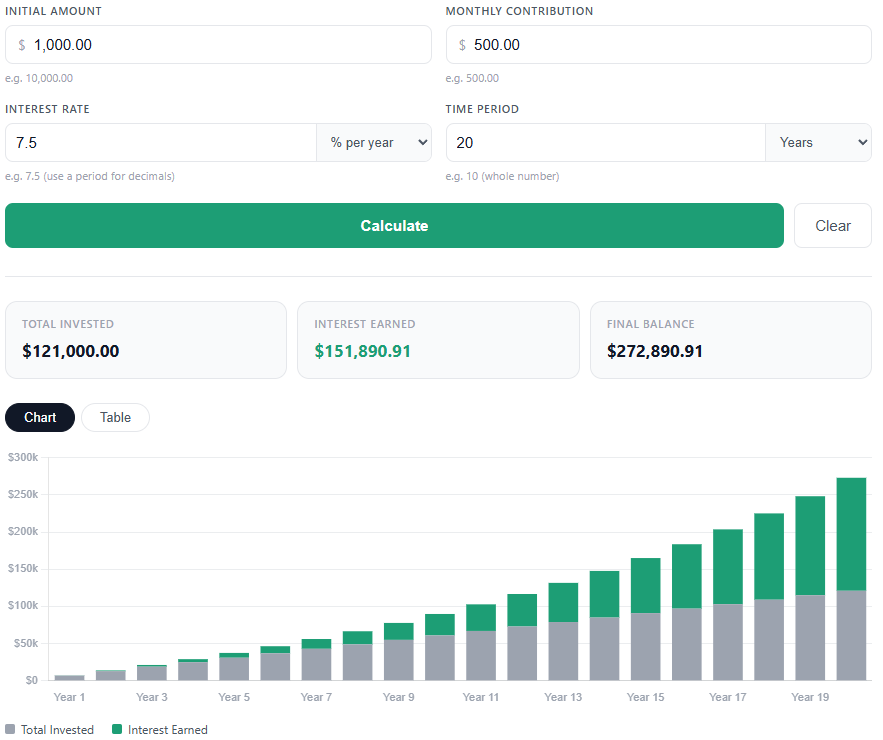
And if you want to understand the power of compounding returns that made Berkshire’s long-term record possible, our Compound Interest Calculator lets you model what consistent, patient returns actually produce over decades — the same principle Abel will be managing at Berkshire for years to come.
Frequently Asked Questions
Who is Greg Abel? Gregory Edward Abel is a Canadian-born accountant and investor who became CEO of Berkshire Hathaway on January 1, 2026, succeeding Warren Buffett. He was born on June 1, 1962, in Edmonton, Alberta. He holds an accounting degree from the University of Alberta and built his career running Berkshire Hathaway Energy, one of the largest regulated utility groups in North America, before being named Vice Chairman of Berkshire’s non-insurance operations in 2018.
How old is Greg Abel? Greg Abel was born on June 1, 1962. He is 63 years old as of mid-2026.
What is Greg Abel’s net worth? Abel’s net worth is estimated at approximately $100 million to $1 billion — modest by Berkshire standards. His wealth comes primarily from a meaningful equity stake in Berkshire Hathaway Energy, which Berkshire bought out in 2023, and approximately $68 million in Berkshire Class A shares he purchased personally in October 2022.
What was Greg Abel’s first deal as CEO? In June 2026, Abel announced Berkshire’s acquisition of Taylor Morrison Home Corp., the country’s sixth-largest homebuilder, for $72.50 per share in cash — an equity value of approximately $6.8 billion and an enterprise value of $8.5 billion. Warren Buffett said he had no involvement in the deal: “Greg did that faster than I could have done it, smoother than I could have done it, and I never talked to the CEO. He has launched.”
How is Greg Abel different from Warren Buffett? Buffett was primarily a capital allocator — he decided where to invest and then largely left companies alone. Abel is more of an operator, with a background in managing large industrial businesses at the infrastructure level. His first major acquisition included plans to integrate the new company with an existing Berkshire subsidiary — a departure from Buffett’s historically hands-off approach.
What does Berkshire Hathaway’s 2026 portfolio look like under Abel? The Q1 2026 13F shows 29 holdings, down from approximately 40 in prior years. Core positions include Apple, American Express, Coca-Cola, and Moody’s Corporation. New positions initiated in Q1 2026 include Delta Air Lines, Alphabet Class C, and Macy’s. Berkshire was a net seller of stocks for the fourteenth consecutive quarter, with nearly $400 billion in cash and Treasury bills as of mid-2026.
Did Warren Buffett endorse Greg Abel? Yes, strongly. Buffett named Abel as his successor and remained as chairman after stepping down as CEO. After Abel’s first major acquisition in June 2026, Buffett told CNBC: “Greg did that faster than I could have done it, smoother than I could have done it, and I never talked to the CEO. He has launched.”
Sources and Further Reading
- Britannica Money — Greg Abel biography (updated July 2026): https://www.britannica.com/money/Greg-Abel
- News4Jax / AP — New Berkshire Hathaway CEO Greg Abel makes first deal since taking over from Warren Buffett (June 1, 2026): https://www.news4jax.com/business/2026/06/01/new-berkshire-hathaway-ceo-greg-abel-makes-first-deal-since-taking-over-from-warren-buffett/
- CNBC — Greg Abel just made his first big deal as Berkshire CEO. Why Warren Buffett is happy (June 1, 2026): https://www.cnbc.com/2026/06/01/greg-abel-just-made-his-first-big-deal-as-berkshire-ceo-why-warren-buffett-is-happy.html
- Fortune — Buffett says Abel “has launched” with his first big Berkshire deal: an $8.5 billion housing bet (June 2, 2026): https://fortune.com/2026/06/01/berkshire-hathaway-housing-bet-gregory-abel-warren-buffett/
- Motley Fool — Warren Buffett’s Successor, Greg Abel, Just Made His First Big Acquisition as CEO of Berkshire Hathaway (June 2, 2026): https://www.fool.com/investing/2026/06/01/warren-buffett-s-successor-greg-abel-just-made-his-first-big-acquisition-as-ceo-of-berkshire-hathaway-here-s-what-investors-need-to-know/
- Seeking Alpha / Barchart — Warren Buffett to step down as Berkshire Hathaway CEO at year end (May 2025): https://www.barchart.com/story/news/32213618/warren-buffett-to-step-down-as-berkshire-hathaway-ceo-at-year-end
- CNBC — Pivot point: Buffett’s likely successor buys into Berkshire (October 2022): https://link.cnbc.com/public/29306309
- Seeking Alpha — Warren Buffett will remain chairman at Berkshire Hathaway when Greg Abel takes over as CEO in 2026: https://seekingalpha.com/pr/20089821
- Wikipedia — Greg Abel: https://en.wikipedia.org/wiki/Greg_Abel
- Investing Time Daily — Warren Buffett’s Portfolio Allocation: https://investingtimedaily.com/warren-buffett-portfolio-allocation/
- Investing Time Daily — Compound Interest Calculator: https://investingtimedaily.com/calculators/compound-interest-calculator-free/