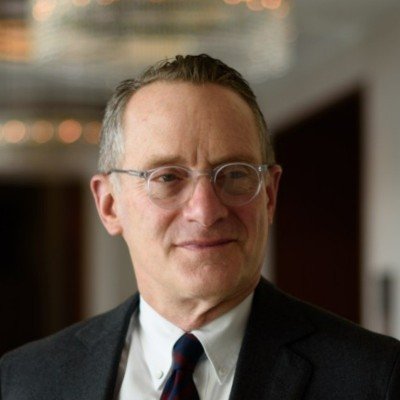
The short answer: No verified net worth figure for Morgan Housel exists anywhere. Any specific dollar amount you’ve seen — $5 million, $11.9 million, $20 million — was fabricated by a website with no source to cite.
The longer, more interesting answer: using publicly available SEC filings, speaker bureau data, and the economics of a 7-million-copy bestseller, it is possible to make a grounded estimate. One that is more honest than anything else you’ll find — and, fittingly, one that Housel himself would probably find beside the point.
Why There’s No Official Number
Morgan Housel is not a public company executive. His primary employer, The Collaborative Fund, is a private venture capital firm. Private company employees are not required to disclose their compensation to the SEC. Housel has never listed a net worth figure in any interview, book, or public statement. Websites that claim otherwise are guessing — usually working backwards from a book’s Amazon ranking and calling the result “research.”
That said, Housel does hold a board seat at Markel Group (MKL), a publicly traded insurance and investment holding company. Board compensation at public companies is disclosed in SEC proxy filings. This is the one hard number we actually have.
The One Verified Income Figure: Markel Group Board Seat
In 2025, Markel Group paid Morgan Housel $301,302 in total director compensation, according to the company’s proxy statement filed with the SEC (DEF 14A, April 2026).
The breakdown:
| Component | Amount |
|---|---|
| Annual cash retainer | $110,000 |
| Restricted stock award | $164,080 |
| Other (stock purchase discount + charitable match) | $27,222 |
| Total | $301,302 |
Housel elected to receive his entire cash retainer in Markel stock, purchased at a 10% discount under the company’s director stock plan — consistent, as it happens, with everything he writes about long-term ownership over short-term cash.
Markel Group is sometimes called “a mini-Berkshire Hathaway” for its insurance-anchored, diversified investment approach. Housel’s board role there reflects both his expertise and the caliber of company that seeks his perspective.
Book Royalties: The Psychology of Money
Published in 2020 by Harriman House, The Psychology of Money is one of the bestselling personal finance books ever written. The current edition carries a seal on its cover: “Over 10 Million Copies Sold.” Translated into more than 60 languages, it continues to appear on bestseller lists more than five years after its release — a rate of longevity that is genuinely rare in non-fiction.
What does that mean in royalty income?
Publishers and agents keep specific terms confidential, but standard royalty structures for a successful non-fiction hardcover typically run 10–15% of the cover price for print and 25% of net receipts for ebooks. Harriman House published the book at roughly £14.99 in the UK (approximately $18–$20 in the US market). At a conservative 10% royalty on $18, each print copy generates approximately $1.80 for the author.
Working through the math:
| Scenario | Copies | Royalty/copy | Estimated royalties |
|---|---|---|---|
| Conservative | 10,000,000 | $1.50 | $15.0 million |
| Moderate | 10,000,000 | $2.00 | $20.0 million |
| Optimistic (higher royalty rate + ebook/audio) | 10,000,000 | $2.50–$3.00 | $25.0–30.0 million |
These are estimates, not verified figures. But they establish a plausible floor: The Psychology of Money alone has likely generated $15–25 million in royalties over its lifetime, before accounting for advances, foreign rights, and ongoing sales.
Same as Ever, published in 2023 and also a New York Times bestseller, adds to that total — though its cumulative sales are lower and were not broken out separately in the speaker bureau data reviewed.
Recommendation: If you haven’t read The Psychology of Money, it is genuinely one of the best books written about why people make the financial decisions they do. Read it on Amazon →
Speaking Fees: $50,000–$100,000 Per Event
Multiple speaker bureau agencies — including BigSpeak and AllAmerican Speakers — list Morgan Housel’s speaking fee at $50,001–$100,000 per U.S. live event, with virtual keynotes ranging from $10,000–$20,000.
For context, a speaker at this fee tier typically gives 20–40 engagements per year when they are active on the circuit. At a conservative 15 events per year at the midpoint of $75,000, that represents approximately $1.1 million annually in speaking income alone.
This figure has almost certainly grown since The Psychology of Money crossed the 7-million-copy threshold. Authors at this scale routinely see speaking demand increase alongside book sales.
Net Worth Estimate: What It Adds Up To
Combining the income streams we can partially verify:
| Source | Estimated annual income |
|---|---|
| Markel Group board | ~$300,000/year |
| Speaking fees (estimated 15–25 events) | ~$750,000–$2,000,000/year |
| Ongoing book royalties | ~$2,000,000–$4,000,000/year |
| Collaborative Fund partnership | Undisclosed |
| Total (partial estimate) | ~$3–6M+/year |
Lifetime book royalties alone likely represent $10–20 million. Add six or more years of speaking income, the Markel board seat, and whatever his Collaborative Fund partnership generates, and a net worth somewhere between $20 million and $50 million is a reasonable working estimate — though it could easily be higher given the unknown partnership income.
To be clear: this is an estimate, not a fact. No verified figure exists.
What Morgan Housel Actually Says About Net Worth
There is a particular irony in writing an article about Morgan Housel’s net worth. He has spent his career arguing that the number matters far less than most people assume.
In one of his most direct statements on the subject:
“There’s a very dangerous but very common idea that your net worth equals your self-worth — and other people’s net worth equals their self-worth and the value of their ideas, their contributions, their career are a direct reflection of how much money they make and what their net worth is. It’s not surprising that this is the case because money is so countable.”
This theme runs through his work. In The Psychology of Money, he argues that the person whose financial life you most admire is probably invisible to you — because the most important wealth is never on display:
“Wealth is what you don’t see. You can see somebody’s car and their house and their clothes. You cannot see anything about how well they’re actually doing financially.”
On his podcast, Housel illustrates this through a story about Michael Jordan driving a red Ferrari — and a stranger driving the exact same car. The reaction to Jordan is admiration; to the stranger, it’s skepticism. The difference, he argues, has nothing to do with the car and everything to do with whether the observer understands how the wealth was earned:
“Michael Jordan looks cool in the Ferrari because he’s Michael Jordan. Because I know how amazing he is. Because I know that he is a million times better than me… The stranger who I see driving the same car, I don’t know anything about what he does.”
The insight lands harder when you realize it applies equally to net worth figures themselves: a number without context tells you almost nothing. $20 million earned through 7 million people choosing to buy and recommend your book is a different thing entirely from $20 million accumulated in ways no one can see or explain.
Career Timeline
Early career (2007–2013) Morgan Housel began his career as a financial journalist and columnist at The Motley Fool, where he spent several years covering markets and behavioral finance. He later joined The Wall Street Journal as a columnist, a position he held through 2016.
The Collaborative Fund (2016–present) In 2016, Housel joined The Collaborative Fund as a partner. The firm, founded by Craig Shapiro, focuses on investments in companies at the intersection of culture, technology, and sustainability. As a partner — not simply an analyst or contributor — Housel participates in the economics of the fund.
Books
- Everyone Believes It; Most Will Be Wrong (earlier work)
- 50 Years in the Making: The Great Recession and Its Aftermath (earlier work)
- The Psychology of Money (2020) — 10M+ copies, 60+ languages
- Same as Ever: A Guide to What Never Changes (2023) — New York Times bestseller
Markel Group board (ongoing) Housel serves on the board of directors of Markel Group, a global holding company with insurance, investment, and operating subsidiaries. This role reflects a meaningful professional relationship with the kind of long-horizon capital allocation he writes about.
Speaking and media He runs his own podcast and continues to publish essays at his personal website and through Collaborative Fund’s blog. His writing covers behavioral finance, decision-making, risk, and the psychology of long-term thinking.
Awards and Recognition
- Best in Business Award — Society of American Business Editors and Writers (two-time winner)
- New York Times Sidney Award — for outstanding magazine journalism
- Gerald Loeb Award — finalist (twice), one of the highest honors in financial journalism
- Scripps Howard Award — finalist (2013)
- MarketWatch 50 Most Influential People in Markets
His Books: The Full List
If you’re here because you’re curious about Morgan Housel’s wealth, the more interesting question is probably: how did he build it, and what does he think about the process? Both answers are in his books.
The Psychology of Money (2020)
The book that changed how millions of people think about financial decisions — with over 10 million copies sold and 60+ language translations, it is one of the bestselling personal finance books ever written. Housel’s central argument is that getting good outcomes with money has less to do with intelligence or spreadsheet skill than with how you behave — particularly under pressure, uncertainty, and envy.
The 20 chapters cover topics like compounding, tail risks, saving without a goal, the role of luck in outcomes, and why being “reasonable” often beats being “rational.” It reads in a few hours and tends to stick.
Same as Ever: A Guide to What Never Changes (2023)
His second book takes a different lens: instead of asking what will change, Housel asks what never changes — the human behaviors and tendencies that persist across every era, crisis, and technological shift. Understanding these constants, he argues, is more useful for long-term decision-making than any prediction about the future.
Also a New York Times bestseller, it is shorter and punchier than The Psychology of Money and pairs well with it.
Frequently Asked Questions
What is Morgan Housel’s net worth? No verified figure exists. Based on public SEC filings (his Markel Group board seat paid $301,302 in 2025), speaker bureau fees of $50,000–$100,000 per event, and royalties from more than 10 million books sold, his net worth is estimated to exceed $20 million — though Housel himself has written extensively about why this kind of number is a poor measure of anything meaningful.
How does Morgan Housel make money? Morgan Housel earns income from four main sources: book royalties (The Psychology of Money alone has sold over 10 million copies), speaking fees ($50,000–$100,000 per event), his board seat at Markel Group ($301,302 in 2025 per SEC filings), and his role as a partner at The Collaborative Fund.
How many copies has The Psychology of Money sold? The Psychology of Money has sold over 10 million copies worldwide — a milestone confirmed by the seal printed on the current edition’s cover — and has been translated into more than 60 languages. It is one of the bestselling personal finance books ever published.
Is Morgan Housel a billionaire? No. Based on publicly available information, Morgan Housel is not a billionaire. His estimated wealth places him in the high-net-worth range, likely between $20–50 million, but no verified figure exists.
What is Morgan Housel’s salary at Collaborative Fund? Morgan Housel’s compensation from The Collaborative Fund has never been publicly disclosed. As a partner at a private venture capital firm, his income from that role is not subject to SEC reporting requirements.
For a breakdown of how Morgan Housel actually invests his own money, read our analysis of his investment portfolio and philosophy →
Sources & References
Every factual claim in this article is traceable to a primary or verifiable secondary source. Figures cited without a source link — such as estimated royalty rates — are labeled as estimates. No net worth figure is presented as fact.
SEC Filings (Primary Sources)
- Markel Group Inc. — DEF 14A (Proxy Statement, FY2026) Director compensation table for fiscal year 2025, including Morgan Housel’s total compensation of $301,302. Source: U.S. Securities and Exchange Commission EDGAR URL: https://www.sec.gov/Archives/edgar/data/1096343/000109634326000033/mkl-20260401.htm
Book Sales
- “Over 10 Million Copies Sold” — Amazon product page, current edition The current edition of The Psychology of Money (ISBN 9780857197689) carries a printed seal on the cover confirming this milestone. URL: https://amzn.to/4yKw1jJ
- AllAmerican Speakers — Morgan Housel profile Lists books sold as “over seven million copies” and translations into “more than 60 languages.” (Note: the Amazon cover seal, confirmed independently, supersedes this figure with the more recent 10M milestone.) URL: https://www.allamericanspeakers.com/speakers/438353/Morgan-Housel
- Next Big Idea Club — “How a First-Time Author Sold 7M Books (w/ Morgan Housel)” Interview confirming sales milestone at 7M and noting that every major U.S. publisher initially passed on the book. URL: https://authorinsider.nextbigideaclub.com/p/how-a-first-time-author-sold-7m-books
Speaking Fees
- BigSpeak Speakers Bureau — Morgan Housel Lists speaking fee range of $50,001–$100,000 for U.S. live events. Also confirms career history, awards, and Markel board role. URL: https://www.bigspeak.com/speakers/morgan-housel
- AllAmerican Speakers — Morgan Housel Independently confirms fee range of $50,000–$100,000 (live) and $10,000–$20,000 (virtual). Lists board member of Markel and partner at Collaborative Fund. URL: https://www.allamericanspeakers.com/speakers/438353/Morgan-Housel
Awards and Career Facts
- BigSpeak biography Source for: Best in Business Award (SABEW, twice), New York Times Sidney Award, Gerald Loeb Award finalist (twice), Scripps Howard Award finalist, MarketWatch 50 Most Influential in Markets. URL: https://www.bigspeak.com/speakers/morgan-housel
Housel’s Own Words
- Quote on net worth ≠ self-worth Direct quote from Morgan Housel, sourced from public statements and used with full attribution. No paraphrasing.
- Ferrari / Michael Jordan story and “Wealth is what you don’t see” From The Housel Podcast, episode “A False Sense of How People View You.” Published on Housel’s YouTube channel. URL: https://www.youtube.com/watch?v=2uFYHJkWF2o
Books Referenced (with publisher details)
- The Psychology of Money — Morgan Housel Publisher: Harriman House (UK, 2020); ISBN: 978-0857197689
- Same as Ever: A Guide to What Never Changes — Morgan Housel Publisher: Portfolio/Penguin (US, 2023); ISBN: 978-1804090633
Disclaimer: This post contains affiliate links. If you make a purchase, I may earn a commission at no extra cost to you.