
JPMorgan CEO Jamie Dimon Shares Outlook on US Debt, AI Jobs, and Tax Trends
SHANGHAI — JPMorgan Chase CEO Jamie Dimon urged business leaders and investors to prepare for a wide range of economic outcomes, warning that sticky inflation and rising interest rates could be here to stay.
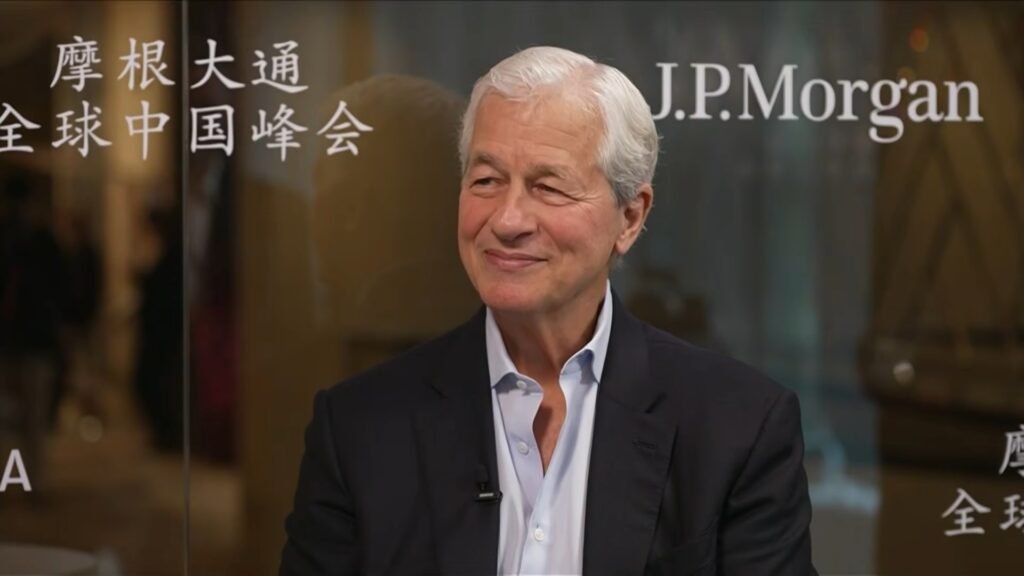
Speaking with Bloomberg Television at the bank’s Global China Summit in Shanghai, the head of America’s largest bank broke down the biggest challenges and opportunities moving the global economy today.
1. The $30 Trillion US Debt and Rising Rates
While the stock market has continued to rally, Dimon warned that underlying pressures in the bond market should not be ignored. The era of ultra-low interest rates may be behind us, driven by massive government deficits and a global demand for capital.
At the center of this shift is the U.S. national debt, which has now crossed $30 trillion.
- The Refinancing Challenge: The U.S. government currently holds an average interest rate of 3.5% on its debt. With roughly $2 trillion in debt maturing and needing to be rolled over this year alone, the government will have to borrow at today’s higher market rates, putting extra pressure on the financial system.
- Corporate Stress: This higher-rate environment also impacts the private sector. Dimon noted there are about $5 trillion to $6 trillion in leveraged loans globally. Companies that did not hedge against interest rate hikes will face significant stress and lower equity values when they are forced to refinance their debts.
2. Artificial Intelligence and the Future of Work
Beyond macroeconomics, the rapid rise of Artificial Intelligence (AI) is driving a massive reallocation of corporate money. AI infrastructure spending in the U.S. is expected to scale from $450 billion annually to $1 trillion in the near future.
JPMorgan Chase has been investing in and using machine learning for over 13 years. The bank deploys AI across risk management, fraud prevention, marketing, document management, and software development.
When asked about the widespread fear that AI will eliminate entry-level positions, Dimon offered a balanced view of how the bank plans to handle its workforce:
- Job Changes, Not Sudden Layoffs: While AI will inevitably change job structures and reduce certain administrative tasks over time, it will also make employees much more productive.
- Using Natural Attrition: Instead of abrupt corporate layoffs, JPMorgan plans to manage staff shifts through normal turnover. The bank naturally loses about 10% of its workforce each year—roughly 25,000 to 30,000 employees—through normal career moves and retirement. This allows the firm to retrain and transition existing employees into tech-augmented roles without heavy job cuts.
Recommended Reading
- Jamie Dimon’s 2026 Warning: 5 Fearless Lessons for Growth
- Why the Rich Don’t Pay Taxes: Ray Madoff Explains
3. Why Businesses Are Relocating to Lower-Tax States
Dimon also discussed how local policies affect economic growth, referencing recent debates over raising taxes on wealthy individuals in places like New York. He emphasized that cities and states are in a constant global competition to attract companies and talent.
When local taxes, regulatory burdens, or crime rates become too high, businesses and individuals simply move to more competitive regions—a concept known as “voting with their feet.”
Dimon pointed to his own bank’s shifting footprint to illustrate this domestic migration:
- The Shift from NY to Texas: In previous years, JPMorgan employed 35,000 people in New York City and only 12,000 in Texas. Today, due to differences in state taxes and local infrastructure, the bank’s New York workforce has dropped to 26,000, while its Texas operations have grown to 33,000 employees.
- Historical Lessons: Dimon warned that aggressive tax policies can backfire by shrinking the local tax base, leaving cities with less money to fund public schools, affordable housing, and social services.
4. The US-China Economic Relationship
Closing his assessment from Shanghai, Dimon touched on the delicate relationship between the world’s two largest economies. While acknowledging major differences regarding trade equity, supply chains, and regional security, he strongly advocated for continued open communication between Washington and Beijing.
From an economic perspective, Dimon noted that China faces internal hurdles, such as real estate adjustments and a heavy reliance on exports.
However, he warned global investors not to count China out. He noted that anyone visiting the country will be impressed by its world-class manufacturing capabilities in critical future sectors, including electric vehicles, solar technology, batteries, and high-precision machine tools.
🙋♂️ Frequently Asked Questions (FAQ)
Q: Why do higher interest rates put pressure on the U.S. government debt? A: When old government bonds mature, the government has to issue new bonds to pay them off. If market interest rates are high, the government has to pay a higher rate to its new investors, making the total national debt much more expensive to maintain.
Q: Is JPMorgan replacing its staff with AI? A: No. Instead of firing workers, the bank is using its natural 10% annual employee turnover to naturally adjust its size while actively retraining current staff to use AI tools to increase their everyday productivity.
Q: What does “voting with their feet” mean? A: It is an economic term for when people or businesses move away from places with high taxes or heavy regulations and relocate to states or cities that offer a more business-friendly environment.
📋 Sources & References
- Primary Source: Bloomberg Television Interview with Jamie Dimon (CEO, JPMorgan Chase & Co.) at the Global China Summit in Shanghai.
⚠️ Disclaimer
This article is for informational and educational purposes only. The economic commentary and data provided do not constitute financial, investment, or legal advice. Readers should conduct their own research or consult with a licensed professional before making financial decisions.






Pingback: Apple Siri AI 2026: The Upgrade & Accessibility Features