Market Strategy: Why Retail Investors Have the “Silent” Edge
In a market defined by rapid geopolitical shifts—from escalations in Iran to sudden ceasefire reports—many investors feel pressured to react to every headline. However, according to Josh Brown, CEO of Ritholtz Wealth Management, individual investors actually hold a distinct advantage over professional hedge fund managers.
Because retail investors aren’t being “graded” daily by clients or third parties, they can afford to ride out volatility without chasing the noise. Instead of attempting to predict the next move in oil or the next presidential tweet, Brown suggests setting rules in advance through an Investment Policy Statement. By rebalancing when things are calm, you remove the emotional “tap dancing” that often leads to losses during a crisis.
The Great Shift: HALO vs. Asset-Light Software
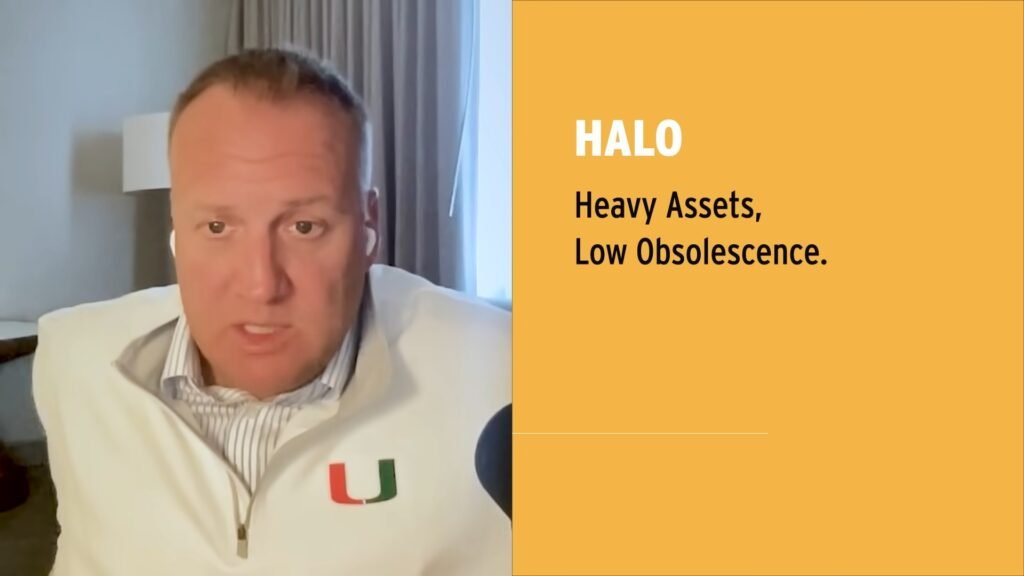
One of the most significant trends in 2026 is the divergence between “Mega Cap Tech” and what Brown calls HALO stocks (Heavy Asset Low Obsolescence). While traditional software-as-a-service (SaaS) names like Salesforce and Adobe have faced a “software apocalypse” with 20% to 30% drawdowns, physical infrastructure is thriving.
- The HALO Advantage: These companies own “metal and steel”—pipelines, power plants, and fiber optic cables—that cannot be replaced by a chatbot.
- The Winners: Stocks like Nvidia, Dell, Corning, and Micron are benefiting from the massive AI capital expenditure (CAPEX) wave.
- The Laggards: Asset-light companies that sell data or operating layers are facing intense competition from “speed-running” innovators like Anthropic and OpenAI.
The AI Reality Check: Burning Billions
The private AI sector is currently operating on a different set of rules than the public markets. While public companies like Microsoft face scrutiny over their ROI, private giants like OpenAI are projected to burn $85 billion annually by 2028.
Despite these losses, the savviest investors continue to pour money into these firms, with OpenAI’s valuation recently hitting $852 billion. As these companies prepare for potential trillion-dollar IPOs, the market is beginning to realize that underpaying for “real-world” assets—like energy and utilities—was a mistake.
Recommended Reading
- Why Markets Keep Defying the Bears: The Truth About Market Defiance in 2026
- Scott Galloway’s Predictions for 2026: The Ultimate Guide to Tech, Markets, and “Good Risks”
FAQ: Market Insights with Josh Brown
Who is Josh Brown? Josh Brown is the co-founder and CEO of Ritholtz Wealth Management, a firm based in New York City that manages approximately $7.5 billion in assets. He is a well-known financial commentator, author, and host of “The Compound and Friends” podcast.
What are HALO stocks? HALO stands for Heavy Asset, Low Obsolescence. These are companies with significant physical infrastructure (like energy, materials, and hardware) that are essential to the economy and less likely to be disrupted by AI software.
Is the U.S. market underperforming internationally? Yes. On a rolling one-year basis, international developed markets have significantly outperformed the U.S.. For instance, emerging markets have seen gains as high as 55%, while the S&P 500 has risen roughly 34% in the same period.
When will OpenAI and SpaceX go public? Current market expectations suggest that OpenAI, Anthropic, and SpaceX could launch IPOs as early as late 2026 or 2027. Analysts project their combined market cap could exceed $3.75 trillion.
Source & References
- Channel: Prof G Markets (Profit Media)
- Host: Ed Elson
- Guest: Josh Brown (CEO of Ritholtz Wealth Management)
- Full interview: Don’t Try to Beat This Market — Here’s What to Do Instead
- Yahoo Finance: What are HALO Stocks and Should You Invest in Them This Year?
- Topics Covered: Geopolitical volatility, AI infrastructure, and global market rotation.