
The best investing books don’t just teach you what to do with money. They change the way you think about it. And that shift in thinking — from reactive to patient, from emotional to rational — is what separates investors who build lasting wealth from those who don’t.
We’ve read through dozens of titles to bring you this list: twelve books that consistently appear on the shelves of serious investors, recommended by fund managers, financial advisors, and first-time savers alike. Some are decades old and still essential. Some are recent and already considered modern classics. All of them are worth your time.
Whether you’re starting from zero or looking to sharpen a strategy you’ve been building for years, there’s a book on this list for you.
Quick Comparison: Which Book Should You Read First?
| Book | Best for | Core idea |
|---|---|---|
| The Psychology of Money | Everyone — start here | Behavior matters more than knowledge |
| The Intelligent Investor | Value investors | Buy undervalued assets with a margin of safety |
| A Random Walk Down Wall Street | New and intermediate investors | Index funds beat most active strategies |
| The Little Book of Common Sense Investing | Beginners | Low-cost index funds, stay the course |
| Rich Dad Poor Dad | Absolute beginners | Assets vs. liabilities — mindset shift |
| One Up On Wall Street | Stock pickers | Everyday investors have an edge |
| The Simple Path to Wealth | FIRE / long-term savers | Simplicity is a superpower in investing |
| The Millionaire Next Door | Lifestyle + wealth builders | Wealth is built quietly, not loudly |
| Think and Grow Rich | Mindset | The mental side of success and wealth |
| Principles by Ray Dalio | Advanced / systematic thinkers | Decision-making frameworks at scale |
| Common Stocks and Uncommon Profits | Growth investors | Qualitative analysis of great companies |
| The Most Important Thing | Advanced value investors | Risk management and contrarian thinking |
The 12 Best Books About Investing
1. The Psychology of Money — Morgan Housel
Best for: Everyone. Read this first. Published: 2020
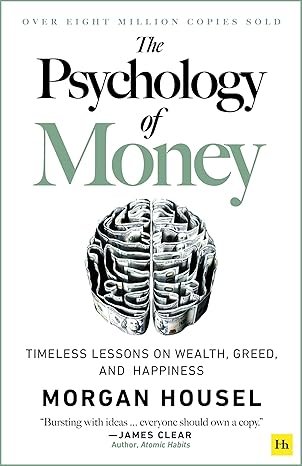
If there’s one book on this list you read before any other, make it this one.
Morgan Housel spent years as a columnist at The Wall Street Journal and The Motley Fool watching smart people make terrible financial decisions — and average people quietly build extraordinary wealth. His conclusion: success with money has less to do with intelligence or technical skill, and almost everything to do with behavior.
The Psychology of Money is structured as 19 short chapters, each built around a story that illustrates how our emotions, biases, and personal history shape financial decisions far more than any formula or spreadsheet. Housel explores why someone with a modest income and no financial education can retire wealthy while a Wall Street analyst with a Harvard MBA goes bankrupt — and what separates the two.
The lessons are practical without being prescriptive. Housel doesn’t tell you which stocks to buy. He shows you how to think about risk, wealth, luck, and time in ways that make every other financial decision cleaner and more rational.
Key insight: Doing well with money isn’t about being the smartest person in the room. It’s about maintaining the right behavior consistently over time — saving when others spend, holding when others panic, and avoiding the mistakes that compound as badly as wealth does.
Why it’s on every list: Published in 2020, it’s already the most recommended personal finance book of the decade. With over 4 million copies sold and a rating of 4.29 on Goodreads from nearly 300,000 readers, it has reached a kind of consensus among investors that few books achieve in their first five years.
👉 Buy on Amazon: https://amzn.to/4aTLW5h
2. The Intelligent Investor — Benjamin Graham
Best for: Anyone serious about value investing. Published: 1949 (revised editions through 2006)
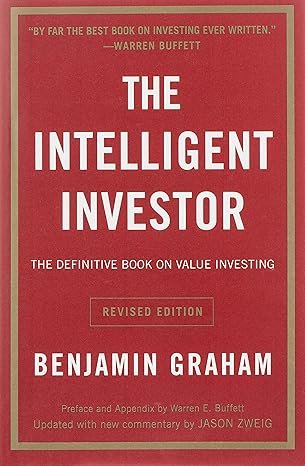
Warren Buffett has called this “by far the best book about investing ever written.” That alone should be enough. But the reason The Intelligent Investor has remained essential for over seven decades goes beyond the endorsement.
Benjamin Graham — Buffett’s mentor and the father of value investing — makes a fundamental distinction that most investors never fully grasp: the difference between investing and speculating. An investor, in Graham’s framework, analyzes a business, demands a margin of safety, and focuses on long-term value. A speculator follows price movements and market sentiment. The book is a guide to becoming — and remaining — the former, no matter what markets are doing.
The core concepts Graham introduces are still the bedrock of serious stock analysis: intrinsic value, margin of safety, Mr. Market (the allegorical figure who offers to buy or sell your shares every day at varying prices, and whose moods you should exploit rather than follow). The 2006 revised edition includes commentary from journalist Jason Zweig that updates each chapter with modern examples, making the dense original text far more accessible.
Fair warning: this is not a light read. Some chapters are dry by modern standards. But for anyone who wants to understand why the discipline of value investing has produced so many successful investors over so many decades, there is no substitute.
Key insight: The stock market is a voting machine in the short run and a weighing machine in the long run. Focus on weight, not votes.
👉 Buy on Amazon: https://amzn.to/3SgWTYp
3. A Random Walk Down Wall Street — Burton G. Malkiel
Best for: New and intermediate investors who want to understand market theory Published: 1973 (updated through 2023 — 13th edition)
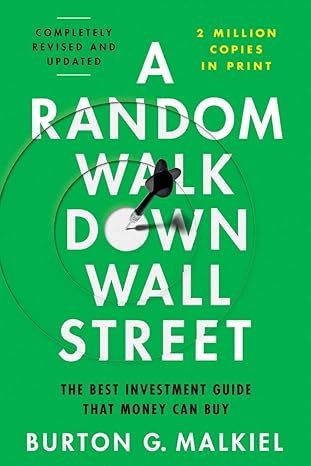
If The Intelligent Investor teaches you to be a disciplined value investor, A Random Walk Down Wall Street makes a compelling argument that most investors — professional or otherwise — would be better off not trying to pick stocks at all.
Burton Malkiel, an economist and professor at Princeton, builds an evidence-based case that stock prices follow a random walk: past price movements contain no useful information about future prices, and therefore, active attempts to beat the market tend to underperform simple, low-cost index investing over time. He surveys every major investment approach — technical analysis, fundamental analysis, growth investing, behavioral theories — and examines the empirical track record of each.
The book isn’t purely academic, though. Malkiel devotes significant space to practical guidance: how to build a diversified portfolio for different life stages, how to evaluate risk, and why the fees on actively managed funds matter more than most investors realize. He also addresses modern additions to the landscape — cryptocurrency, NFTs, meme stocks — with the same evidence-based skepticism.
Now in its 13th edition, this remains one of the most data-rich arguments for passive investing ever written. It’s the intellectual foundation for the index fund movement that John Bogle later turned into Vanguard.
Key insight: Most people who try to beat the market fail over the long run. The most reliable strategy is to capture the market’s return through low-cost index funds and let time do its work.
👉 Buy on Amazon: https://amzn.to/4oNOS9t
4. The Little Book of Common Sense Investing — John C. Bogle
Best for: Beginners who want a short, clear answer Published: 2007
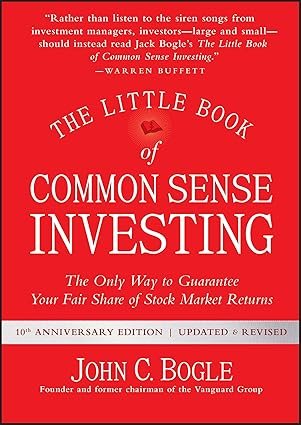
John Bogle founded Vanguard and created the first retail index fund available to ordinary investors. This book is his clearest, most direct argument for why that innovation matters — and why it remains the most reliable path to long-term wealth for most people.
In fewer than 300 pages, Bogle makes his case with simple math: the stock market delivers an average annual return over long periods. Every dollar paid in fees and transaction costs is a dollar that doesn’t compound. Over 30 years, the difference between a 0.05% expense ratio and a 1% expense ratio — on the same underlying investment — can amount to hundreds of thousands of dollars in lost wealth. Low-cost index funds win not because they are clever, but because they stop money from leaking out.
Bogle backs every argument with data and historical returns. He doesn’t ask you to trust him — he shows you the numbers. Warren Buffett has said that when he dies, he’s leaving instructions for the trustee managing money for his wife to put 90% of it in a low-cost S&P 500 index fund. Bogle’s book is the best explanation of why.
Key insight: The simplest investment strategy — buy a low-cost total market index fund, contribute consistently, and don’t touch it — outperforms the vast majority of active strategies over any meaningful time horizon.
👉 Buy on Amazon: https://amzn.to/4g1hE4h
5. Rich Dad Poor Dad — Robert Kiyosaki
Best for: Absolute beginners — especially those who’ve never thought about money systematically. Published: 1997
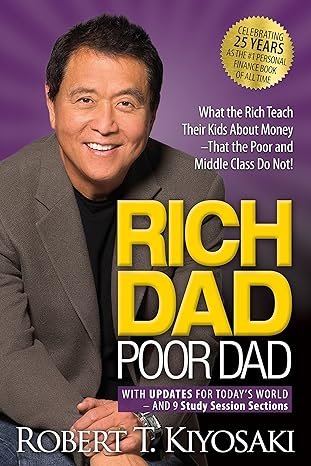
No list of investing books is complete without this one, and for good reason: Rich Dad Poor Dad is the book that makes people realize they need to think about money differently before they can do anything useful with it.
Kiyosaki’s central argument is straightforward: most people spend their working lives buying liabilities they think are assets, and never build wealth as a result. His “rich dad” — his best friend’s father — taught him the difference between an asset (something that puts money in your pocket) and a liability (something that takes money out). The family home, new cars, and consumer debt are liabilities. Businesses, investments, and income-generating real estate are assets. The path to financial independence is to accumulate assets.
The book is light on specifics and heavier on mindset — and that’s precisely its value. Rich Dad Poor Dad doesn’t tell you which index fund to buy. It tells you why you need to start thinking about building wealth at all, and why trading time for money indefinitely is a trap most people never escape.
It’s worth noting that some of Kiyosaki’s specific advice has attracted criticism from financial professionals, and the book takes some liberties with its personal narrative. Read it as a mindset primer, not a technical manual, and it delivers exactly what it promises.
Key insight: Financial freedom comes from building assets that generate income, not from earning a higher salary and spending it.
👉 Buy on Amazon: https://amzn.to/4xJtczu
6. One Up On Wall Street — Peter Lynch
Best for: People interested in stock picking who want a readable, practical approach Published: 1989
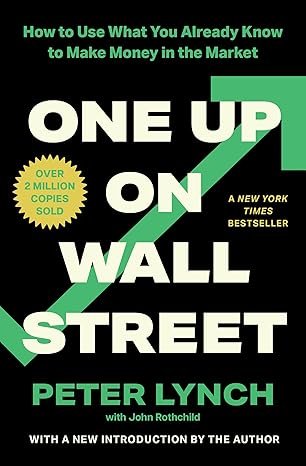
Peter Lynch ran the Fidelity Magellan Fund from 1977 to 1990 and delivered an average annual return of 29.2% — one of the greatest track records in investment management history. One Up On Wall Street is his account of how he did it, written in a conversational style that makes it one of the most readable books on this list.
Lynch’s central argument is counterintuitive: individual investors have an edge over professional fund managers because they live in the real world. A fund manager managing billions is constrained by position size limits, redemption risk, and the need to explain every holding to clients. An individual investor can buy a small company no one has heard of, hold it for five years through volatility that would terrify an institutional manager, and walk away with extraordinary returns. Lynch calls these opportunities “ten-baggers” — stocks that return ten times the purchase price.
The book walks through Lynch’s framework for evaluating companies: what to look for, what to avoid, how to categorize different types of businesses, and how to think about price relative to earnings. It’s practical, funny, and accessible without being dumbed down.
Key insight: Your best investment ideas often come from your own life. The stores you love, the products you use, the services your employer uses — these are starting points for research, not final answers.
👉 Buy on Amazon: https://amzn.to/43PNucP
7. The Simple Path to Wealth — JL Collins
Best for: Anyone pursuing financial independence or long-term wealth building Published: 2016]
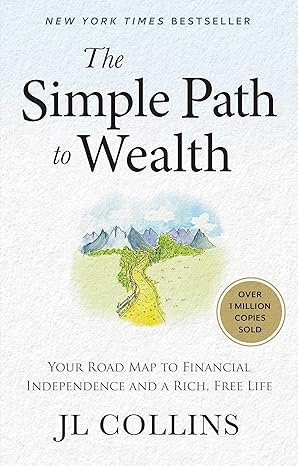
JL Collins started writing a series of letters to his daughter about money and investing. Those letters became a popular blog series, and the blog became this book. The result is one of the most straightforward, no-nonsense guides to building wealth ever written.
Collins’s philosophy is disarmingly simple: invest in a total stock market index fund (he recommends VTSAX, Vanguard’s Total Stock Market Index Fund), add to it consistently, hold through market drops without selling, and let decades of compounding do the work. That’s essentially the whole book — but Collins builds the argument with enough clarity, evidence, and storytelling that readers come away genuinely convinced rather than just told.
What sets The Simple Path to Wealth apart from other passive investing books is its tone. Collins writes like a friend who figured something out and wants to share it — not a financial professional covering his liability with caveats. He addresses volatility directly, explaining why market drops are not catastrophes but opportunities for consistent investors. He covers the accumulation phase, the withdrawal phase (the “4% rule” for retirement spending), and the psychology of staying the course.
This book has become the cornerstone of the FIRE (Financial Independence, Retire Early) community and has converted thousands of people from anxious market-watchers to calm, patient investors.
Key insight: Complexity is the enemy of wealth. One fund, consistent contributions, and time will outperform most elaborate strategies.
👉 Buy on Amazon: https://amzn.to/4gtCwRE
8. The Millionaire Next Door — Thomas J. Stanley & William D. Danko
Best for: Anyone who thinks wealth looks like luxury. Published: 1996
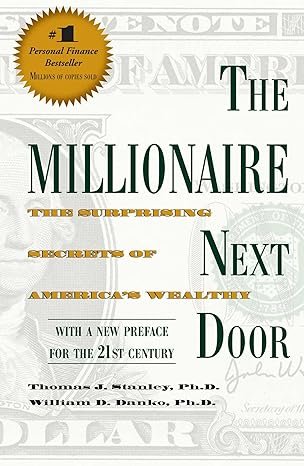
Based on decades of research into the habits and lifestyles of America’s wealthy, The Millionaire Next Door delivers a finding that surprises almost everyone who encounters it: most millionaires don’t look like millionaires.
Stanley and Danko studied thousands of people with high net worth and found that the typical American millionaire drives a used car, lives in a modest house, shops at ordinary stores, and has built wealth quietly over decades through disciplined saving and investing — not through high income or flashy success. The “prodigious accumulator of wealth” (PAW, in their terminology) is frugal, self-employed or professionally independent, avoids status spending, and invests consistently. The “under-accumulator of wealth” (UAW) earns well, spends more, and has almost nothing saved.
The book is essentially a research-based argument that the lifestyle most people associate with wealth — luxury cars, designer goods, expensive restaurants — is precisely what prevents most people from becoming wealthy.
Key insight: Building wealth and displaying wealth are opposite behaviors. The people who look rich often aren’t; the people who are rich often don’t look it.
👉 Buy on Amazon: https://amzn.to/4oLKqrW
9. Think and Grow Rich — Napoleon Hill
Best for: Readers focused on the mindset and motivation behind financial success Published: 1937
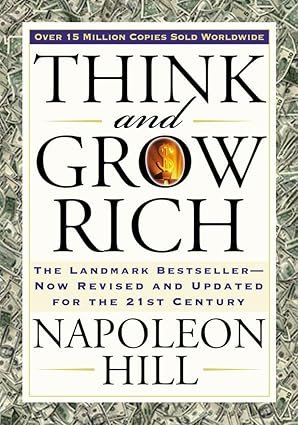
Think and Grow Rich is one of the best-selling books of all time — over 100 million copies — and its influence on personal finance, entrepreneurship, and investing is enormous. Hill spent 20 years studying the habits of successful people, including Andrew Carnegie, Henry Ford, and Thomas Edison, and distilled his findings into a set of principles around desire, belief, persistence, and decision-making.
It’s worth being clear about what this book is and isn’t. It’s not a technical investing guide. It doesn’t tell you about index funds or margin of safety. What it does — better than almost anything else — is address the psychological preconditions for financial success: the clarity of purpose, the willingness to persist through failure, and the mindset that separates people who take action from those who don’t.
For many readers, this is the book that motivated them to start — to open that brokerage account, to begin reading the other books on this list, to take their financial future seriously for the first time. That makes it worth including regardless of what more technical readers might think of its methodology.
Key insight: A clear, specific financial goal — held with conviction and pursued with persistence — is the foundation every other strategy is built on.
👉 Buy on Amazon: https://amzn.to/4oGki1p
10. Principles: Life and Work — Ray Dalio
Best for: Advanced investors and systematic thinkers. Published: 2017
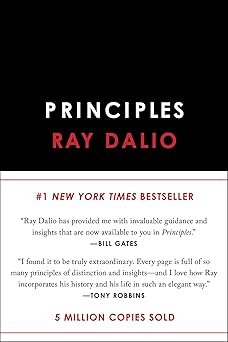
Ray Dalio founded Bridgewater Associates, the world’s largest hedge fund, and Principles is his account of how he thinks about decision-making, risk, failure, and systematic investing.
The book is structured in two parts: life principles and work principles. The first covers Dalio’s philosophy of radical transparency, learning from mistakes, and building an “idea meritocracy” — an environment where the best ideas win regardless of who holds them. The second covers how those principles translate into the management of Bridgewater and, by extension, how to approach any complex problem systematically.
For investors, the most valuable sections deal with Dalio’s approach to risk management: his “Holy Grail of Investing” concept (finding 15 or more uncorrelated return streams to reduce risk without sacrificing return) and his thinking about economic cycles — how debt, credit, and productivity interact to create the patterns markets move through.
This is a denser read than most on this list, and it’s best approached after the foundational books. But for anyone who wants to understand how one of the most successful investors in history thinks about uncertainty and decision-making under pressure, there is nothing quite like it.
Key insight: Understanding how the economic machine works — its cycles, its levers, its patterns — is as important as understanding individual investments.
👉 Buy on Amazon: https://amzn.to/3QPPNcY
11. Common Stocks and Uncommon Profits — Philip A. Fisher
Best for: Investors interested in growth companies and qualitative analysis. Published: 1958
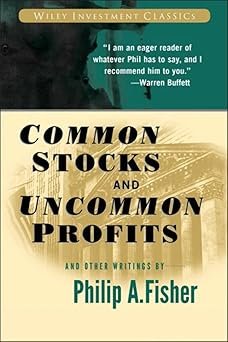
If Graham is the father of value investing, Philip Fisher is the intellectual godfather of growth investing. Common Stocks and Uncommon Profits introduced the qualitative approach to stock analysis — evaluating companies based on the quality of their management, the strength of their competitive position, and their capacity for sustained growth, not just their current earnings multiple.
Fisher’s most famous contribution is the “scuttlebutt” method: talking to competitors, suppliers, customers, and former employees to build a picture of a company’s real competitive advantages and management quality — information that rarely appears in financial statements. His framework for evaluating whether a company is worth buying (the “15 points”) remains a practical checklist decades after it was written.
Warren Buffett has described his investment approach as “85% Graham and 15% Fisher.” Reading both back-to-back gives you a more complete picture of how value and growth thinking can work together.
Key insight: The most important qualities of a great investment — management integrity, competitive moat, research capability — don’t show up in balance sheets. You have to find them by asking the right questions.
👉 Buy on Amazon: https://amzn.to/4xEPceE
12. The Most Important Thing — Howard Marks
Best for: Advanced investors focused on risk management and contrarian thinking. Published: 2011
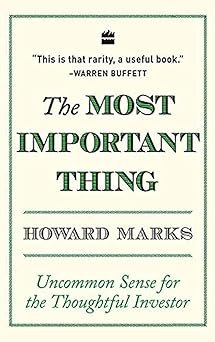
Howard Marks co-founded Oaktree Capital Management and is known in investment circles for his “memos” — regular letters to clients that have been circulated and studied for their clarity of thinking about risk, market cycles, and investor behavior. The Most Important Thing is essentially a distillation of those memos into book form.
The title is a running structural device: each chapter identifies something that is “the most important thing” in investing — understanding market cycles, recognizing the role of luck, managing risk, maintaining contrarian thinking, knowing your limits. The repetition is intentional; Marks is making the point that none of these factors can be optimized in isolation. All of them matter, and the investor who masters all of them has a genuine edge.
Marks is especially good on the subject of risk. He argues that investment risk is not volatility (the standard academic definition) but the probability of permanent loss of capital — a distinction with enormous practical implications for how portfolios are built and managed. His writing on when to be aggressive and when to be cautious (based on where we are in market cycles) is among the most useful frameworks for navigating uncertainty that exists in investment literature.
Key insight: Risk management is not about avoiding risk but about understanding it, pricing it correctly, and ensuring you’re compensated for taking it.
👉 Buy on Amazon: https://amzn.to/4eAn18b
How to Build Your Reading Order
If you’re new to investing and want a reading path rather than a list, here’s how the team at Investing Time Daily would sequence these:
Start with mindset (books 1, 5, 9): The Psychology of Money, Rich Dad Poor Dad, and Think and Grow Rich don’t require any prior financial knowledge. They build the mental foundation every other book assumes you have.
Then build your strategy (books 2, 3, 4, 7): The Intelligent Investor, A Random Walk Down Wall Street, The Little Book of Common Sense Investing, and The Simple Path to Wealth give you the frameworks. By the end of these four, you’ll understand value investing, passive investing, and why the simplest strategies usually win.
Then go deeper (books 6, 8, 11, 12): One Up On Wall Street, The Millionaire Next Door, Common Stocks and Uncommon Profits, and The Most Important Thing are for readers who want more nuance — in stock analysis, in lifestyle choices, in qualitative research, in risk management.
Then read Dalio (book 10): Principles rewards readers who already have context. Save it for when you’ve built a foundation.
Put the Books Into Practice
Reading about investing is the first step. The second is running the numbers on your own situation. Our free tools let you do exactly that — no sign-up required.
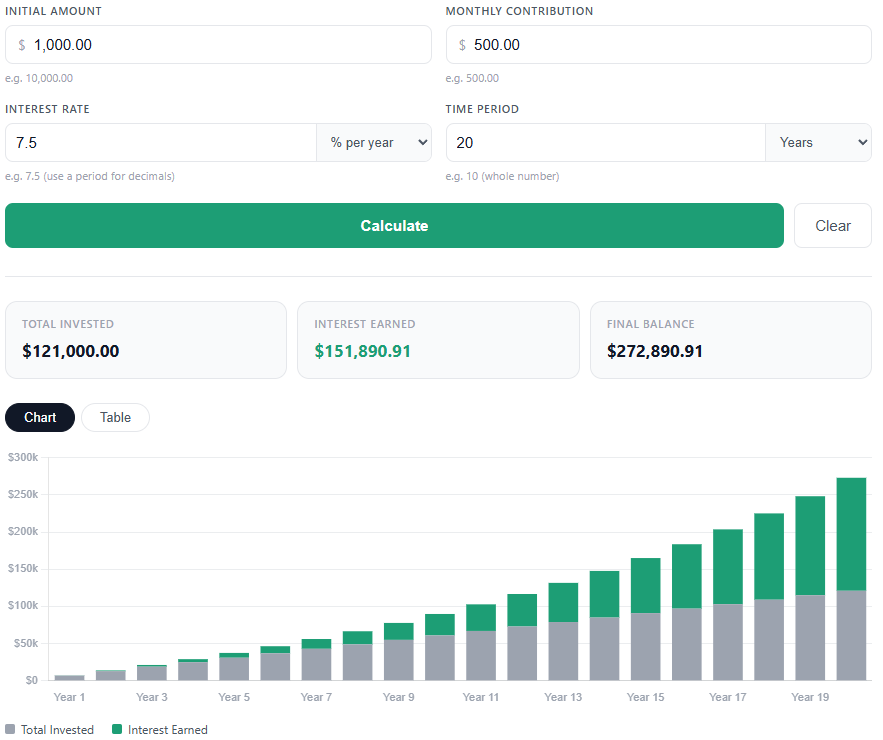
Use the Compound Interest Calculator to see what consistent monthly investing actually looks like over 10, 20, or 30 years. Plug in the rate of return assumptions you’ve read about — 7%, 10%, 12% — and watch the difference that compounding and time make.
Frequently Asked Questions
What is the best book about investing for beginners? The Psychology of Money by Morgan Housel is the strongest starting point for most readers — it requires no prior knowledge, is genuinely engaging, and addresses the behavioral foundations that make every other investment strategy more or less effective. After that, The Little Book of Common Sense Investing by John Bogle gives you a clear, evidence-based strategy in under 300 pages.
What is the single most important investing book ever written? Most professionals would say The Intelligent Investor by Benjamin Graham. Warren Buffett has described it as the best investing book ever written, and the concepts it introduced — intrinsic value, margin of safety, Mr. Market — remain the foundation of serious fundamental investing more than 70 years later.
Is The Psychology of Money worth reading? Yes — for almost anyone, regardless of investment experience. It’s particularly valuable because it addresses the behavioral and psychological dimensions of wealth that most technical books ignore, and it does so through stories rather than formulas. It’s among the highest-rated personal finance books on Goodreads and has sold over 4 million copies since its 2020 release.
How many investing books should I read before I start investing? You don’t need to read any books before you start — the best time to begin investing is now, even if you invest only a small amount while you continue learning. In practice, reading The Psychology of Money and The Little Book of Common Sense Investing before making significant decisions gives you enough framework to avoid the most common and costly mistakes.
Are old investing books like The Intelligent Investor still relevant? Yes. The behavioral principles in The Intelligent Investor (1949), Common Stocks and Uncommon Profits (1958), and A Random Walk Down Wall Street (1973) remain as applicable today as when they were written — because human psychology hasn’t changed, and markets are still driven by the same fear and greed cycles they always have been. The specific examples are dated; the principles are not.
What’s the difference between investing books for beginners and advanced investors? Beginner books focus on mindset, simple strategy, and foundational principles — Rich Dad Poor Dad, The Psychology of Money, The Little Book of Common Sense Investing. Advanced books assume you already understand the basics and go deeper into analysis, risk management, and nuanced thinking — The Most Important Thing, Principles, Common Stocks and Uncommon Profits. Our comparison table at the top of this article maps every book by audience.
Do I need to read all 12 books? No. Start with two or three that match where you are right now. The reading order section above gives you a logical path. Many serious investors return to the same handful of books repeatedly rather than reading dozens of new ones — deep understanding of a few core texts tends to be more valuable than surface familiarity with many.
Sources and Further Reading
- Goodreads — Reader ratings and reviews for all titles listed: https://www.goodreads.com
- U.S. News Money — Best Investing Books for Beginners (updated Feb 2026): https://money.usnews.com/investing/articles/best-investing-books-for-beginners
- InvestmentNews — Essential reading: Best investing books: https://www.investmentnews.com/guides/the-best-investing-books-essential-reads-for-every-investor/252796
- Morningstar — 2026 Reading List for Investors: https://global.morningstar.com
- Warren Buffett’s Letters to Shareholders — Berkshire Hathaway: https://www.berkshirehathaway.com/letters/letters.html
- Investing Time Daily — Compound Interest Calculator: investingtimedaily.com/calculators/compound-interest-calculator-free/
Disclosure: This post may contain affiliate links. If you buy through these links, we may earn a small commission at no extra cost to you.