In the early 2010s, cryptocurrency was a niche experiment for cryptographers. By 2026, it has become a trillion-dollar asset class, a cornerstone of institutional portfolios, and the technological “rails” for the next generation of global finance.
But beneath the headlines of “Digital Gold” and market volatility, what is actually happening?
The Simple Definition: What is Cryptocurrency?
A cryptocurrency is a digital or virtual currency that is secured by cryptography, making it nearly impossible to counterfeit or double-spend.
Unlike the US Dollar or the Euro, most cryptocurrencies are decentralized networks based on blockchain technology—a distributed ledger enforced by a global network of computers rather than a central bank or government.
How Does It Work? (The 3 Pillars)
To understand crypto, you must understand the three components that make it functional:
- The Blockchain: A digital “ledger” that records every transaction ever made. It is transparent, permanent, and cannot be edited by any single person.
- Cryptography: Advanced mathematical “locks” that ensure only the owner of a digital wallet can send their coins.
- Consensus Mechanisms: This is how the network agrees a transaction is valid. In 2026, the two primary methods are Proof of Work (mining, used by Bitcoin) and Proof of Stake (staking, used by Ethereum).
The 2026 Hierarchy: Not All Coins Are Equal
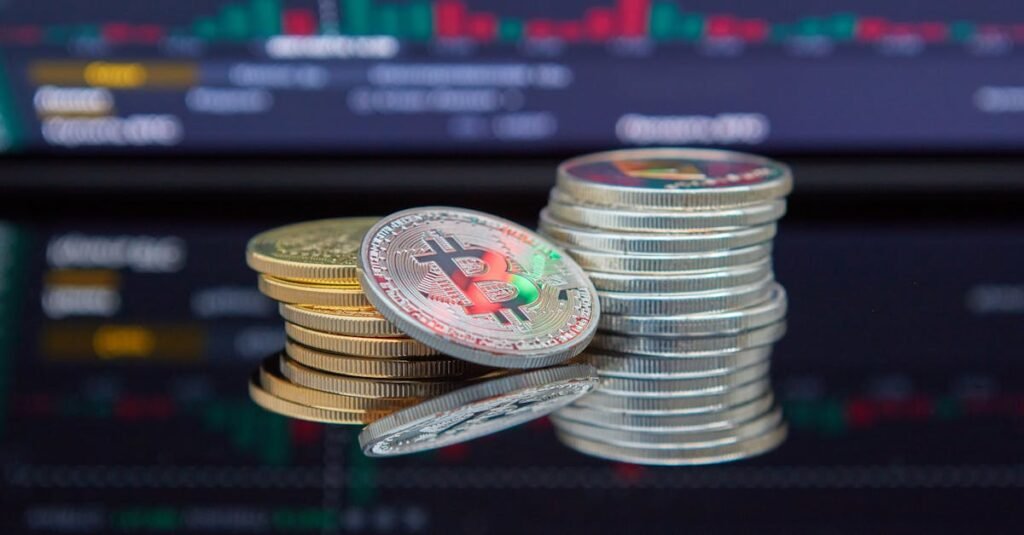
The “Crypto” umbrella covers thousands of assets, but they generally fall into three categories:
- Store of Value (Digital Gold): Bitcoin (BTC) remains the leader here. Its value comes from its absolute scarcity (only 21 million will ever exist).
- Smart Contract Platforms: Ethereum (ETH) and its competitors. These are “programmable money” used to build apps, NFTs, and RWA (Real-World Assets).
- Stablecoins: Digital assets pegged to a stable reserve, like the US Dollar (e.g., USDC). These provide the benefits of crypto speed without the price volatility.
Cryptocurrency vs. Traditional Money
| Feature | Cryptocurrency | Traditional (Fiat) Money |
| Issuance | Capped by code (Decentralized) | Issued by Central Banks (Centralized) |
| Transaction Speed | Instant to minutes (Global) | Days for international (Local) |
| Transparency | Publicly viewable on ledger | Private bank records |
| Security | Cryptographic proof | Legal and physical enforcement |
The Risk & Psychology of Crypto
Following the principles of high-performance wealth, crypto should be viewed through the lens of asymmetric risk.
While the potential for growth is high, the volatility is significant. As Morgan Housel notes in The Psychology of Money, the goal is to “stay in the game.” In 2026, many investors achieve this through Spot ETFs, which provide the price exposure of Bitcoin or Ethereum without the technical burden of managing private keys and digital wallets.

How to Approach Crypto in 2026
- Education First: Never invest in what you don’t understand.
- Use Regulated Rails: Utilize established brokerages or Spot ETFs for security.
- Think Long-Term: Treat crypto as a technology play, not a “get rich quick” scheme.
Affiliate notice: To better understand the cycles of innovation and wealth, we recommend reading “Same as Ever” by Morgan Housel and “The Simple Path to Wealth” by JL Collins. These foundational texts help you navigate market noise with a calm, high-performance mindset. (Links provided may be affiliate links).
Educational Disclosure: The information provided in this article is for educational purposes only and is not financial advice. Cryptocurrency is a highly volatile asset class. Never invest money you cannot afford to lose. We recommend consulting a financial professional to see how digital assets fit into your specific “Simple Path to Wealth” strategy.
ALSO WATCH
Frequently Asked Questions (FAQ)
1. Is cryptocurrency “real” money? While it differs from government-issued “fiat” currency, cryptocurrency functions as money because it serves as a medium of exchange, a unit of account, and a store of value. In 2026, major retailers and institutional platforms treat digital assets like Bitcoin as a legitimate form of capital.
2. Is it safe to invest in cryptocurrency? Cryptocurrency is a high-risk, high-reward asset. While the blockchain itself is extremely secure, the “safety” depends on how you store your assets. Using regulated Spot ETFs or hardware wallets (cold storage) is considered the gold standard for security. Never share your private keys or “seed phrase” with anyone.
3. How is cryptocurrency taxed? In most jurisdictions, cryptocurrency is treated as property rather than currency. This means every time you sell or trade a coin for a profit, you may be liable for capital gains tax. It is essential to keep detailed records of your “cost basis” for every transaction.
4. What is the difference between Bitcoin and an Altcoin? Bitcoin (BTC) was the first cryptocurrency and is primarily viewed as “Digital Gold.” An “Altcoin” (Alternative Coin) is any cryptocurrency other than Bitcoin. This includes Ethereum, which acts as a global software platform, and Stablecoins, which are pegged to the dollar.
5. Can I lose all my money in crypto? Yes. Because the market is decentralized and highly volatile, prices can drop significantly in a short period. This is why a high-performance wealth strategy emphasizes diversification. Most experts recommend limiting crypto exposure to a small percentage of your total portfolio, as part of a Simple Path to Wealth plan.
6. What is “Mining” vs. “Staking”?
- Mining (Proof of Work): Computers solve complex puzzles to secure the network (used by Bitcoin).
- Staking (Proof of Stake): Owners “lock up” their coins to validate transactions and earn rewards (used by Ethereum). Staking is significantly more energy-efficient and is the dominant model in 2026.
Sources & References
Primary Research & Industry Reports:
- PwC (PricewaterhouseCoopers): Bitcoin, Blockchain, and Cryptocurrency – Financial Services Technology.
- ScienceDirect: Cryptocurrency: Overview and Computer Science Applications.
- SUNY Oswego: Basics About Cryptocurrency – Campus Technology Services.
- Wikipedia: Cryptocurrency – Historical and Technical Overview.