
How Sarah Friar Plans to Fund the AI Revolution—and Why Your Business Should Pay Attention
The $50 Billion Question Everyone’s Asking
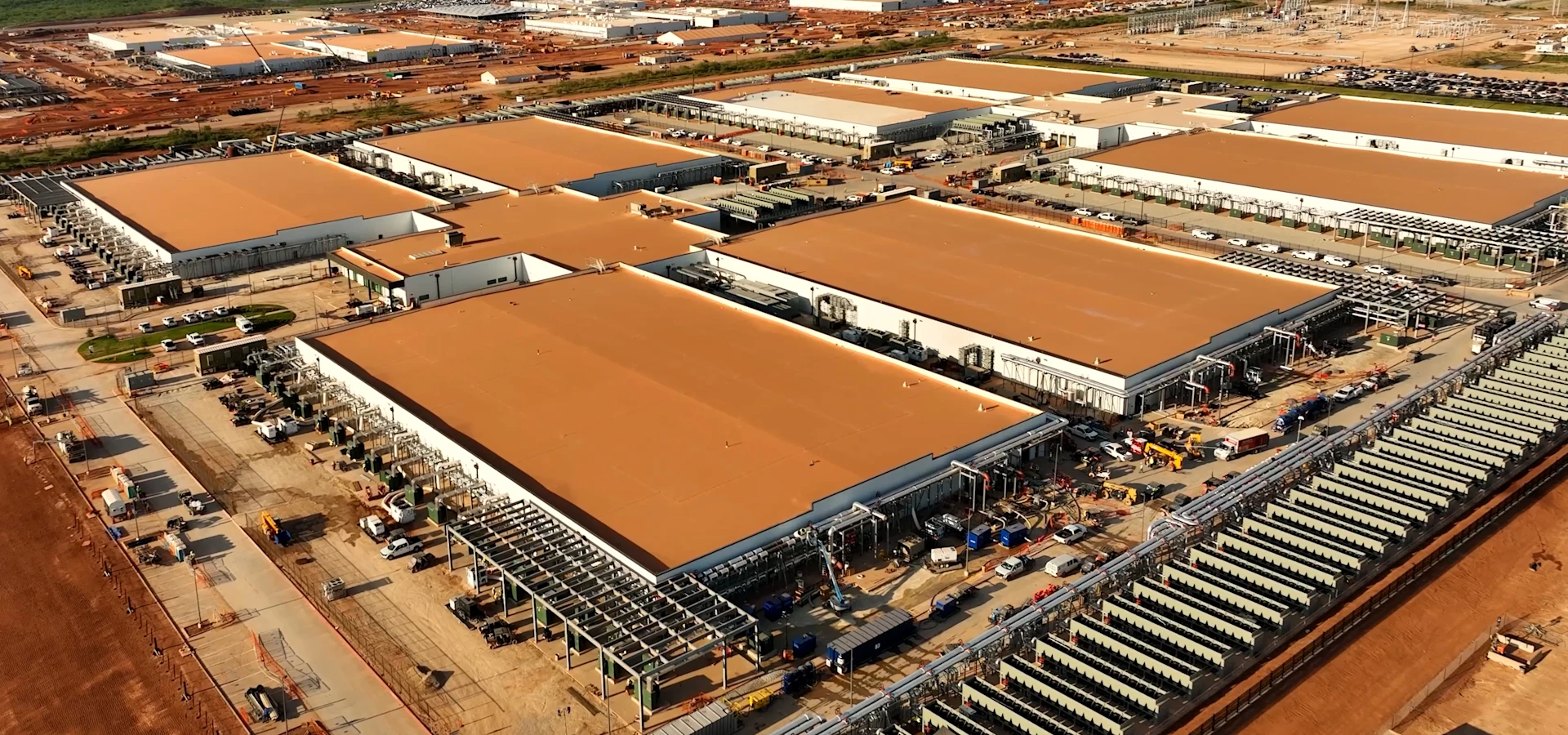
In a candid interview with the Wall Street Journal yesterday, OpenAI’s Chief Financial Officer Sarah Friar pulled back the curtain on one of tech’s most closely guarded secrets: the true cost of building artificial intelligence infrastructure, revealing that a single one-gigawatt data center requires approximately $50 billion in investment.
To put that in perspective? That’s equivalent to the entire power consumption of Ireland, which uses six to seven gigawatts. And OpenAI isn’t building just one.
If you’re an investor, business leader, or tech enthusiast trying to understand where AI is heading, this interview is a masterclass in the economics of the intelligence revolution. Let’s break down the insights that matter most.
The Revenue Explosion Nobody Saw Coming
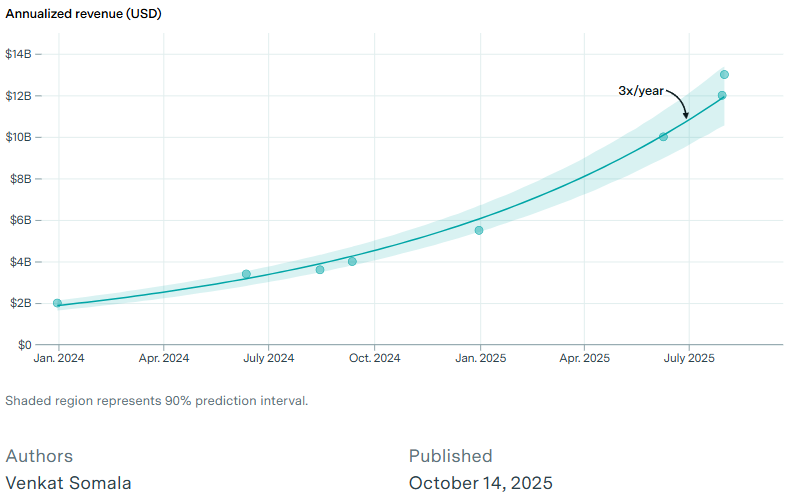
OpenAI’s revenue journey tells an extraordinary story: from $1 billion two years ago to $4 billion last year, and now tracking toward $13 billion this year. That’s not just growth—that’s a paradigm shift in how quickly AI companies can scale.
But here’s what’s even more interesting: the business is rapidly shifting from consumer-focused (70% of revenue at the start of the year) to enterprise-driven, now approaching a 60-40 split, with the enterprise segment growing approximately 9X year-over-year.
What This Means for You
If you’re running a business, this shift signals something critical: AI adoption has moved from experimentation to production. OpenAI just announced hitting 1 million enterprise customers on their platform, and companies aren’t just testing anymore—they’re transforming core operations.
The Compute Crisis: Why Your Favorite AI Features Are Stuck
Here’s something Friar admitted that should worry—and excite—everyone: OpenAI is massively compute-constrained, meaning they cannot roll out new models when ready, with products like Sora 2 facing six to seven month delays between completion and launch.
Think about that. The technology exists. It works. But they physically cannot deploy it because they don’t have enough computing power.
Features like “Pulse”—a personalized daily AI briefing that analyzes your calendar, Slack, and past searches to proactively work for you overnight—are currently limited to the $200/month Pro tier solely due to compute constraints, not pricing strategy.
The Innovation Being Left on the Table
Friar painted a vivid picture: comparing AI’s current state to the moment electricity first lit homes, she argues we’ve only “turned on the lights” but haven’t yet thought about heating homes, running appliances, or the countless other applications electricity enables.
Translation: We’re at 1% of what’s possible.
How They’re Actually Paying for All This
The financial engineering happening behind the scenes is fascinating. OpenAI recently completed a full recapitalization, transforming into OpenAI PBC (Public Benefit Corporation) as their for-profit entity while simultaneously creating the OpenAI Foundation, potentially one of the largest nonprofits ever established.
But here’s where it gets creative:
The New Model: Alignment Through Warrants
OpenAI structured an innovative warrant deal with AMD where, when companies announce partnerships with OpenAI and see immediate stock price impacts, OpenAI receives aligned compensation through warrant structures.
It’s brilliant: If your company benefits from associating with OpenAI, OpenAI shares in that upside. Win-win alignment.
The Truth About AI and Jobs (It’s Not What Headlines Say)
Let’s address the elephant in the room: Will AI take your job?
Friar’s answer is nuanced and backed by real data. Rather than eliminating positions, she’s observing AI augmenting workforces, with recent Wharton studies showing that junior roles aren’t disappearing but becoming more refined and insight-focused.
A Real Example from OpenAI’s Own Finance Team
Friar described how her team replaced mundane “flux analysis” work—where junior accountants manually compare actual vs. planned expenses across hundreds of line items—with AI agents that automatically identify anomalies, cross-reference Slack conversations and meeting notes, and surface only insight-worthy items requiring human judgment.
The result? Accountants spend less time being “historians of the company” and more time having strategic conversations about business acceleration.
Key insight: The jobs aren’t disappearing; they’re moving from backward-looking analysis to forward-looking insights.
Enterprise AI: The Use Cases That Actually Matter
Friar shared two compelling enterprise examples that demonstrate AI’s real-world impact:
1. Accelerating Drug Approvals at Amgen
Amgen is using OpenAI’s technology to speed up FDA approval processes by weeks or even months, which could literally be the difference between a cancer patient accessing a life-saving drug in time or not.
When you frame it that way, the stakes become crystal clear.
2. Walmart’s Merchandising Revolution
Walmart is deploying OpenAI technology both externally (through commerce integration) and internally for merchandising decisions and risk management, going “very deep, very fast”.
These aren’t pilot programs. These are production deployments at scale.
The Privacy Question: Should You Hand Over Your Data?
As AI becomes more personalized—reading your calendar, Slack, emails, documents—the privacy question looms large.
Friar’s response focuses on enterprise security architecture: all data access operates within enterprise security protocols using SSO (Single Sign-On), meaning users only access information they’re already authorized to see, with no training on customer data and no data leaving enterprise boundaries.
The fact that OpenAI works with clients like the US Army should signal the security standards they’ve had to meet.
What Actually IS AGI? The Official Definition
Here’s something most people don’t know: OpenAI has a specific, measurable definition of Artificial General Intelligence (AGI).
OpenAI defines AGI as the point where models become capable of performing the majority of economically valuable work, measured through their “GDP eval” framework that analyzes all economic sectors, maps work by job type, and calculates whether AI models can perform or accelerate that work.
But Friar adds an important caveat: beyond wonky data definitions, they need to bring humanity along the journey so people feel the breakthrough is genuinely changing their lives.
The Business Model Evolution: Beyond Subscriptions
OpenAI started with a simple subscription model because nobody expected ChatGPT to reach 800 million weekly active users in just over two years—making it the fastest-growing consumer app in history.
Now they’re evolving with multiple revenue streams:
1. API Access for developers
2. Enterprise subscriptions (ChatGPT wall-to-wall deployments)
3. Value-based pricing through credits
4. Transformational research deals
The most interesting model: partnering deeply with customers in domains like tech, materials science, and healthcare where breakthroughs (like discovering new drug compounds) have massive value, allowing OpenAI to share in value creation beyond simple per-token pricing.
Commerce Without Compromising Truth
OpenAI’s commerce feature emerged from observing users conduct deep research on purchases (cars, baby strollers, coffee pots) but being unable to complete transactions in-app, so they integrated purchasing while maintaining their “north star”: always provide the best answer, never the sponsored answer.
Market Bubble or Real Revolution?
With AI stocks volatile and massive spending announcements weekly, is this sustainable?
Friar rejects concerns about circularity in the AI ecosystem (where partners invest in each other), arguing it’s simply the natural build-out of infrastructure required for AI to advance, comparing it to any other industry’s supply chain development.
Her favorite market philosophy: quoting Benjamin Graham, she notes that “in the short run, the market can be a popularity machine; in the long run, it’s a weighing machine,” emphasizing her job is ensuring OpenAI has substantive weight when measured.
The CFO’s Perspective on Profitability
OpenAI deliberately isn’t focused on breaking even today because the underlying business has healthy software-like gross margins, meaning they could reach profitability by pulling back investments, but they’re choosing hypergrowth while the opportunity is massive.
This isn’t recklessness—it’s mission alignment, as a Public Benefit Corporation building an AI ecosystem “for the benefit of the world”.
The Hardware Future: What’s Coming Next
Friar confirmed OpenAI is working on a new device with legendary Apple designer Jony Ive, though she (wisely) revealed almost nothing about it.
What she did say is revealing: every era of computing brings new hardware substrates—PCs for early internet, mobile phones for mobile computing—and in a multimodal AI world, current devices aren’t optimized for how these models actually work (voice, vision, audio), leading to what she calls “looking down and talking with your thumbs” instead of natural interaction.
The goal: opening technology to people currently shut out, like her visually impaired mother who can’t read family text messages but can speak to ChatGPT through voice interaction.
The Numbers That Should Wake You Up
Let’s consolidate the scale we’re talking about:
- $50 billion per one-gigawatt data center
- $15 billion for land, power, and shell
- $35 billion for frontier chips alone
- OpenAI will end 2025 at about 2 gigawatts, up from 200 megawatts just two years ago—a 10X increase
- They need to potentially 10X again to 20 gigawatts in the next two years
- 800 million weekly active ChatGPT users
- 1 million enterprise customers
- 9X year-over-year enterprise revenue growth
These aren’t incremental improvements. This is exponential transformation.
The Bottom Line
Sarah Friar’s interview reveals something profound: we’re not in an AI bubble. We’re in the early stages of a fundamental economic and technological transformation that will touch every industry, job, and aspect of human life.
The infrastructure being built today—the $50 billion data centers, the country-sized power deployments, the new financial instruments—these aren’t signs of excess. They’re the foundation being laid for what Friar calls “the age of intelligence.”
The lights have just turned on. We haven’t yet imagined all the applications.
The question isn’t whether this transformation is happening. The question is: Are you ready for it?
Take Action Today
Want to stay ahead of the AI revolution?
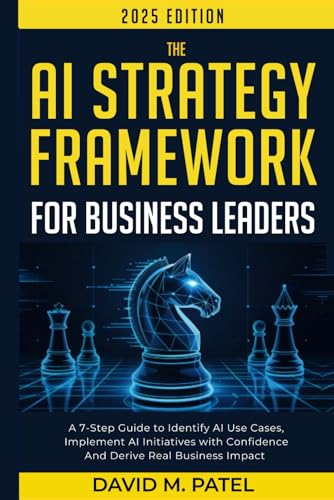
📚 Learn AI Strategy: AI Strategy for Business Leaders Book:
https://amzn.to/4nExdih
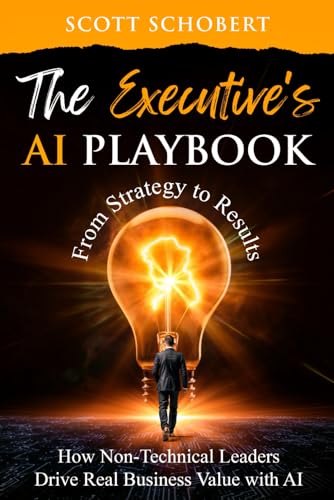
💼 Enterprise AI Implementation Guide: The AI Playbook for Executives:
https://amzn.to/3WJFcj6
📊 Financial Analysis Tools: AI-Powered Financial Analytics Software:
https://amzn.to/4hXWSRR
Final Thoughts
What struck me most about Friar’s interview wasn’t the massive numbers or the technological breakthroughs. It was the sense of responsibility—the careful balance between techno-optimism and safety concerns, between moving fast and bringing humanity along for the journey.
As Friar noted, we need great journalism, government engagement, and educational institutions to allow people to be optimistic without being Pollyannaish, avoiding doom while maintaining appropriate safety vigilance.
That’s the real challenge ahead: not just building the technology, but ensuring it genuinely benefits everyone.
The age of intelligence is here. Let’s make sure we get it right.
What’s your take? Are we moving too fast, too slow, or just right? Drop a comment below.
Sources & References
This article is based on the Wall Street Journal interview with Sarah Friar, Chief Financial Officer of OpenAI, conducted November 2025. All statistics and quotes are sourced from this interview.
Disclaimer: This article contains affiliate links. We may earn a commission if you purchase through these links at no additional cost to you. All product recommendations are based on relevance to the topic and our editorial judgment.


