
When the CEO of Nvidia—the company powering the entire AI revolution—says his biggest regret is not investing enough in AI companies, you need to pay attention.
Jensen Huang just gave one of the most revealing interviews about where AI is heading, how much money is being invested, and whether we’re in a bubble. And his insights matter to everyone—investors, employees, entrepreneurs, and anyone trying to understand where this massive transformation is going.
This isn’t hype. This is the person who’s literally selling the infrastructure that powers ChatGPT, Claude, and every major AI system explaining where trillions of dollars are flowing—and why.
Let’s break down what Huang revealed and what it means for your investments and your future.
The $2 Billion Question: Is Nvidia’s Vendor Financing a Red Flag?
Wall Street raised eyebrows when Nvidia announced financing deals with AI companies like OpenAI and xAI (Elon Musk’s AI venture).
The concern? Circular financing—when a company lends money to customers so they can buy the company’s own products. It’s what brought down telecom giants like Lucent and Nortel during the dot-com crash.
Is history repeating itself?
Huang’s Response: “This Time Is Different”
Jensen Huang pushes back hard on the comparison, and his reasoning is worth understanding.
The 2000 dot-com era:
- All internet companies combined were worth $30-40 billion
- Many had no revenue (remember Pets.com?)
- Speculative business models with no path to profitability
- Infrastructure built for theoretical demand
The 2025 AI era:
- Hyperscalers (Amazon, Microsoft, Google, Meta) already have $2.5 trillion in existing business
- They’re spending $500 billion in CapEx on AI infrastructure
- AI companies are now generating profitable tokens (we’ll explain this)
- Real products solving real problems for paying customers
The scale is completely different. We’re not betting on whether people will use the internet. We’re watching companies with trillions in revenue transform their infrastructure.
The xAI Investment: Why Huang Wishes He Gave Elon More Money
When asked about Nvidia’s investment in Elon Musk’s xAI, Huang’s answer was telling:
“My only regret is I didn’t give him more money. Almost everything that Elon’s part of, you really want to be part of.”
This isn’t vendor financing in the traditional sense. It’s Nvidia making an equity investment in what Huang believes will be a “really great future company.”
Translation: Nvidia isn’t just selling chips. They’re taking ownership stakes in the AI companies they believe will dominate the future.
Book recommendation: To understand how legendary investors think about backing winners early, read “The Intelligent Investor” by Benjamin Graham. It teaches you how to identify real value versus speculation—critical for navigating the AI investment landscape.

The Multi-Trillion Dollar AI Build-Out Is Just Beginning
Here’s the number that should make every investor pay attention:
Nvidia has generated “a couple hundred billion dollars” in AI infrastructure revenue so far. And according to Huang, that’s just the beginning of a multi-trillion dollar build-out.
Breaking Down the Numbers
Current state:
- Hyperscalers have $2.5 trillion in existing business
- Annual CapEx on infrastructure: ~$500 billion
- Nvidia’s AI infrastructure business: ~$200 billion so far
The transition: From classical CPU-based computing → Generative AI computing powered by GPUs
This isn’t a new industry being built from scratch. It’s the transformation of existing infrastructure that already supports trillions in business.
Think about the implications:
Every data center needs to be rebuilt. Every cloud service needs to be reimagined. Every enterprise system needs AI integration.
The companies that own the picks and shovels (like Nvidia) are positioned to profit from the entire transformation—regardless of which specific AI applications succeed or fail.
The New Generation of AI Companies
Huang highlights a completely new category of companies that didn’t exist a few years ago:
AI Model Builders:
- OpenAI (ChatGPT)
- Anthropic (Claude)
- xAI (Elon Musk’s company)
- Thinking Machine Labs (Meera Murati)
- SSI (Ilya Sutskever)
- Reflection AI (Misha’s company)
These aren’t just startups. They’re building the fundamental AI systems that every other company will use.
And here’s what changed recently that makes Huang so optimistic…
The Profitability Turning Point: AI Tokens Are Now Profitable
This is the most important shift in the AI industry that most people are missing.
What Changed in the Last Several Months
Before: AI companies were generating tokens (AI responses) at a loss. They were building technology that was fascinating but not useful enough for people to pay for.
Now: AI has crossed the profitability threshold. The tokens are making money.
Why the change?
The new technology is reasoning AI:
- AI that does research before answering questions
- AI that can browse the web and study PDFs
- AI that can use tools and generate information
- AI that creates genuinely useful responses people will pay for
Huang uses AI every day now. So do millions of others. And they’re paying for it.
What This Means for Investors
When fundamental technology crosses from “interesting but unprofitable” to “useful and profitable,” that’s the inflection point.
It’s the difference between:
- Amazon in 1999 (burning cash, uncertain future)
- Amazon in 2003 (profitable, clear business model)
We just crossed that threshold with AI. Companies are no longer building infrastructure for a theoretical future—they’re building it for current paying demand.
Book recommendation: For understanding technological inflection points and how to invest in them, read “The Innovator’s Dilemma” by Clayton Christensen. It explains why breakthrough technologies often look unprofitable at first—until they suddenly aren’t.

Enterprise AI Is Here: The Cursor Example
Huang gives a specific, powerful example of AI’s real-world impact: Cursor.
What Is Cursor?
Cursor is an AI coding assistant. And 100% of Nvidia’s 40,000 engineers now use it.
The result? Productivity has gone up incredibly.
This isn’t theory. This is Nvidia—one of the world’s most advanced technology companies—completely transforming how their engineers work.
The Fastest Growing Companies You’ve Never Heard Of
Huang name-drops several enterprise AI companies that are “some of the fastest growing companies in the world”:
- Cursor (AI coding)
- OpenEvidence (AI research)
- Lovable (AI development)
These companies are addressing enterprise needs—not consumer novelties. They’re being adopted by businesses because they genuinely increase productivity and make money.
Why This Matters for Your Career
If 100% of Nvidia’s engineers are using AI assistants, how long until your industry does the same?
Huang’s message is clear: Enterprise AI adoption is happening now, not in some distant future.
The professionals who learn to work alongside these tools will be the ones who thrive. The ones who resist will be the ones struggling to keep up.
Book recommendation: To understand how to position yourself for the AI-powered workplace, read “Range: Why Generalists Triumph in a Specialized World” by David Epstein. It explains why adaptability and broad skills beat narrow expertise in times of rapid change.

The AGI Debate: Do We Need It to Justify the Investment?
A venture capitalist recently argued that only Artificial General Intelligence (AGI) can justify the massive capital being spent on AI.
Huang’s response? We don’t need AGI to make this profitable.
Useful AI vs. Perfect AI
“We are going to have incredibly profitable and incredibly useful AIs long before AGI.”
Cursor doesn’t need to be generally intelligent to transform how engineers work. It just needs to be really good at coding.
Medical AI doesn’t need to pass the Turing test. It just needs to accurately diagnose diseases.
Customer service AI doesn’t need consciousness. It just needs to solve problems efficiently.
The Tool User Revolution
Here’s Huang’s most profound insight:
Previous technologies: Tools that humans use (Excel, web browsers, calculators)
AI: Technology that can actually use tools by itself
This is revolutionary.
The tool industry (software, equipment, machinery) is worth a few trillion dollars.
The tool user industry (human labor across all sectors) is worth $100 trillion.
If AI can augment or replace tool users—even partially—the economic impact is staggering.
That’s why everyone’s excited. That’s why trillions are being invested. That’s why Huang says we don’t need AGI to justify it.
Will There Be Room for Everyone?
The interviewer presses: Won’t there be consolidation? Won’t most AI companies fail?
Huang’s answer is nuanced: General intelligence vs. specialized intelligence.
General intelligence (like ChatGPT) is valuable for consumers. But where companies really make money is specialized intelligence—AI trained for specific industries, problems, or workflows.
Think about it: Nvidia hires generally intelligent engineers, then makes them highly specialized for what Nvidia needs.
The same will happen with AI. General models will exist, but the real enterprise value will come from specialized AI tailored to specific use cases.
Translation: There’s room for both OpenAI (general) and thousands of specialized AI companies serving different industries.
Nvidia’s Investment Strategy: Why Huang Keeps Saying “I Wish I Invested More”
Throughout the interview, Huang repeatedly expresses one regret: not investing enough in AI companies.
The Pattern
xAI: “My only regret is I didn’t give him more money”
CoreWeave: “My only regret is I didn’t invest enough”
OpenAI: (Implied) Wishes he had invested more
Why Is Nvidia Investing in Its Own Customers?
Some see this as a conflict of interest. Huang sees it as smart capital allocation.
Nvidia’s investments serve multiple purposes:
1. Ecosystem Building These companies are building the AI infrastructure for the world—using Nvidia chips. Their success is Nvidia’s success.
2. Financial Returns Huang genuinely believes these are “really special companies” that will generate massive returns.
3. Strategic Positioning By investing early, Nvidia gets insights into how their technology is being used and what customers need next.
4. Risk Diversification Nvidia profits whether they succeed as investors or as a chip supplier. But both together is even better.
What This Tells You About Huang’s Conviction
When a CEO wishes he had invested more of his company’s capital in the very industry he’s already dominating, that tells you something.
He’s not worried about a bubble. He’s not hedging. He’s doubling down.
The Full AI Stack: Where the Money Is Flowing
Huang breaks down AI into four components—and money is flowing into all of them:
1. Energy AI data centers consume massive amounts of power. Energy infrastructure must be built or upgraded.
2. Chips Nvidia’s GPUs are the foundation, but specialized AI chips are emerging across the stack.
3. Models The OpenAIs, Anthropics, and xAIs building the core AI capabilities.
4. Applications The Cursors, OpenEvidences, and thousands of other companies building AI tools for specific use cases.
Why This Matters for Investors
You don’t have to pick the winning AI model or application. You can invest in the infrastructure layer that all of them need.
Energy companies powering data centers. Chip manufacturers. Cloud providers. These are the “picks and shovels” plays—less risky than betting on individual AI applications.
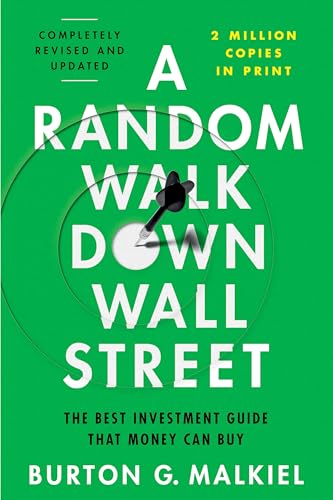
Book recommendation: For understanding how to invest in technological infrastructure plays, read “A Random Walk Down Wall Street” by Burton Malkiel. It teaches evidence-based investing across market cycles—including tech booms.
The Depreciation Question: Are We Building Obsolete Infrastructure?
A critical question from the interviewer: With annual chip upgrades, how fast does AI infrastructure depreciate?
Translation: Are we spending hundreds of billions on data centers that will be obsolete in two years?
Huang’s answer (though not directly stated in this excerpt): The infrastructure being built is foundational. Better chips make it more powerful—they don’t make it useless.
Think about it like this:
When Intel released faster CPUs, your existing data center didn’t become worthless. You upgraded over time, but the fundamental infrastructure remained valuable.
The same will happen with AI. Today’s AI data centers will get chip upgrades, software improvements, and efficiency gains. But the basic infrastructure—power, cooling, networking, facilities—remains valuable for decades.
How Fast Do These Companies Really Grow?
Huang calls companies like Cursor “some of the fastest growing companies in the world.”
But what does that actually mean?
The Enterprise AI Growth Curve
Traditional SaaS company:
- Year 1: $1M revenue
- Year 2: $3M revenue (3x growth)
- Year 3: $9M revenue (3x growth)
Enterprise AI company:
- Year 1: $5M revenue
- Year 2: $50M revenue (10x growth)
- Year 3: $300M revenue (6x growth)
The growth rates are unprecedented because:
- The technology genuinely increases productivity
- Word-of-mouth spreads rapidly among professionals
- Switching costs are low (easy to adopt)
- Value proposition is immediately clear
When Nvidia’s 40,000 engineers adopt a tool and love it, every other tech company hears about it instantly.
What Consumers vs. Enterprises Will Pay For
The interviewer raises an excellent question: Who’s ultimately paying for all this?
Is it consumers? Is it enterprises like Procter & Gamble? Is it doctors and small businesses?
The Two Markets
Consumer AI:
- OpenAI’s ChatGPT has millions of paying subscribers
- Individual professionals paying $20-100/month
- Personal productivity and convenience
Enterprise AI:
- Companies paying thousands to millions per year
- Productivity tools like Cursor transforming entire workforces
- Mission-critical applications (medical diagnosis, legal research, code generation)
Huang’s optimistic: “Hopefully both.”
But the real money—the sustainable, massive-scale revenue—will come from enterprise adoption.
A doctor using AI to diagnose patients better? That’s worth thousands of dollars per month to a hospital system.
An engineering team 2x more productive with AI coding assistants? That’s worth millions to a tech company.
That’s where the big money is. And that’s why Huang is so confident.
The Displacement Question: What About Workers?
The interviewer notes that Cursor is “displacing things”—meaning other tools or potentially workers.
Huang corrects this framing: “This is a brand new thing.”
AI as Tool User, Not Just Tool
The critical distinction Huang makes:
Previous technologies: Tools humans use to do work (Excel, browsers, CAD software)
AI: Technology that uses tools by itself to do work
This is fundamentally different.
AI agents can browse the web for you, book travel, compare options, and make decisions. They’re not helping you use tools—they’re using the tools themselves.
What This Means for Employment
Is this mass job displacement?
Huang’s implicit answer: It’s augmentation first, replacement eventually for some tasks.
At Nvidia, AI isn’t replacing engineers. It’s making them more productive. They can do more, build faster, solve harder problems.
But yes—some job functions will be displaced. Just like ATMs displaced bank tellers for routine transactions but created new banking jobs for relationship management and financial advising.
The question isn’t whether AI will change jobs. It’s whether you’ll be on the side that gets augmented or the side that gets replaced.
Book recommendation: To understand how to position yourself on the right side of technological displacement, read “The Second Machine Age” by Erik Brynjolfsson and Andrew McAfee. It explores how to thrive when machines can do more of what humans used to do exclusively.

Investment Lessons from Nvidia’s CEO
Let’s pull together the investment wisdom from this conversation:
Lesson 1: Bet on Ecosystems, Not Just Products
Huang doesn’t just invest in chip buyers. He invests in the entire AI ecosystem: chips, energy, models, applications.
This diversification within a theme is smart strategy.
Lesson 2: When You Find Winners, Wish You’d Bet More
Every successful investor says the same thing in hindsight: “I wish I’d invested more in my winners.”
Huang’s repeated regrets about not investing enough in successful companies reflects this truth.
Application: When you identify genuine winners early, don’t just dip your toe in. Size your position appropriately.
Lesson 3: Profitability Changes Everything
The shift from “interesting but unprofitable” to “useful and profitable” is the critical inflection point.
AI companies can now make money on every token generated. That changes the entire investment thesis.
Application: Look for technologies crossing the profitability threshold, not just the ones getting the most hype.
Lesson 4: Infrastructure Plays Reduce Risk
By investing in Nvidia (the infrastructure), you don’t need to pick which AI application wins. You profit regardless.
Application: Consider infrastructure investments (cloud providers, chip makers, data center operators) alongside direct AI company investments.
Lesson 5: Follow the Smart Money—Carefully
When CEOs like Huang invest their companies’ capital into specific areas, that’s a signal. But don’t blindly follow—understand the why behind the investment.
How to Invest in the AI Boom (Practical Strategies)
Based on Huang’s insights, here are actionable investment strategies:
Strategy 1: The Infrastructure Play
Invest in companies that profit regardless of which AI applications succeed:
- Nvidia (chips)
- AMD (chips)
- Microsoft, Amazon, Google (cloud infrastructure)
- Energy companies building data center power
- Real estate companies owning data center facilities
Risk level: Lower (essential infrastructure) Return potential: Moderate to high
Strategy 2: The Platform Play
Invest in companies building the foundational AI models:
- Microsoft (OpenAI exposure through partnership)
- Google (Gemini, DeepMind)
- Meta (Llama, open source AI)
- Amazon (Bedrock, Titan models)
Risk level: Moderate (established companies, but competitive market) Return potential: High if they win the platform wars
Strategy 3: The Application Play
Invest in AI application companies (higher risk, higher reward):
- Public AI companies in specific verticals (healthcare, legal, finance)
- AI ETFs that hold baskets of AI application companies
- Venture capital funds focused on AI (if you’re accredited)
Risk level: Higher (many will fail) Return potential: Very high for winners
Strategy 4: The Pick-and-Shovel Play
Invest in essential services AI companies need:
- Cloud infrastructure providers
- Cybersecurity for AI systems
- Data center cooling and energy management
- AI chip design tools (EDA companies)
Risk level: Lower to moderate Return potential: Steady growth
Strategy 5: The Index Approach
For most investors: Broad exposure through indexes
- S&P 500 (captures major AI players)
- NASDAQ-100 (tech-heavy with AI exposure)
- AI-focused ETFs (concentrated exposure)
Risk level: Lowest (diversified) Return potential: Moderate (market average with AI tailwinds)
Huang’s Approach: Multiple Bets Across the Stack
Notice Huang isn’t picking just chips or just applications. He’s investing across energy, chips, models, and applications.
That diversification within the AI theme is smart portfolio construction.
The Timing Question: Are We Early or Late?
Given all the hype, the question everyone asks: Are we early or late to AI investing?
Huang’s Perspective: We’re Early
Evidence:
- “A couple hundred billion dollars into a multi-trillion dollar build-out”
- “We’re in the beginning phases”
- Infrastructure transition “is just starting”
- Enterprise AI adoption just beginning
Translation: Nvidia has generated ~$200B in AI infrastructure revenue. The total build-out could be $2-5 trillion or more.
If Huang is right, we’re roughly 5-10% into the build-out phase.
The Counter-Argument
Skeptics point out:
- Nvidia stock has already surged (up 10x+ in some periods)
- Valuations are stretched across AI companies
- Hype often precedes crashes
- Not all AI companies will succeed
Both can be true. We could be early in the technology adoption but fairly priced or even expensive in the current valuations.
The Smart Approach
Rather than trying to time the perfect entry:
- Build positions gradually (dollar-cost averaging)
- Diversify across the AI stack (don’t put everything in one company)
- Take a 5-10 year view (not a trading mentality)
- Rebalance when positions get too large (don’t let one stock dominate)
- Keep learning and adjusting (this is early in a long transition)
Book recommendation: For mastering the psychology of long-term investing through volatile markets, read “The Psychology of Money” by Morgan Housel. It teaches you how to stay rational when markets aren’t.

What About the Risks?
Huang is obviously bullish—he runs Nvidia and is deeply invested in AI’s success. But what are the real risks investors should consider?
Risk 1: Valuation Compression
Even if AI delivers on its promise, expensive stocks can still fall if valuations compress. Nvidia’s P/E ratio is high by historical standards.
Risk 2: Competition
Nvidia dominates now, but AMD, Intel, Google (TPUs), Amazon (custom chips), and startups are all building AI chips. Dominance can evaporate quickly in tech.
Risk 3: Regulation
Governments worldwide are considering AI regulation. Restrictive rules could slow adoption or limit applications.
Risk 4: Technical Limitations
What if we hit walls in AI capabilities? What if scaling laws break down? What if energy costs become prohibitive?
Risk 5: Geopolitical
US-China tensions around chip exports, Taiwan’s role in manufacturing, and export controls all create uncertainty.
Risk 6: The “Too Much Too Fast” Problem
Even transformative technologies can see boom-bust cycles. The internet was real and valuable, but that didn’t prevent the dot-com crash.
Managing the Risks
Diversification – Don’t bet everything on AI or any single company Position sizing – Keep AI investments to a reasonable portion of your portfolio Quality focus – Invest in companies with real revenue and profits, not just promises Long-term view – Short-term volatility is guaranteed; long-term value creation is the bet Stay informed – This landscape changes quickly; continuous learning is essential
Final Thoughts: The Regret You Don’t Want to Have
Jensen Huang keeps saying the same thing: “My only regret is I didn’t invest more.”
He’s talking about xAI. About CoreWeave. About OpenAI. About the entire AI ecosystem.
The CEO of the company literally powering the AI revolution wishes he had invested more in it.
That tells you everything you need to know about his conviction.
Now the question is: Will you have the same regret five years from now?
Not because you should blindly follow any investor—even brilliant ones make mistakes.
But because you need to seriously evaluate: Am I positioned for the AI transformation, or am I ignoring it?
As an investor, are you diversified into AI infrastructure and applications?
As a professional, are you learning AI tools and staying relevant?
As a business owner, are you exploring how AI can transform your operations?
The transition is happening. The infrastructure is being built. The money is flowing. The adoption is accelerating.
The only question is whether you’ll be part of it—or watching from the sidelines wondering what happened.
What’s your AI strategy? Are you investing, learning, or waiting? Drop a comment below and let’s discuss how to position yourself for this transformation.