Bill Gates just dropped a bombshell about AI—and his answer to whether we’re in an AI bubble might surprise you. In an exclusive interview with CNBC, the Microsoft co-founder didn’t dodge the question. Instead, he delivered the most honest, nuanced take on AI’s future that tech investors need to hear right now.
With over 1,300 AI startups valued at $100 million+ and 498 AI “unicorns” worth $1 billion or more, the question on everyone’s mind is simple: Are we in an AI bubble?
Gates’ answer reveals why this isn’t like the tulip mania of the 1600s—but it’s also not a guaranteed gold rush. Here’s everything you need to know about the AI revolution, the massive investments flooding the market, and whether your job is at risk.
Want to hear Bill Gates explain this in his own words? Watch the exclusive CNBC interview on YouTube where he breaks down the AI bubble debate and what it means for your future.
Bill Gates’ Verdict: AI Bubble or Revolution?
When asked directly if we’re in an AI bubble, Gates responded with characteristic precision: “We need to define bubble.”
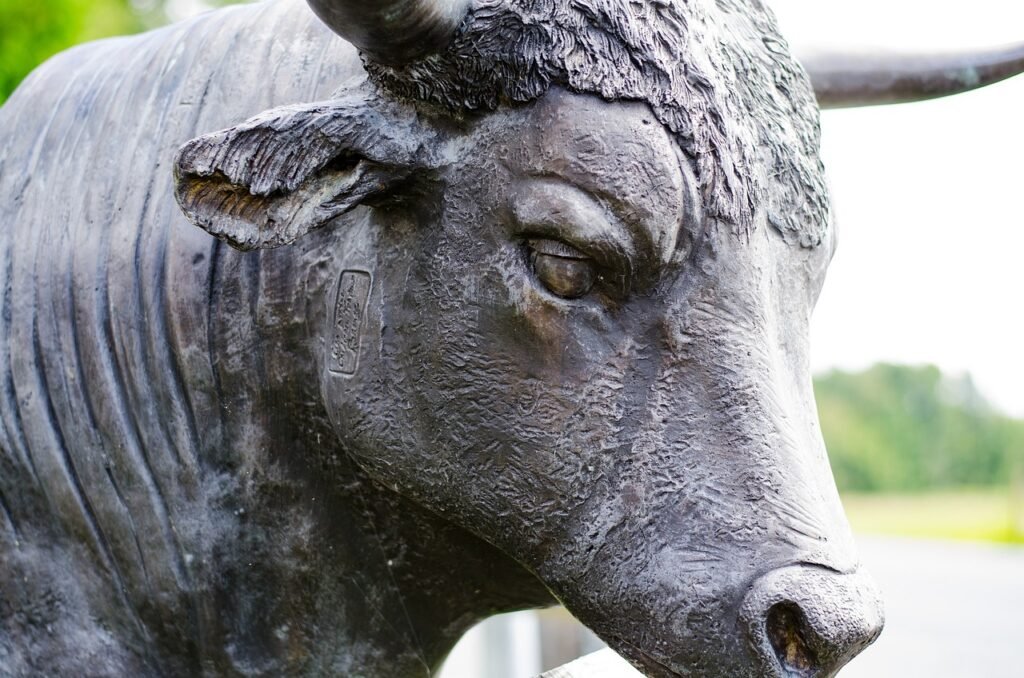
Gates distinguished between two types of bubbles: the tulip mania in the Netherlands where “there was nothing there, those were just tulips,” and the internet bubble where “something very profound happened” that changed the world.
His verdict? AI is closer to the internet bubble than tulip mania.
What That Actually Means for Investors and Workers
Here’s the crucial part most headlines miss: Gates acknowledges that “there are a ton of these investments that will be dead ends,” and some companies will “commit to data centers whose electricity is too expensive” or “buy a generation of chips” that won’t capture their value before the next one arrives.
But here’s why that doesn’t matter in the long run.
Why Bill Gates Calls AI “The Biggest Technical Thing Ever” in His Lifetime
Gates stated unequivocally: “AI is the biggest technical thing ever in my lifetime. It is so profound and therefore its influence is hard to overstate. The economic value—this is basically intelligence—where you can get medical advice or you can get a tutor or you can get somebody to help you design drugs. So the value is extremely high.”
Let that sink in. This is a man who:
- Co-founded Microsoft in 1975
- Pioneered the personal computer revolution
- Witnessed the birth of the internet
- Saw smartphones change humanity
- Watched social media transform communication
And he’s saying AI is bigger than all of it.
The Internet Bubble Comparison: What History Teaches Us
Gates compared AI to the internet bubble, noting that while “a lot of companies were kind of me-too, fell behind burning capital companies,” ultimately “something very profound happened” and “the world was very different”.
Translation? Yes, many AI companies will fail. Yes, billions will be lost. But the technology itself will fundamentally reshape civilization.
Just like the internet bubble:
- Amazon survived (now worth $1.5 trillion)
- Google emerged (now worth $1.8 trillion)
- Pets.com died (lost $300 million in 268 days)
- Webvan collapsed (burned through $800 million)
The pattern is clear: During bubbles, technologies survive while most companies don’t.
The Uncomfortable Truth About AI and Your Job
Gates didn’t sugarcoat this part, and neither will I.
When asked about job losses, Gates was direct: “In terms of the jobs, this is going to take some period of time, but yes, although it hasn’t been seen in large numbers, over the next several years there will be some impact on the job market.”
He added something crucial that most executives won’t admit: “Nowadays when you say that, some people are like, ‘Oh, how can you say that? Isn’t that going to slow the US down in this race?’ But it’s only honest for people to speak frankly about the fact this will have a big effect on the job market.”
Which Jobs Are At Risk? (Gates’ Predictions)
According to Gates’ interview with Jimmy Fallon, over the next decade AI will make human expertise in many fields “free” and “commonplace,” including “great medical advice” and “great tutoring”.
He’s not alone in this assessment. Gates called Mustafa Suleyman’s book “The Coming Wave” his “favorite book on AI,” recommending it to “heads of state, business leaders, and anyone else who asks” because it predicts AI will change what most jobs look like across nearly every industry within the next five years.
The book’s stark conclusion? “These tools will only temporarily augment human intelligence. They will make us smarter and more efficient for a time, and will unlock enormous amounts of economic growth, but they are fundamentally labor replacing.”
Jobs most at risk according to AI experts:
- Customer service and administration
- Content creation and copywriting
- Data entry and processing
- Basic coding and software development
- Medical diagnosis and legal research
- Teaching and tutoring (partially)
Jobs least at risk:
- Creative strategy and innovation
- Complex problem-solving
- Emotional intelligence roles
- Physical trade skills (plumbing, electrical)
- Healthcare requiring human touch
- Leadership and management
The $375 Billion Question: Is This Money Well Spent?
Total global AI spending is expected to hit $375 billion this year and reach $500 billion in 2026, according to UBS research.
But here’s the twist: Gates admits “you have a frenzy and some of these companies will be glad they spent all this money. Some of them will commit to data centers whose electricity is too expensive or they’ll buy a generation of chips and they won’t have captured all their value before the next one comes along”.
Why Tech Companies Can’t Stop Spending
Gates delivered a brutal reality for tech CEOs: “If you want to be a tech company, you don’t get to say no—let’s check out of this race.”
This explains why:
- Microsoft is spending $50+ billion on AI infrastructure
- Google invested $75 billion in AI and cloud in 2024
- Meta allocated $38-40 billion for AI development
- Amazon committed $75 billion to data centers
These companies aren’t stupid. They’re making rational bets in an irrational environment. The cost of being wrong is existential.
The Energy Crisis Nobody’s Talking About
Here’s a problem that could derail the entire AI revolution: energy consumption.
Gates addressed this head-on: “We need to put things like terapower nuclear reactors in places where it’s very clear that you’re not raising the residents’ electricity bills. Historically, nuclear was done in a way that the utility bore a lot of that liability—that business model won’t get repeated.”
Why Your Electricity Bill Matters for AI
Gates acknowledged public concerns: “There’s a whole bunch of places where people want to put data centers and the community says no, we don’t want this because we don’t want to have to spend more money for power to power our own homes.”
The tension is real:
- AI needs massive power → Data centers consume as much electricity as small countries
- Communities resist → Nobody wants their power bills to skyrocket
- Nuclear is the answer → But public acceptance is “very, very strong” requirement, Gates notes
Without solving the energy equation, AI scaling hits a hard ceiling.
The Government’s Messy Role in AI: Gates Weighs In
When asked about the US government taking stakes in AI and chip companies, Gates didn’t hold back about the confusion.
Gates emphasized: “The government operates best when it’s kind of predictable. When you build a factory, the government shouldn’t be changing its policy every year or every day because predictability is a very, very important thing.”
He raised critical questions about government investment in AI: “When the company’s helping nascent technology, is it doing that for the good of the country and treating companies equally? Or will it want to own part of those companies and favor the company they own part of if somebody has better technology?”
His conclusion? “The rules of the game we’re playing are pretty unclear right now.”
What This Means for AI Startups and Investors
The uncertainty creates both risk and opportunity:
Risks:
- Policy changes could destroy business models overnight
- Government favoritism might pick winners artificially
- International competition complicates US strategy
Opportunities:
- Government capital could accelerate breakthroughs
- Strategic partnerships offer competitive moats
- National security priorities guarantee funding
How to Survive (and Thrive) in the AI Revolution
Gates’ perspective offers a roadmap for navigating this transformation:
For Workers: Adapt or Get Left Behind
Gates noted that AI is “improving at a rate that surprises” even him, pointing to its “deep research capability” where he takes “some complex question, and just for fun” to see how “AI does an awfully good job gathering all the materials and summarizing”.
Action steps:
- Learn AI tools NOW – Don’t wait until your job is automated
- Focus on AI-resistant skills – Creativity, emotional intelligence, complex problem-solving
- Become the human + AI hybrid – Those who master AI augmentation will dominate
- Stay flexible – Career pivots will become more common, not less
For Investors: Bet on Infrastructure, Not Applications
The lesson from the internet bubble is clear: Infrastructure companies (Amazon, Google, Cisco) survived while content companies (Pets.com, Webvan) died.
Smart AI bets:
- Chip manufacturers (NVIDIA, AMD, Intel)
- Cloud infrastructure (Microsoft Azure, AWS, Google Cloud)
- Energy solutions (Nuclear, renewable for data centers)
- Vertical AI applications with real revenue (not vaporware)
Risky AI bets:
- Me-too AI wrappers with no moat
- Consumer AI applications without monetization
- Companies burning cash with no path to profitability
- Overhyped startups with $1B+ valuations and minimal revenue
Book recommendation: To understand how legendary investors think about backing winners early, read “The Intelligent Investor” by Benjamin Graham. It teaches you how to identify real value versus speculation—critical for navigating the AI investment landscape, do not invest your money without knoledge.

For Business Leaders: Embrace AI or Become Irrelevant
Gates’ warning to CEOs is existential: “If you want to be a tech company, you don’t get to say no—let’s check out of this race.”
Strategic imperatives:
- Start AI experiments TODAY – Even small pilots matter
- Invest in training – Your team needs AI literacy
- Plan for workforce transformation – Reskilling is cheaper than mass layoffs
- Focus on augmentation first – AI should enhance humans before replacing them
The Bigger Picture: What Comes After AI?
Gates has been through every major tech revolution since 1975. His long-term perspective matters.
Gates predicts that within 10 years, humans will no longer be needed “for most things” and expertise will become “free, commonplace”—a world he calls “free intelligence.”
But he’s not predicting dystopia. Gates believes, like past technological disruptions, AI will ultimately create more opportunities than it destroys.
The key difference? The transition will happen faster than any previous revolution.
Superintelligence: The Question Nobody Can Answer
Gates admitted that even experts disagree on the timeline: “AI today can replace human work, the most complex coding tasks, it’s not able to do yet. And people in the field disagree: is that within the next year or two, or is it more like ten years away?”
That uncertainty is precisely what makes this moment so critical.
If superintelligent AI arrives in 2 years, we’re catastrophically unprepared. If it takes 10 years, we have time to adapt our education systems, social safety nets, and economic structures.
Nobody knows which timeline is correct—not even Bill Gates.
The Verdict: Bubble or Revolution? (It’s Both)
Here’s what Gates’ analysis ultimately reveals: We’re in an AI bubble AND an AI revolution simultaneously.
The bubble part:
- Massive overinvestment in marginal companies
- Unrealistic valuations for unproven business models
- Capital destruction on an epic scale
- Winner-take-most dynamics that will kill 90%+ of AI startups
The revolution part:
- Fundamental transformation of how intelligence works
- Disruption of nearly every industry
- Creation of entirely new economic possibilities
- The most important technology shift in human history
Your Move: What Should You Do Right Now?
Based on Gates’ insights, here’s your action plan:
If you’re an employee:
- Start using AI tools daily (ChatGPT, Claude, Copilot)
- Develop skills that complement AI, not compete with it
- Build a financial cushion for potential career transitions
- Network aggressively—connections will matter more than ever
If you’re an investor:
- Avoid FOMO-driven AI stock purchases
- Focus on infrastructure over applications
- Diversify beyond AI—it’s not the only investment thesis
- Think 10-year horizon, not 10-month flips
If you’re a business leader:
- Launch AI pilots in every department
- Prepare workforce for transformation (don’t surprise them)
- Invest in energy-efficient operations
- Build relationships with AI infrastructure providers
If you’re a student:
- Study AI and machine learning fundamentals
- Focus on creative and interpersonal skills
- Prepare for multiple career pivots
- Embrace lifelong learning as non-negotiable
The Bottom Line: Gates’ Final Word
Bill Gates calls AI “the biggest technical thing ever” in his lifetime because “its influence is hard to overstate” and “the economic value is extremely high”.
But he’s equally clear about the costs: Many AI investments “will be dead ends” and companies will “burn capital”.
The paradox is the point. We can simultaneously be in a bubble (where most companies fail) and a revolution (where the technology transforms everything).
Your job isn’t to predict which AI companies will win. It’s to position yourself—whether as a worker, investor, or business leader—to benefit from the transformation regardless of which specific companies survive.
Because one thing is certain: If you’re in tech, “you don’t get to say no—let’s check out of this race”.
Watch the Full Interview
Don’t take my word for it—hear Bill Gates explain everything himself.
Watch the exclusive CNBC interview on YouTube where Gates discusses:
- The exact difference between AI and the tulip bubble
- Why energy costs threaten AI’s future
- His unfiltered predictions about job losses
- What government policy mistakes could derail everything
- The timeline for superintelligent AI
Recommended Resources
Want to dive deeper into AI and prepare for the coming transformation?
Books Gates Recommends:
- “The Coming Wave” by Mustafa Suleyman – Gates’ #1 AI book recommendation for understanding what’s ahead
- “The Psychology of Money” by Morgan Housel – Learn how to think about wealth during technological disruption
- “How to Avoid a Climate Disaster” by Bill Gates – Understand the energy challenges facing AI infrastructure


Stay Updated:
- Subscribe to our YouTube channel for exclusive interviews with tech leaders
- Join our community of forward-thinking professionals preparing for the AI revolution
Final Thought: The Race You Can’t Opt Out Of
Bill Gates has witnessed every major technological shift since the 1970s. His assessment of AI isn’t hype—it’s a warning disguised as an opportunity.
The bubble will pop. Companies will fail. Billions will be lost.
But the technology? Like the internet bubble, “something very profound” is happening that will make “the world very different”.
Your only choice is whether you’ll be shaped by this transformation—or shape it yourself.
The AI revolution isn’t coming. It’s already here.
What will you do about it?
Last Updated: October 28, 2025 | Interview Source: CNBC Exclusive with Bill Gates