
The billionaire founder of Bridgewater Associates sees more than “conceivable” the end of American hegemony. And technology will be the decisive battlefield.
Wall Street’s Uncomfortable Prophecy
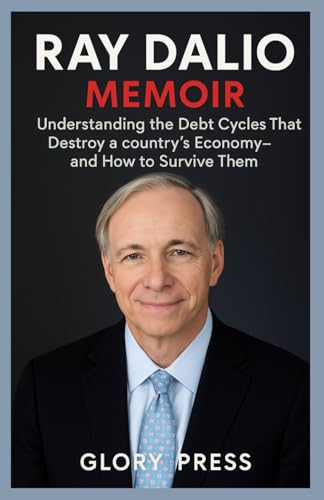
Ray Dalio doesn’t mince words. When asked if it’s conceivable that the United States could cease to be the dominant global power in the next 50 to 100 years, his answer is direct: “Yeah. More than conceivable.”
For those immersed in Silicon Valley’s technological optimism or New York’s financial prowess, this sounds like heresy. But Dalio has arguments that are hard to ignore. As a global macro investor, he spent decades studying 500 years of economic history — and discovered a pattern that repeats with surgical precision.
The Inevitable Cycle of Empires
“People always think that the future will be a slightly modified version of the present. And it’s not,” warns Dalio. It’s like watching a child grow day by day — you don’t notice the monumental transformation happening before your eyes. But the arc of life, like the arc of empires, is irrefutable.
The British Empire fell. The Dutch before it. And all followed a frighteningly similar script. What seemed invincible in its time eventually crumbled under the weight of mounting debts, internal conflicts, and the rise of a stronger rival.
The War That Decides All Wars
If you’re not paying attention yet, here’s the wake-up call: the technological competition between the United States and China isn’t just another geopolitical dispute. It’s the endgame.
“Whoever wins the technology war is going to win all wars,” Dalio states categorically. “They’ll win the economic war. They’ll win the geopolitical war.”
History proves it. Nuclear technology decided World War II. The Industrial Revolution crowned Great Britain as a superpower. And now, artificial intelligence, quantum computing, and semiconductors are the battlefields of the 21st century.
The problem? Only two players have enough chips to compete at this poker table: the US and China. The rest of the world simply doesn’t have the capital, innovation, or talent necessary to play at this scale.
The Three Horsemen of the American Apocalypse
Dalio identifies three existential threats that could topple the United States:
1. The Debt Time Bomb
The American economy is suffocating under mountains of debt. The problem isn’t just how much it owes, but the unsustainable trajectory of that debt relative to its ability to pay.
2. Silent Civil War
Hard left versus conservative right. Political polarization has reached toxic levels. People no longer believe the system works for them — and when that happens, they stop following the rules. Democracy doesn’t survive without basic consensus.
3. The Great Power Conflict
On the other side of the Pacific, Xi Jinping, Vladimir Putin, and Narendra Modi walk side by side at international meetings. The sides are lining up. And nobody wants to be in the middle of a war between superpowers.


The America You Don’t See
Here’s the dirty secret nobody wants to admit: there isn’t “one” America.
About 1% of the population — approximately 3 million people in a country of 330 million — is prospering extraordinarily. They’re the ones running innovative companies, dominating the stock market, and living in neighborhoods where wealth is obscene.
The next 10% orbit around this elite core and are also doing very well.
But then comes the brutal punch: 60% of Americans have a reading level below sixth grade.
“To have a successful society, you need to have broad-based productivity and prosperity,” explains Dalio. It’s not enough to have geniuses creating artificial intelligence if most of the population can barely read an employment contract.
The Verdict
Ray Dalio isn’t being sensationalist. He’s reading data. And data doesn’t lie.
The question isn’t IF the United States can lose its dominant position. The question is whether Americans can stop fighting each other long enough to face external challenges.
Because while Washington debates culture wars, Beijing is playing three-dimensional chess. And on the board of history, the clock doesn’t stop.
Ray Dalio is founder of Bridgewater Associates, the world’s largest hedge fund, with over $120 billion under management.
FAQ: Ray Dalio & Market Crashes
1. What does Ray Dalio say about a market crash?
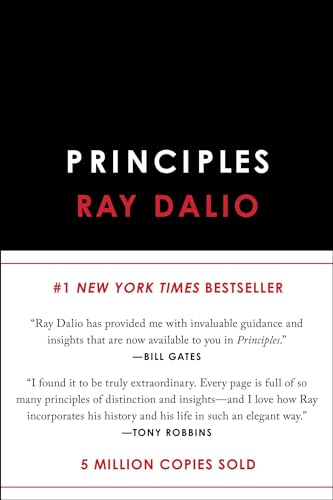
Ray Dalio analyzes market crashes through long-term debt cycles, credit expansion, and deleveraging patterns. In his book Principles for Navigating Big Debt Crises, he explains that crashes usually follow periods of excessive debt, low interest rates, and asset bubbles — conditions that repeat throughout history.
2. Why do people connect Ray Dalio to the 1929 market crash?
Dalio often uses the 1929–1933 Great Depression as a case study to explain how debt bubbles unwind. He compares today’s cycles to past ones to help investors identify similar patterns — not to predict exact dates.
3. Did Ray Dalio predict another 1929-style crash?
No. Dalio does not make date-specific crash predictions. Instead, he highlights risk factors such as high debt levels, monetary policy limits, wealth gaps, and geopolitical tensions. These are structural similarities between today and the late 1920s.
4. What is Ray Dalio’s “Long-Term Debt Cycle”?
It’s a historical cycle, typically lasting 50–100 years, where economies move through phases of:
- Early debt growth
- Bubble expansion
- Peak leverage
- Deleveraging (market crashes)
- Restructuring and recovery
The 1929 crash is one of Dalio’s primary examples of a deleveraging phase.
5. How does Ray Dalio use history to analyze the markets?
Dalio famously says:
“If you understand the past, you can understand the future.”
He studies centuries of crashes — including 1929, Japan 1989, and the 2008 crisis — to find repeating behaviors driven by human psychology and credit cycles.
6. Does Ray Dalio think another crash is inevitable?
Dalio believes cycles are inevitable, not dates. According to his research, every long-term debt cycle eventually hits a correction phase, but how severe it becomes depends on:
- central bank policy
- political decisions
- global tensions
- investor behavior



Pingback: Morgan Housel: The Investment Strategy That Beats 95% of Professional Investors