When the CEO of Goldman Sachs talks about AI, Wall Street listens. And what David Solomon just revealed should matter to everyone—not just investment bankers.
In a recent interview, Solomon dropped some hard truths about how artificial intelligence is reshaping one of the world’s most prestigious financial institutions. And his insights don’t just apply to Goldman Sachs—they’re a preview of what’s coming to every industry.
Whether you’re worried about AI taking your job, curious about how to stay relevant, or wondering how to invest in this transformation, this article breaks down everything you need to know.
Let’s dive into what Goldman’s CEO really said—and what it means for your financial future.
Is There an AI Bubble? Goldman’s CEO Weighs In
The question everyone’s asking: Are we in an AI bubble?
David Solomon’s answer might surprise you. He’s not using the word “bubble”—and here’s why that matters.
The Data Behind the Optimism
Solomon looked at the numbers. Tech company valuations are currently sitting at the 75th to 80th percentile historically. Translation: Yes, valuations are high. But they’re not in uncharted, irrational territory.
He explains: “There’s no question we’re somewhere in a cycle where the values are higher, but the growth opportunity coming from AI is significant.”
This is coming from someone who runs a $130+ billion investment bank. When he says the opportunity is “significant,” he’s not being dramatic—he’s being conservative.
Winners and Losers: The Uncomfortable Truth
But here’s where Solomon gets brutally honest:
“I’m certainly in the camp that there are going to be winners and losers. Capital’s been allocated to companies that are going to be hugely important companies and it’s going to be allocated to companies that ultimately won’t make it.”
This is critical. Not every AI company will succeed. Not every investment will pay off. But the long-term trend is undeniable: AI will create massive productivity gains and build some of the most important companies of our generation.
What This Means for Investors
If you’re investing in AI stocks or companies, Solomon’s message is clear:
Don’t bet on everything. Be selective. Just like the dot-com boom, there will be Amazons and Googles—but there will also be plenty of companies that disappear.
The key is understanding that the technology itself is real. The hype around specific companies? That might be inflated.
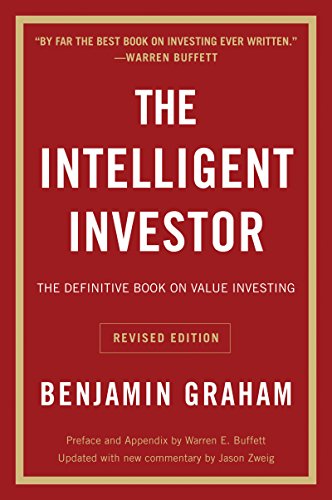
Book recommendation: If you want to understand how to identify winning investments versus hype, read “The Intelligent Investor” by Benjamin Graham. It’s the bible of value investing and teaches you how to separate real value from market euphoria—essential skills in any tech boom.
How Goldman Sachs Is Using AI Right Now
Forget the theory. Let’s talk about what’s actually happening inside one of the world’s most powerful banks.
From Six Hours to Six Seconds
Solomon shares a story that perfectly illustrates the transformation:
40 years ago, if you wanted to do a common stock comparison, it took six hours. You had to physically go to the library, dig through microfiche, and pull back issues of the Wall Street Journal.
Today, the same analysis takes seconds.
But here’s what’s fascinating: Goldman Sachs still employs thousands of smart young people doing intensive work. They’re just doing different work than they did 40 years ago.
That’s the pattern we need to understand.
The Real Way Goldman Uses AI
Solomon breaks down two primary ways Goldman Sachs deploys AI:
1. Making Smart People More Productive
AI tools get into the hands of investment bankers, analysts, and traders. These tools don’t replace them—they amplify their capabilities.
The result?
- More time with clients
- Ability to handle more complex analyses
- Greater reach and scale
- Deeper insights faster
2. Reimagining Core Processes
This is the bigger story. Goldman announced “One Goldman Sachs 3.0″—a complete rethinking of how the firm operates using AI.
They’re looking at six core principles to:
- Operate more efficiently
- Serve clients better
- Automate repetitive processes
- Create meaningful efficiency gains
Solomon emphasizes: “This technology gives us the right and the ability for the first time to reimagine these processes and really do them entirely differently.”
This isn’t about tweaking existing systems. It’s about rebuilding them from scratch with AI at the core.
The Goal: Reinvestment, Not Just Cost-Cutting
Here’s what separates smart AI adoption from dumb AI adoption:
Bad approach: Use AI to cut costs and fire people.
Goldman’s approach: Use AI to create efficiency, then reinvest those gains into business growth.
Solomon puts it clearly: “It’s not just taking out cost, it’s giving us more capacity to invest in our business and grow.”
This is the mindset every company—and every professional—needs to adopt.
Will AI Reduce Headcount at Goldman Sachs?
The question everyone wants answered: Will AI eliminate jobs at Goldman?
Solomon’s answer is nuanced and worth understanding.
“This Time Is Not Different”
First, he pushes back on the panic:
“Technology has been having an impact on headcount, the way people work, what workers you have, for decades and decades.”
The ATM didn’t eliminate bank tellers—it changed what they do. Excel didn’t eliminate accountants—it made them more valuable. The internet didn’t eliminate retail—it transformed it.
AI is the next wave in a long pattern of technological change.
But the Pace Is Different
However, Solomon acknowledges one critical difference: the speed.
“One of the things that’s happening here that’s a little bit different is this is going at a pace that’s quicker.”
This faster pace means:
- More volatility in job transitions
- Certain job functions shifting rapidly
- Less time to adapt than previous technological shifts
- Potential for “unsettled transition” periods
The Job Mix Will Change—Not Disappear
Solomon points out that 25 years ago, Goldman Sachs didn’t have 13,000 engineers. Today they do.
The jobs didn’t disappear. They transformed.
His prediction? “My guess is the mix of engineers with this technology will again shift and change.”
Certain roles will decline. New roles will emerge. The total headcount? That’s not the right question.
The right question is: What skills will be valuable in the AI-powered version of my industry?
What This Means for Your Career (No Matter Your Industry)
If you think this only applies to investment banking, think again.
Solomon makes this clear: “I can’t find a CEO that I’m talking to in any industry that is not focused on how they can reimagine and automate processes in their business.”
Every industry. Every company. Every CEO is thinking about this right now.
The Three Types of Workers in the AI Era
Based on Solomon’s insights, workers will fall into three categories:
1. The Amplified These are people who use AI to become 10x more productive. They embrace the tools, learn them deeply, and use them to deliver dramatically better results.
2. The Displaced These are people doing repetitive, automatable work who resist learning new skills. They’ll struggle as their roles are reimagined or eliminated.
3. The Creators These are people building the AI tools, training the models, designing the systems, and managing the AI infrastructure. Demand for these skills is exploding.
Which category will you be in?
Skills That Matter More Than Ever
If AI can do the technical work faster, what makes humans valuable?
Solomon gives us clues:
- Client relationships – AI can’t replace trust and human connection
- Strategic thinking – Deciding what to analyze, not just running the analysis
- Creativity – Reimagining processes requires human innovation
- Judgment – Making decisions with incomplete information
- Adaptability – Learning new tools and approaches constantly
These are the skills you need to develop right now.
How to AI-Proof Your Career
Here’s your action plan based on Goldman’s strategy:
1. Become an AI power user Don’t fear AI tools—master them. ChatGPT, Claude, Midjourney, GitHub Copilot—whatever tools exist in your industry, learn them.
2. Focus on high-value activities If AI can do it in seconds, you shouldn’t be spending hours on it. Shift your time to strategic, creative, and relationship-driven work.
3. Develop technical literacy You don’t need to become an engineer, but understanding how AI works, what it can and can’t do, and how to direct it is essential.
4. Build irreplaceable relationships The more your value comes from trust, reputation, and human connection, the safer you are.
5. Embrace continuous learning Solomon’s been at Goldman for 40 years and he’s still adapting. Make learning a lifelong habit.
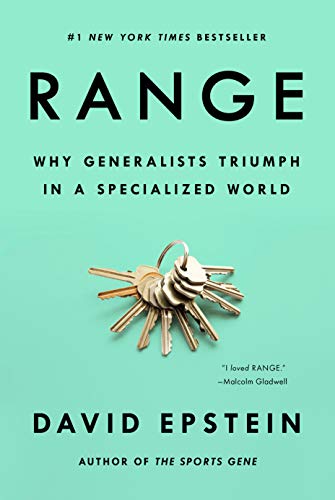
Book recommendation: To understand how to stay relevant in a rapidly changing economy, read “Range: Why Generalists Triumph in a Specialized World” by David Epstein. It explains why broad skills and adaptability beat narrow expertise in times of technological disruption.
The Opportunity: More Capacity to Grow
Here’s the most optimistic part of Solomon’s message:
AI isn’t just about efficiency for efficiency’s sake. It’s about creating capacity to invest in growth.
What “More Capacity” Means
Goldman Sachs is constrained by how much they can invest while maintaining returns for shareholders. Every dollar spent on growth needs to deliver results.
AI changes the equation. By automating and streamlining existing processes, Goldman frees up:
- Capital to invest in new products and services
- Human talent to focus on client-facing and strategic work
- Time to move faster and capture more opportunities
- Resources to expand into new markets
Solomon says it explicitly: “This should free up more capacity to do the things we want to do to serve our clients and grow our business. And that’s exciting.”
What This Means for the Economy
If every company does what Goldman is doing—using AI to create efficiency and reinvest in growth—the economic impact is enormous.
More innovation. More jobs (different jobs). More productivity. More value creation.
Solomon nails it: “That’s a really good thing for economic growth.”
This isn’t a zero-sum game where AI wins and humans lose. It’s a productivity multiplier that can expand the entire economic pie.
How to Invest in the AI Transformation
If you believe Solomon’s thesis—that AI will create massive productivity gains and important new companies—how should you invest?
The Goldman Sachs Approach to AI Investing
Remember Solomon’s key insight: There will be winners and losers.
This means:
❌ Don’t: Blindly invest in every AI stock or company ❌ Don’t: Chase hype and momentum without understanding fundamentals ❌ Don’t: Put all your money in a few speculative AI plays
✅ Do: Diversify across AI leaders with real revenue and products ✅ Do: Look for companies using AI to create genuine value, not just talking about it ✅ Do: Consider AI infrastructure plays (chips, cloud, data centers) ✅ Do: Balance AI exposure with stable, proven investments
Investment Categories to Consider
1. AI Infrastructure Companies building the picks and shovels: Nvidia, AMD, cloud providers, data center operators
2. AI Platforms Microsoft, Google, Amazon—companies with AI platforms and distribution
3. AI-Enabled Enterprises Traditional companies (like Goldman Sachs) using AI to transform their operations and gain competitive advantage
4. Pure-Play AI Companies Anthropic, OpenAI (when public), and other AI-first companies—but be selective
5. Index Funds with AI Exposure For most investors, a diversified tech fund or AI-focused ETF reduces individual stock risk
The Conservative Approach
If you’re not sure how to pick individual winners, Solomon’s perspective suggests:
- Invest in broad market index funds (they’ll include the winners)
- Add modest exposure to AI-specific funds (5-15% of portfolio)
- Focus on companies with real earnings and products, not just potential
- Stay diversified across sectors and geographies
- Keep a long-term view (10+ years)
Book recommendation: For a comprehensive guide to intelligent investing during technological disruption, read “A Random Walk Down Wall Street” by Burton Malkiel. It teaches evidence-based investing principles that work across all market cycles—including AI booms.

The 3-5 Year View: What’s Coming Next
Solomon takes a 3-5 year view on AI transformation. That’s the timeframe you should be thinking about too.
What Will Change by 2028-2030
Based on Goldman’s strategy and Solomon’s insights, here’s what’s likely:
In Banking and Finance:
- Most routine analysis automated
- Dramatically smaller back-office teams
- Larger client-facing and strategic teams
- Entirely reimagined processes and workflows
- Personalized financial advice at scale through AI
Across All Industries:
- Productivity gains of 20-40% in knowledge work
- Significant job role transformation (not necessarily elimination)
- New categories of jobs we can’t imagine yet
- Companies that adapt will dominate; those that don’t will struggle
- Widening gap between AI-savvy professionals and those who resist
For Your Career:
- Continuous upskilling becomes mandatory, not optional
- Hybrid human-AI workflows become standard
- Technical literacy becomes as important as reading and writing
- Soft skills (creativity, judgment, relationships) become more valuable
- Career changes every 5-7 years instead of every 10-15
Preparing for 2030
If you want to thrive in the AI-powered economy of 2030, start now:
2025: Experiment with AI tools in your current role 2026: Develop one new AI-related skill deeply 2027: Reposition yourself as an AI-enabled expert in your field 2028: Help others in your organization adopt AI 2029: Leverage your experience to move into higher-value roles 2030: Lead AI transformation initiatives
The people who start this journey today will have a 5-year head start on everyone else.
The Bottom Line: Adapt or Get Left Behind
David Solomon is refreshingly honest: This transformation is happening whether you’re ready or not.
Every CEO in every industry is focused on AI. Every company will reimagine their processes. Every role will be touched by this technology.
You have two choices:
Choice 1: Resist and hope it goes away Stick with the old ways. Avoid learning new tools. Complain about AI. Hope your industry moves slowly.
Result: Increasing irrelevance and career stagnation.
Choice 2: Embrace and lead the change Learn AI tools. Understand the technology. Position yourself as the person who helps others adapt. Become 10x more valuable.
Result: Career growth, higher earnings, and job security through indispensability.
Goldman Sachs Is Showing You the Playbook
The Goldman Sachs strategy is the template:
- Use AI to amplify your best people (not replace them)
- Reimagine processes from scratch (not just tweak them)
- Create efficiency to fund growth (not just cut costs)
- Invest in continuous adaptation (not one-time transformation)
- Take a 3-5 year view (not panic about tomorrow)
Apply this same framework to your own career and you’ll navigate this transition successfully.
Essential Reading for the AI Economy
If you’re serious about thriving in the AI-powered economy, these books will give you the knowledge and mindset you need:
1. “The Intelligent Investor” by Benjamin Graham – Learn to identify real value versus hype in AI investments
2. “Range: Why Generalists Triumph in a Specialized World” by David Epstein – Understand why adaptability beats narrow expertise in times of change
3. “A Random Walk Down Wall Street” by Burton Malkiel – Master evidence-based investing during technological disruption
4. “Life 3.0: Being Human in the Age of Artificial Intelligence” by Max Tegmark – Explore the long-term implications of AI and how to prepare
5. “The Innovator’s Dilemma” by Clayton Christensen – Learn why successful companies struggle with disruption and how to avoid the same trap
6. “Atomic Habits” by James Clear – Build the daily learning habits that will keep you relevant for decades
7. “Zero to One” by Peter Thiel – Understand how breakthrough companies are built in times of technological transformation
Start with “The Intelligent Investor” if you’re focused on investing. Start with “Range” if you’re focused on career positioning.
Take Action Today
David Solomon’s message is clear: The AI transformation is real, it’s happening now, and it will reshape every industry.
But transformation creates opportunity—if you’re positioned to seize it.
This week:
- Identify one AI tool relevant to your work and start using it daily
- Read one article about how AI is changing your specific industry
- Have a conversation with your manager about AI adoption plans
This month:
- Take an online course on AI fundamentals or prompting
- Experiment with using AI for at least one regular work task
- Network with people in your field who are ahead on AI adoption
This quarter:
- Become known as the “AI person” on your team
- Help a colleague learn to use AI tools effectively
- Propose one process improvement using AI at your company
This year:
- Develop deep competency in 2-3 AI tools relevant to your work
- Position yourself for roles that involve AI strategy or implementation
- Build a portfolio of AI-enabled work that demonstrates your value
The professionals who take action now will be the leaders of 2030. The ones who wait will be playing catch-up—if they’re still in the game at all.
Which path will you choose?
Final Thoughts: Optimism Grounded in Reality
What I appreciate most about David Solomon’s perspective is that it’s optimistic without being naive.
Yes, there will be disruption. Yes, some jobs will change or disappear. Yes, the pace is faster than previous technological shifts.
But ultimately, this technology creates more capacity—capacity to grow businesses, serve clients better, create new opportunities, and drive economic growth.
For the individuals and companies that adapt, the next 3-5 years will be incredibly exciting.
Goldman Sachs is betting billions on this future. Are you betting on yourself?
What’s your biggest concern about AI and your career? Drop a comment below and let’s discuss strategies to help you stay ahead of the curve.