
What if the biggest threat to your financial future isn’t a stock market crash, but a “moving tectonic plate” of global politics and a mountain of “blue tape”?
Jamie Dimon, the billionaire CEO of JPMorgan Chase and one of the most influential figures in global finance, recently sat down with Bloomberg’s David Rubenstein for a candid discussion that should serve as a wake-up call for every investor. While the headlines focused on his blunt “no way, no how” to becoming Fed Chair, the real value lay in his warnings about the structural decay of the American economy and the dismantling of the post-WWII world order.
In this comprehensive guide, we’ll break down Dimon’s insights on why he’d refuse the Fed, his critique of “over-regulation,” and the geopolitical shifts that could determine the economy of 2026 and beyond.
⚠️ IMPORTANT DISCLAIMER: This article is for informational and educational purposes only. It does not constitute financial, legal, or investment advice. We do not recommend buying, selling, or holding any specific assets. The views expressed are a summary of public statements and data. Always consult with a qualified professional before making financial decisions.
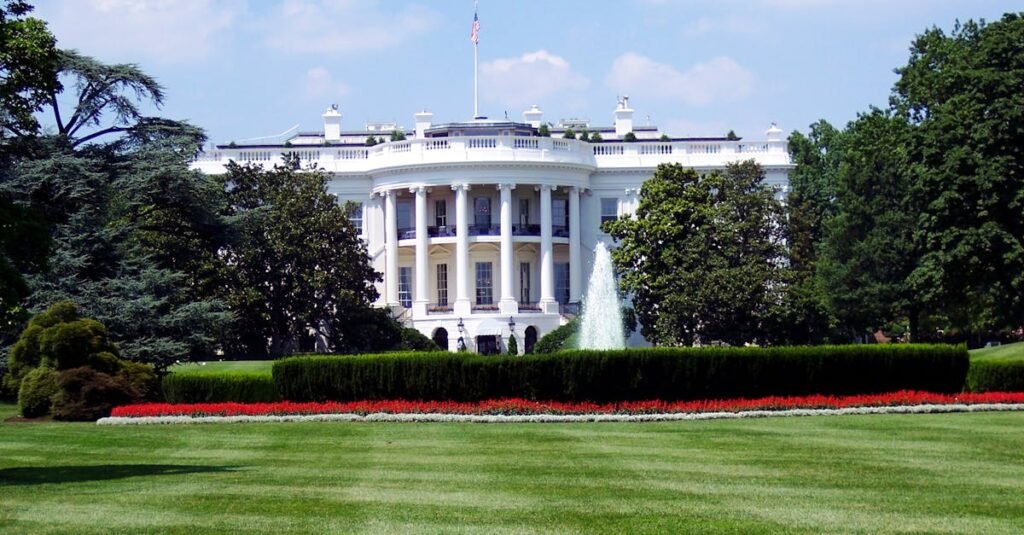
1. Why Jamie Dimon Says “No” to the Fed (But “Maybe” to the Treasury)
When asked if he would ever lead the Federal Reserve, Dimon’s response was immediate: “Chairman of the Fed, I’d put in the absolutely, positively no change, no way, no how, for any reason.”
For a man who has been his own boss for 25 years, the constraints of the Federal Reserve—an entity that must maintain a delicate, often politically charged independence—hold zero appeal. However, the position of Secretary of the Treasury is a different story.
The Power of Being the Boss
Dimon values autonomy. He recalled a televised moment in Peru where he was told the President liked him but wouldn’t make him Treasury Secretary. His response? “That’s good, because I’d like to be my own boss.”
Dimon suggests that if a President calls, a citizen should consider it—but only if the “how they want to operate” aligns with efficiency.
2. The Geopolitical “Tectonic Plates” Shifting Beneath Us
While many investors obsess over quarterly earnings, Dimon is looking at the map. He identified geopolitics as the “biggest unknown” facing the global economy.
The Dismantling of the Western System
Dimon points to a coordinated effort by Russia and China to dismantle the global system established by the West after World War II.
“Those folks have told you what they want to do. They want to dismantle the system set up by America… it’s been quite successful.”
He argues that this isn’t just a concern for Wall Street; it’s a concern for the future of the free, democratic world.
Actionable Takeaway: In a world where alliances are shifting, diversification isn’t just about stocks vs. bonds—it’s about geographic and geopolitical risk management.
3. “Blue Tape” vs. Economic Growth: The Regulation Trap
One of Dimon’s most viral takes from this interview was his rebrand of “Red Tape” to “Blue Tape.” He argues that excessive regulations—often implemented with good intentions—are slowly strangling the American dream.
The Vanishing Public Company
Dimon cites a staggering statistic: America has gone from 8,000 public companies to only 4,000. This trend, which peaked in 1996, has been driven by several factors, but regulatory compliance costs remain a primary culprit. According to research from the American Council for Capital Formation, reporting requirements alone disincentivize small and medium firms from going public, reducing the options for everyday investors.
Why Regulation Costs You Money:
- Liquidity: Excessive rules reduce the system’s ability to move money efficiently.
- Housing: Dimon argues that the housing crisis is driven by zoning and permitting policies that make it impossible to build homes.
- Education: He critiques the lack of “work skills” focus, noting we need “2,000 welders” but lack the schools to train them because we don’t measure outcomes.
The “Europe-ification” of America
Dimon warned that the U.S. is following the path of Europe, where GDP per person has dropped significantly relative to the U.S. due to over-regulation. Data from the International Monetary Fund (IMF) confirms this widening gap: by late 2025, U.S. GDP per capita stood at approximately $92,880, while the Euro Area average lagged behind at $53,670.
4. The Critical Importance of Fed Independence
Recently, there has been significant debate—including a public back-and-forth between Dimon and Donald Trump—regarding presidential influence over the Federal Reserve. Dimon’s stance is firm: Don’t touch it.
He warns that “chipping away” at the independence of the Fed will have the opposite of the intended effect. Instead of lowering rates, political interference will drive rates higher by increasing inflation expectations and risk premiums.
Historical Context: Historical studies, such as those from the Hoover Institution, show that when Presidents (like Nixon or Johnson) pressured the Fed to keep rates low for political gain, it led to the “Great Inflation” of the 1970s. It took the “Volcker Era” interest rate hikes to finally break that cycle.
5. How to Protect Your Portfolio in the “Dimon Era”
Based on Jamie Dimon’s outlook, here is how you can implement these insights:
- Watch the “Blue Tape”: Keep an eye on sectors heavily impacted by zoning. If deregulation occurs in housing, it could unlock massive value in real estate.
- Geopolitical Hedging: Given the “tectonic shifts” mentioned at [01:48], consider assets that act as a hedge against global instability, such as defense or energy.
- Monitor Fed Headlines: If political pressure on the Fed increases, be prepared for “sticky inflation.” Research from the Peterson Institute for International Economics (PIIE) suggests that an erosion of Fed independence could lead to inflation staying 2 percentage points higher than baseline through 2040.
Conclusion: The Fight for Good Policy
Jamie Dimon isn’t just a banker; he’s a student of history. His message is a call to action for leadership to focus on outcomes rather than just adding “things on top of things.”
What do you think? Is the U.S. becoming too regulated, or are these safeguards necessary? Let us know in the comments!
Sources and References:
- Video Source: Dimon Says ‘No Chance’ He’d Take Fed Chair Position – Bloomberg
- Data Reference: World Economic Outlook (October 2025) – IMF
- Study: The declining number of public companies – American Council for Capital Formation
- Official Website: Investing Time Daily
- Follow us: Instagram @InvestingTimeDaily



Pingback: Jamie Dimon Softens on Bitcoin and Blockchain in 2025