
The year was 1929. The air in New York was thick with panic. Crowds gathered outside the New York Stock Exchange, not just to watch history, but because the “Big Board” was five hours behind. People were selling indiscriminately because they thought the very machinery of capitalism had broken.
Fast forward to today. We have the world’s financial data in our pockets. We have the SEC, the FDIC, and a Federal Reserve that knows exactly how to print money when the sky starts falling. We’re safe, right?
Not exactly.
In a recent discussion on Bloomberg Businessweek, Andrew Ross Sorkin—renowned journalist and author of the definitive history 1929: Inside the Greatest Crash in Wall Street History—and How It Shattered a Nation—dropped a truth bomb: While we’ve fixed the problems of 1929, we’ve created entirely new “dominoes” that could lead us straight into a 1932-style depression.
If you’ve ever felt like the current market—fueled by crypto, private credit, and $38 trillion in national debt—feels like a house of cards, this guide is for you. We’re breaking down the hard lessons of history to see if we’re standing on the edge of another “Greatest Crash.”
1. Why 1929 Was Different: The Chaos of Information
The 1929 crash wasn’t just about bad stocks; it was about a total breakdown in communication. Sorkin points out that one of the primary reasons for the panic was that the stock exchange was “off”.
Imagine trying to trade today if your screen showed prices from four hours ago. You’d panic, too.
What We Fixed:
- Transparency: Today, you have a Bloomberg terminal or a smartphone app providing real-time data.
- Regulation: In 1929, insider trading was actually legal. Manipulation was the name of the game. Today, the SEC (at least theoretically) keeps the playing field level.
- Safety Nets: There was no FDIC in 1929. If your bank failed, your life savings vanished. Today, bank runs are mitigated by federal insurance.
2. The “Austerity Spiral”: How a Crash Becomes a Depression
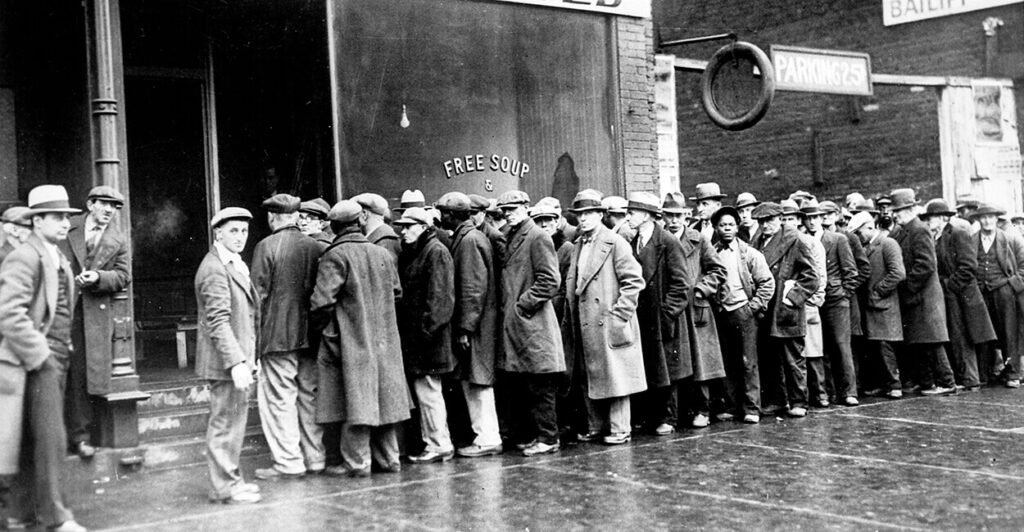
A common myth is that the stock market crash caused the Great Depression. Sorkin clarifies that the crash was merely the “first domino”. What actually shattered the nation were a series of catastrophic policy choices:
- The Fed’s Inaction: The Federal Reserve did essentially nothing as the system collapsed.
- Tariffs: Trade wars further strangled the global economy.
- The Gold Standard: This limited how much liquidity could be injected into the system.
In his book, Sorkin notes that the 25% unemployment rate “didn’t have to happen”. It was the result of choosing austerity when the world needed liquidity.
“Everybody thinks it’s like there’s one bad day and then somehow there’s a Great Depression, but there’s so much in between.” — Andrew Ross Sorkin
3. The $38 Trillion Red Line: Our Modern Weakness
If 1929 was a crisis of structure, 2024 is a crisis of debt.
Sorkin highlights a terrifying contrast: In 1929, the U.S. had a budget surplus. Today, we have $38 trillion in debt.
The “Bernanke Put”
Since the 2008 financial crisis, the “playbook” has been to throw money at the problem. We did it in 2008, and we did it again during the pandemic. This has created a “put” on the market—investors assume the government will always bail them out.
The Bond Market Red Line
But what happens if the government tries to write a $5 trillion check to stop a future crash and the bond market says “No”? If lenders demand interest rates three or four times higher than today, the U.S. could enter an “austerity spiral” that leads directly to 25% unemployment.
4. The Double-Edged Sword of Modern Technology
In 1929, technology was too slow. Today, it might be too fast.
Sorkin cites the Silicon Valley Bank failure as a prime example. On Twitter (X), information—even accurate information—spreads so instantly that a bank can be emptied over a weekend.
While fast information can correct lies, it also allows people to act on “bad news” simultaneously, creating systemic shocks that the 1929 regulators couldn’t have imagined.
5. FOMO and the “Lottery Ticket” Economy
Is Wall Street greedier than it used to be? Sorkin argues it’s not greed, but FOMO (Fear Of Missing Out) driven by social media.
Because of rising inequality and the visibility of extreme wealth on platforms like TikTok, more people feel they can’t “make it” through traditional means. This leads to:
- High-Risk Betting: People treating crypto and “prediction markets” like lottery tickets rather than investments.
- Shadow Banking: The rise of “Private Credit”—a $2 trillion market that even the Federal Reserve doesn’t fully understand.
6. Actionable Takeaways: How to Protect Yourself
Based on the insights from Sorkin’s research into the 1929 crash, here is how you can navigate today’s “irrational exuberance”:
- Watch the Debt, Not Just the Stocks: The real “red line” isn’t a stock market dip; it’s a spike in interest rates on short-term Treasuries.
- Avoid the FOMO Trap: Don’t let social media dictate your risk tolerance. The 1929 crash was fueled by people buying on margin (debt) because they saw their neighbors getting rich.
- Liquidity is King: In a crisis, the “playbook” relies on the government’s ability to provide cash. If that $38 trillion debt prevents them from doing so, you want to be holding uncorrelated assets.
- Read the History: To understand the future, you must understand the “dominoes” of the past.
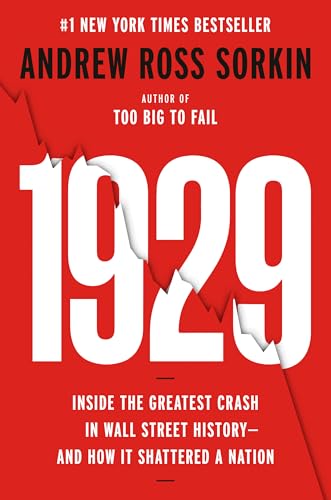
Recommended Reading: For a deep dive into the psychology of the crash, I highly recommend picking up Sorkin’s book:
Conclusion: Will History Repeat?
The world of 2024 is safer in terms of bank insurance and data transparency, but it is far more fragile in terms of global debt and the speed of panic. As Sorkin notes, the 1929 crash didn’t have to be a Depression; it was the policy choices that followed that broke the country.
Our goal today should be to ensure that when the next domino falls, we don’t let “FOMO” or “austerity” push us over the edge.
Watch the Full Discussion:
For more insights from Andrew Ross Sorkin on the parallels between the 1920s and today, watch the full Bloomberg interview here: What the Crash of 1929 Can Tell Us About Today
Follow for more daily financial insights:
- Website: Investing Time Daily
- Instagram: @investingtimedaily




Pingback: Joe Lonsdale on AI Regulation: Key Insights from CNBC