
Understanding the global economy has never felt more confusing.
Every week, headlines talk about AI investment booms, India’s rise, China’s slowdown, interest rate cycles, and geopolitical tension—often with contradictory conclusions. For many people, the real question isn’t what to invest in, but:
How do I understand what’s actually happening?
That’s where books still outperform news feeds, social media threads, and hot takes.
The best investment books don’t tell you what to buy. Instead, they explain:
- How economic systems evolve
- Why markets behave the way they do
- How human psychology shapes financial decisions
- Why history keeps influencing the present
This article is an educational guide to the best investment books for understanding today’s global economy—based on history, behavioral finance, macroeconomics, and long-term thinking, not predictions or advice.
You won’t find stock tips here.
You will find context, mental models, and frameworks used by some of the most respected thinkers in finance.
Why Books Still Matter in a World of Financial News
Financial news is designed to be reactive. Books are designed to be reflective.
According to Nobel laureate economist Robert Shiller, markets are deeply influenced by narratives—stories people believe and repeat (Narrative Economics, 2017). News amplifies narratives quickly, but books slow them down and examine their structure.
Books help you:
- Separate signal from noise
- Understand cycles instead of moments
- See how today’s events resemble past ones
As investor and writer Morgan Housel notes:
“The most important part of every plan is planning for the fact that the plan won’t go according to plan.”
— Same As Ever (2023)
That mindset is essential when trying to understand a constantly changing global economy.
How This List Was Built (Methodology)
This list is based on educational value, not popularity alone.
Each book included meets at least one of these criteria:
- Used in universities, CFA programs, or academic references
- Written by respected investors, economists, or historians
- Cited frequently in serious financial literature
- Focused on how systems work, not predictions
Sources include:
- University syllabi (Harvard, Yale, LSE)
- CFA Institute reading lists
- Academic research
- Public interviews and writings by the authors
The Intelligent Investor – Benjamin Graham
Understanding Markets Through Principles, Not Predictions
First published: 1949
Benjamin Graham is often called the father of value investing, but that label understates his broader contribution.
The Intelligent Investor is fundamentally a book about:
- Risk vs. uncertainty
- Market psychology
- Long-term decision-making
Graham introduced the idea that markets behave like an emotional partner—sometimes rational, often irrational. This metaphor, “Mr. Market,” is still referenced today because it explains why prices can disconnect from fundamentals.
Why it matters today
In an era of:
- Rapid capital flows
- Algorithmic trading
- Speculative narratives
Graham’s insistence on margin of safety and emotional discipline provides historical grounding.
Source: The Intelligent Investor, Benjamin Graham, Harper Business

Same As Ever – Morgan Housel
Why Human Behavior Never Changes (Even When Technology Does)
Published: 2023
Morgan Housel focuses on something often ignored in economic discussions: human behavior.
While technology, regulations, and markets evolve, Housel argues that:
- Fear, greed, optimism, and uncertainty remain constant
- Economic cycles repeat because people repeat
The book draws from history, psychology, and finance to show how recurring patterns shape global outcomes.
Why it matters today
In periods dominated by:
- AI narratives
- New financial instruments
- Rapid innovation
Same As Ever reminds readers that behavioral forces often matter more than technical ones.
Source: Same As Ever, Morgan Housel, Harriman House

Principles for Dealing with the Changing World Order – Ray Dalio
A Historical Framework for Global Power Shifts
Published: 2021
Ray Dalio’s book examines 500 years of history to identify patterns behind:
- The rise and fall of empires
- Currency cycles
- Debt accumulation
- Internal and external conflicts
Dalio compares historical cases such as:
- The Dutch Empire
- The British Empire
- The United States
- China
His framework is not predictive; it is comparative.
Why it matters today
With increasing interest in:
- China–U.S. relations
- Emerging markets like India
- Currency and debt discussions
This book provides a long historical lens instead of short-term speculation.
Source: Principles for Dealing with the Changing World Order, Ray Dalio

The Most Important Thing – Howard Marks
Understanding Risk, Cycles, and Second-Level Thinking
Published: 2011
Howard Marks emphasizes what he calls second-level thinking:
- Not just what happens
- But what people expect to happen
The book explains:
- Why cycles are inevitable
- Why extremes of optimism and pessimism matter
- How risk is often misunderstood
Marks repeatedly stresses humility and uncertainty—ideas supported by academic finance research.
Why it matters today
In environments shaped by:
- Rapid shifts in sentiment
- Overconfidence during booms
- Panic during downturns
Understanding cycles is more valuable than forecasts.
Source: The Most Important Thing, Howard Marks, Columbia Business School Publishing

A Random Walk Down Wall Street – Burton G. Malkiel
What Academic Research Says About Markets
First published: 1973
Malkiel’s work is grounded in the Efficient Market Hypothesis (EMH), which argues that prices reflect available information.
While EMH is debated, the book presents:
- Decades of academic research
- Data-driven analysis
- Clear explanations of market behavior
Why it matters today
In a world of:
- Financial influencers
- Confident predictions
- Algorithmic trading
This book introduces skepticism and evidence-based thinking.
Source: A Random Walk Down Wall Street, Burton G. Malkiel, Princeton University Press

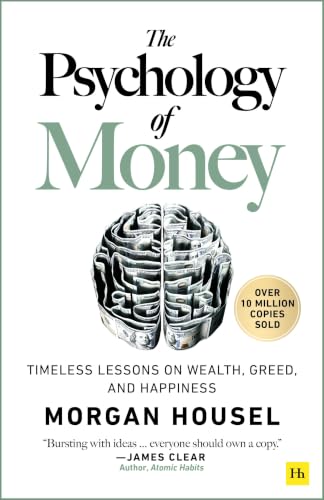
The Psychology of Money – Morgan Housel
How Personal Decisions Shape Economic Outcomes
Published: 2020
This book complements macroeconomic thinking by zooming in on individual behavior.
Housel explains:
- Why people interpret risk differently
- How luck and risk coexist
- Why compounding is misunderstood
These insights help explain broader economic patterns when aggregated across millions of individuals.
Why it matters today
Macroeconomic outcomes often emerge from micro-level behavior repeated at scale.
Source: The Psychology of Money, Morgan Housel
Why These Books Matter More Than “Hot Takes”
Short-term commentary often:
- Overreacts to data
- Confuses correlation with causation
- Ignores historical context
Books, by contrast:
- Integrate multiple cycles
- Acknowledge uncertainty
- Provide tested frameworks
As economist John Maynard Keynes famously noted:
“Markets can remain irrational longer than you can remain solvent.”
Understanding why markets behave this way is more valuable than trying to predict when they will change.
How to Read These Books (Educational Approach)
This article does not suggest actions or strategies. Instead, these books can be read to:
- Build historical awareness
- Improve critical thinking
- Understand systemic risk
- Recognize behavioral biases
A useful approach:
- Read slowly
- Compare frameworks
- Cross-reference historical events
- Avoid treating any book as a rulebook