
The artificial intelligence revolution isn’t coming—it’s already here. And it’s creating one of the most significant wealth-building opportunities in modern history.
According to International Data Corporation, the global AI market is projected to explode from $235 billion in 2024 to reaching over $631 billion by 2028. That’s a 168% increase in just four years. Companies like Nvidia have seen their stock prices soar over 700% in the past two years alone, while OpenAI’s valuation has skyrocketed to over $157 billion.
But here’s the challenge: Most investors don’t know how to evaluate AI companies, understand the technology driving this revolution, or identify which opportunities are real versus which are just hype.
That’s where the right books can give you an enormous advantage.
In this comprehensive guide, we’ll explore the best AI investment books for 2026, covering everything from beginner-friendly introductions to advanced strategy guides written by industry insiders. Whether you’re completely new to AI investing or looking to deepen your expertise, you’ll find the perfect resources to help you capitalize on this technological revolution.
Why AI Investing Requires Specialized Knowledge
Traditional investing rules don’t fully apply to artificial intelligence companies. Understanding why requires grasping what makes AI investments fundamentally different.
The Technology Complexity Factor
AI investing demands understanding not just business fundamentals but also technological capabilities. Can a company’s AI model actually deliver on its promises? Is their approach to machine learning scalable? Do they have access to the data they need?
These aren’t questions traditional fundamental analysis prepares you to answer. Books specifically focused on AI investing bridge this knowledge gap, helping you evaluate companies through both a business and technological lens.
The Winner-Take-Most Dynamic
AI markets tend toward natural monopolies more than traditional industries. Network effects, data advantages, and the extreme costs of developing cutting-edge models mean that leaders can pull dramatically ahead of competitors.
BlackRock’s analysis reveals that their proprietary AI models, trained on over 400,000 earnings call transcripts covering 17,000+ firms, can forecast market movements with accuracy that decreases in newer versions of general-purpose models like GPT-4. This demonstrates why specialized AI knowledge creates competitive advantages that compound over time.
The Hype vs Reality Challenge
Not every company adding “AI” to their investor presentations deserves your capital. Learning to separate genuine AI innovation from marketing buzzwords is perhaps the most valuable skill an AI investor can develop—and the right books provide frameworks for making these distinctions.
The Best AI Investment Books for 2026
For Absolute Beginners: Starting Your AI Investing Journey
“AI Investing For Dummies” by Paul Mladjenovic
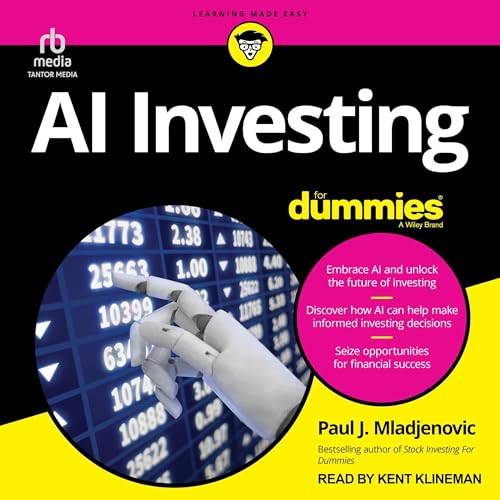
If you’re completely new to both investing and artificial intelligence, this is your starting point. Paul Mladjenovic breaks down complex AI concepts into digestible explanations while teaching fundamental investing principles.
What Makes It Essential: This book excels at explaining the benefits and drawbacks of AI investing in plain English. Mladjenovic covers stocks, bonds, commodities, and even real estate through an AI lens, showing how artificial intelligence is transforming every major asset class.
Best For: Complete beginners who need to understand both basic investing and AI fundamentals simultaneously.
Key Takeaway: AI investing isn’t just about tech stocks—it’s about recognizing how AI creates opportunities and disruption across your entire portfolio.
What You’ll Learn:
- How AI can help you make better investment decisions
- Ways to identify hidden opportunities using AI tools
- AI-specific tactics for budgeting, taxes, and retirement planning
- How to implement the right AI resources and solutions for your situation
“The AI Stock Investor: A Beginner’s Guide to Profiting from the AI Revolution”
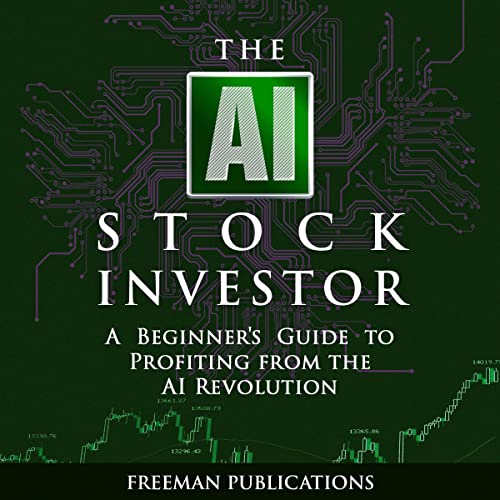
This focused guide takes beginners specifically through the process of investing in AI stocks, even if you’ve never read a finance book before.
What Makes It Essential: Unlike broader investing books, this concentrates exclusively on building a successful long-term position in AI companies. The author provides step-by-step guidance for evaluating AI stocks, understanding what makes certain companies positioned for success, and avoiding common pitfalls.
Best For: Beginners who want to focus specifically on AI stock opportunities rather than broader investment strategies.
Key Takeaway: Success in AI investing comes from understanding both the technology roadmap and business fundamentals—not just chasing the latest trending stock.
What You’ll Learn:
- How to evaluate AI company fundamentals
- Understanding AI business models and revenue streams
- Identifying which AI sectors offer the most opportunity
- Building a diversified AI-focused portfolio
For Intermediate Investors: Deepening Your AI Knowledge
“Supremacy: AI, ChatGPT and the Race That Will Change the World” by Parmy Olson
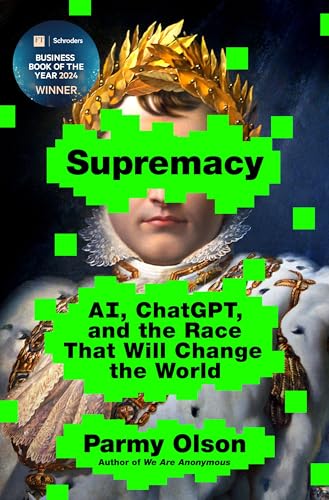
This 2024 Financial Times Business Book of the Year Award winner provides insider access to the intense competition between OpenAI, DeepMind, and Anthropic as they race toward artificial general intelligence (AGI).
What Makes It Essential: Understanding the competitive dynamics between leading AI labs helps you identify which companies have sustainable advantages. Olson’s narrative reveals the people, philosophies, and technological breakthroughs driving this revolution, giving investors crucial context for evaluating AI investments.
Best For: Investors who want to understand the strategic landscape and competitive moats in AI development.
Key Takeaway: The race to AGI isn’t just about technology—it’s about access to capital, talent, compute resources, and data. Understanding these factors helps you identify long-term winners.
What You’ll Learn:
- Inside the competition between major AI labs
- Ethical and societal implications affecting AI company trajectories
- How generative AI systems are transforming industries
- What factors separate leaders from followers in AI development
“AI Superpowers: China, Silicon Valley, and the New World Order” by Kai-Fu Lee
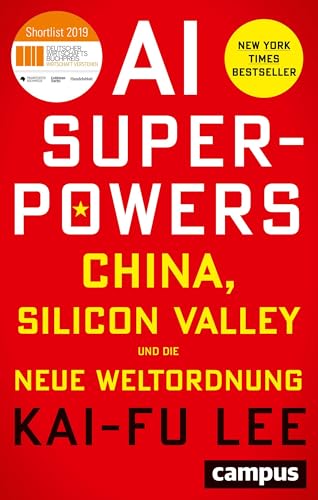
Former Google China president Kai-Fu Lee provides unparalleled insight into the AI landscape across China and the United States, revealing how this technological competition reshapes global power dynamics.
What Makes It Essential: Most AI investing books focus exclusively on American companies, but Lee reveals why understanding China’s AI capabilities is crucial for global investors. His insider perspective on both Silicon Valley and Chinese tech giants provides strategic context you won’t find elsewhere.
Best For: Investors building globally diversified AI portfolios who need to understand competitive dynamics between the world’s two AI superpowers.
Key Takeaway: China’s massive data advantages, aggressive implementation approach, and state-backed investment create both opportunities and competitive threats that Western-focused investors often miss.
What You’ll Learn:
- Comparative advantages of US and Chinese AI development
- How China’s approach to AI differs fundamentally from Silicon Valley
- Workforce displacement implications across both economies
- Investment opportunities in Chinese AI companies
For Advanced Investors: Professional-Grade AI Investment Strategy
“The AI Book: The Artificial Intelligence Handbook for Investors, Entrepreneurs and FinTech Visionaries” by Susanne Chishti and Ivana Bartoletti
This comprehensive handbook focuses specifically on how AI is transforming the financial services industry, providing detailed insights into FinTech applications and investment opportunities.
What Makes It Essential: While most AI investment books discuss investing in AI companies, this book reveals how AI is revolutionizing the investment process itself. Understanding these transformations helps you identify which financial services companies will thrive and which face disruption.
Best For: Sophisticated investors and financial professionals who need deep understanding of AI’s impact on banking, investment management, and financial services.
Key Takeaway: AI isn’t just an investment opportunity—it’s fundamentally changing how investment decisions are made, creating advantages for those who understand and leverage these tools.
What You’ll Learn:
- How AI improves financial health for underbanked populations
- Applications of AI in fraud prevention, risk management, and compliance
- Investment opportunities AI creates in financial services
- How robotic process automation transforms financial operations
“Prediction Machines: The Simple Economics of Artificial Intelligence” by Ajay Agrawal, Joshua Gans, and Avi Goldfarb

Three leading economists from the University of Toronto explain how AI fundamentally transforms the economics of prediction, with profound implications for business strategy and investment.
What Makes It Essential: This book provides an economic framework for understanding AI’s value that goes far beyond technical capabilities. By understanding AI as a tool that dramatically reduces the cost of prediction, you can identify which business models benefit most and where investment opportunities emerge.
Best For: Investors who want theoretical foundations for evaluating AI’s economic impact across industries.
Key Takeaway: AI doesn’t just make better predictions—it makes prediction so cheap that entirely new business models become viable. Understanding this principle helps you identify transformative opportunities before they become obvious.
What You’ll Learn:
- Economic principles underlying AI value creation
- How reduced prediction costs transform business models
- Organizational design implications for AI adoption
- Public policy considerations affecting AI investments
“Artificial Intelligence: A Modern Approach” by Stuart J. Russell and Peter Norvig
This comprehensive textbook, updated in its fourth edition (2020), serves as the definitive technical resource on AI. While not specifically an investment book, it provides deep technical understanding that separates informed investors from those merely following trends.
What Makes It Essential: Understanding how AI actually works—not just what companies claim it does—gives you enormous advantages in evaluating investment opportunities. This book covers everything from foundational theories to practical applications, though it requires significant time investment.
Best For: Serious investors willing to invest substantial effort to develop genuine technical understanding of AI systems.
Key Takeaway: Technical understanding of AI capabilities and limitations helps you separate genuine innovation from marketing hype when evaluating company claims.
What You’ll Learn:
- Foundational AI theories and algorithms
- Machine learning and deep learning principles
- Natural language processing and computer vision
- AI’s actual capabilities versus common misconceptions
Specialized Topics: Niche AI Investment Opportunities]
“The Singularity Is Nearer” by Ray Kurzweil (2024)
Ray Kurzweil updates his groundbreaking predictions about AI’s future, focusing on the accelerating pace of technological advancement and its implications for humanity and investment.
What Makes It Essential: Kurzweil’s track record of technological predictions gives his forecasts particular weight. Understanding his vision of AI’s trajectory helps investors think beyond quarterly earnings to truly transformative changes ahead.
Best For: Long-term investors interested in positioning portfolios for radical technological transformation over the next 10-20 years.
Key Takeaway: If Kurzweil’s predictions prove even partially correct, today’s AI investments represent the ground floor of the most significant economic transformation in human history.

Frequently Asked Questions About AI Investment Books
What are the best AI investment books for complete beginners?
Start with “AI Investing For Dummies” by Paul Mladjenovic, which explains both basic investing principles and AI fundamentals in accessible language. Follow this with “The AI Stock Investor,” which provides step-by-step guidance specifically for AI stock investing. These two books provide a comprehensive foundation without requiring prior investing or technical knowledge.
Do I need technical knowledge to invest in AI successfully?
You don’t need to be an AI engineer, but developing basic understanding of how AI works provides significant advantages. Books like “AI Superpowers” and “Prediction Machines” explain AI’s impact without requiring technical expertise, while “Artificial Intelligence: A Modern Approach” offers deeper technical knowledge for those willing to invest the time.
How do AI investment books compare to following AI news and blogs?
Books provide systematic frameworks and deeper analysis than daily news coverage. While current news helps you stay updated on developments, books teach you how to think about AI investing strategically. The ideal approach combines foundational knowledge from books with current information from reputable news sources.
Are AI investment books from 2020-2021 still relevant in 2026?
Partially. Books covering AI fundamentals, economic principles, and investment frameworks remain valuable. However, specific stock recommendations and technological predictions may be outdated. Focus on books published 2023 or later for current analysis, or classic books covering timeless principles rather than current events.
What’s the difference between books about investing in AI versus using AI for investing?
Books about investing in AI help you evaluate and select AI companies as investments. Books about using AI for investing teach you how to leverage AI tools for research, trading, and portfolio management. Both categories offer value, but serve different purposes. Most investors benefit more from learning to invest in AI companies than from using AI trading algorithms.
Should I read books about OpenAI and ChatGPT specifically?
Books covering specific companies and products provide valuable context but can quickly become outdated as technology advances. “Supremacy” offers excellent insight into OpenAI’s competitive dynamics that remains relevant even as specific products evolve. Balance company-specific books with broader strategic frameworks.
How many AI investment books should I read before investing?
Read at least two books appropriate to your knowledge level before making significant AI investments. A good combination pairs a beginner-friendly introduction with either a strategic framework book (“Prediction Machines”) or sector-specific analysis (“AI Superpowers”). Continue learning as you invest rather than waiting to read everything before starting.
Do AI investment books cover cryptocurrency and blockchain?
Most AI investment books focus specifically on artificial intelligence rather than cryptocurrency, though some discuss both technologies. If interested in crypto, seek books specifically covering cryptocurrency investing. AI and crypto represent distinct investment categories with different risk profiles and growth drivers.
What AI investment books do professional investors recommend?
Professional investors frequently recommend “Prediction Machines” for its economic framework and “AI Superpowers” for strategic context. BlackRock’s public insights reveal they use proprietary AI models trained on specific datasets rather than general-purpose tools—a lesson about specialization that books covering institutional AI adoption reinforce.
Are there AI investment books focused on specific sectors like healthcare or automotive?
While comprehensive sector-specific AI investment books are still emerging, books like “The AI Book” focus on financial services applications. For other sectors, combine general AI investment knowledge with sector-specific analysis from investment research firms covering healthcare technology, autonomous vehicles, or other AI-impacted industries.
Conclusion: The AI Investment Opportunity of a Generation
The artificial intelligence revolution represents perhaps the most significant investment opportunity of the 21st century. The global AI market’s projected growth from $235 billion to over $631 billion by 2028 reflects just the beginning of AI’s economic impact.
But successfully capitalizing on this opportunity requires more than following headlines about the latest AI breakthrough. It demands systematic understanding of AI technology, economic frameworks for evaluating AI’s impact, and practical knowledge of how to identify companies with sustainable competitive advantages.
The books covered in this guide provide that essential foundation. Whether you’re just beginning your AI investment journey with “AI Investing For Dummies” or deepening expertise with “Artificial Intelligence: A Modern Approach,” each book offers insights that can meaningfully improve your investment decisions.
Start with one book appropriate to your current knowledge level. Read it actively, taking notes and identifying how concepts apply to companies you’re considering. Then supplement book knowledge with current analysis, gradually building the expertise that separates successful AI investors from those simply riding trends.
The AI revolution is happening now. The question isn’t whether artificial intelligence will transform our economy—it’s whether you’ll position yourself to benefit from that transformation.
Your AI investment education starts with the first book you choose. Pick one from this guide, and begin today.

Ready to start your AI investing journey? Choose the book that matches your experience level and click through to begin building the knowledge that will drive your investment success in the AI era.
Disclaimer: This article contains affiliate links. If you purchase books through these links, we may earn a commission at no additional cost to you. All book recommendations are based on content quality and relevance to AI investing education. This content is for informational purposes only and does not constitute investment advice. Always conduct your own research and consider consulting with financial professionals before making investment decisions.
ALSO WATCH
Recommended Reading
“Godfather of AI” Warns: Superintelligence in 10 Years, Massive Unemployment Coming
Sundar Pichai on the Future of AI: What Google’s CEO Just Revealed About Work, Wealth, and the Web