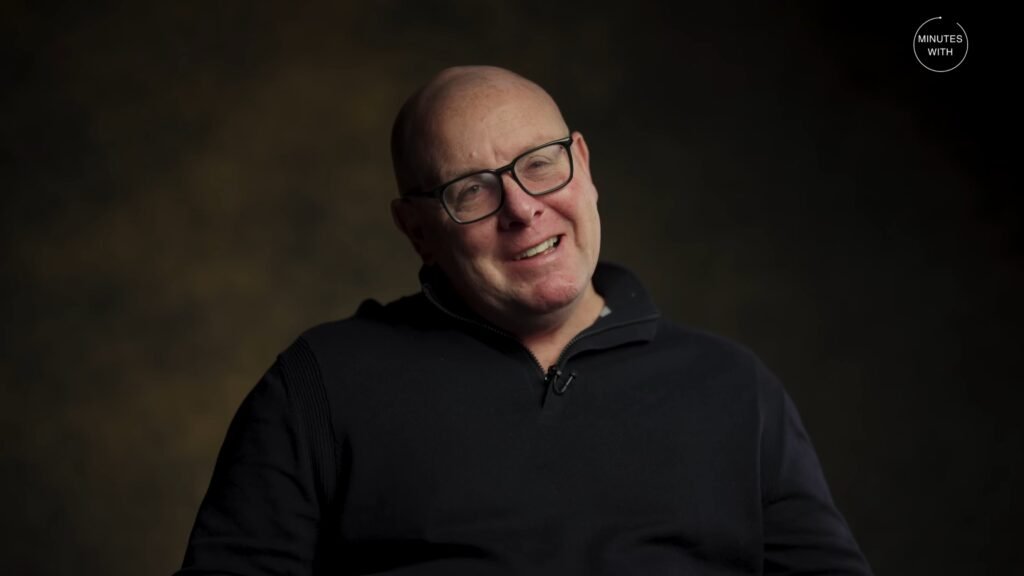
Bank of America CEO Brian Moynihan provided a detailed assessment of the United States economy, revealing that while aggregate consumer spending remains healthy, the bottom third of American consumers are experiencing slower growth and increasing concerns about affordability.
In an interview with Bloomberg Television, Moynihan drew on data from 70 million Bank of America consumer customers who collectively spend approximately $4.5 trillion annually, offering one of the most comprehensive real-time views of American household economic activity.
Consumer Spending Shows Continued Growth
According to Moynihan’s analysis of November 2024 data compared to November 2023, consumer spending increased by approximately 4.2 to 4.5 percent year-over-year. This growth was evident during major retail periods including Black Friday and Cyber Monday.
“The U.S. consumer is doing fine,” Moynihan stated. “For the month of November 25 versus November 24, the amount of money our 70 million consumers pushed about 4.2-4.5%. The spending was solid and good and it’s consistent with a growing economy.”
Bank of America’s economic team projects U.S. economic growth of 2.4 percent for the coming year, based on the spending patterns and economic indicators observed through their extensive customer base.
The Reality of Bifurcated Economic Experience
However, Moynihan emphasized that aggregate numbers mask significant disparities in consumer financial health across income levels—what economists refer to as a “K-shaped” economic recovery or economy.
“If you sort into thirds, the bottom third is growing. It’s just growing at a slower rate than the middle third of the top third,” Moynihan explained. “And so that’s what you hear about the K economy and things like that.”
This bifurcation represents a key challenge for policymakers and businesses attempting to assess overall economic health, as different segments of the population experience markedly different economic conditions.
Affordability Emerges as Primary Consumer Concern
Despite relatively strong employment figures, with the unemployment rate at 4.4 percent and new unemployment claims remaining at historically low levels, Moynihan identified affordability as the dominant concern among consumers, particularly those in the lower income brackets.
“They’re worried about affordability,” Moynihan stated. “We hear it from certain pockets of consumers. The good news is with the unemployment rate at 4.4% or so, new claims for unemployment are still at a very low rate. So people are working, they’re getting paid, but they are worried about prices and affordability and I think that will dominate the conversation until it settles in.”
This observation highlights a fundamental tension in the current economic environment: employment remains solid, wages continue to grow nominally, yet purchasing power concerns persist among a significant portion of the population.
Labor Market Strength Provides Foundation
Moynihan noted that strong labor market fundamentals provide an important foundation for consumer economic health. With unemployment remaining low and new jobless claims at levels comparable to or lower than pre-pandemic periods, the structural employment situation remains supportive of consumer spending capacity.
The challenge, according to Bank of America’s analysis, centers not on employment availability but on the relationship between income growth and price levels, particularly for lower-income households that spend a higher proportion of their income on necessities.

Recommended Reading
- Ray Dalio: Why America Is Losing the Technology War to China
- JPMorgan CEO Jamie Dimon on US Debt, AI and Tax Risks
Federal Reserve Policy Outlook
Moynihan addressed expectations for Federal Reserve monetary policy, indicating that Bank of America’s team anticipates a rate cut at the Federal Reserve’s upcoming December meeting.
“A Fed cut helps and our team believes the Fed will cut next week,” Moynihan stated, referring to the December Federal Open Market Committee meeting.
Inflation Progress and Persistence
The discussion of Fed policy centered on the persistent nature of inflation despite progress in reducing it from peak levels. Moynihan noted that inflation remains above the Federal Reserve’s target rate and has proven “sticky,” though it continues to decline gradually.
“When they started raising rates, people told me it takes five years to actually squeeze out inflation and people just aren’t patient,” Moynihan observed. “And so it takes a while. It’s been coming down and it’s sort of sticky in that it’s not making the incremental progress.”
According to Bank of America’s projections, the Federal Reserve will ultimately reduce the federal funds rate to approximately 3 percent, while ten-year Treasury rates are expected to settle in the range of 4 to 4.5 percent. Moynihan characterized this as “a more normal rate structure for the United States.”
The Benefits of Rate Normalization
Moynihan suggested that a return to more historically normal interest rate levels could provide benefits for economic decision-making, removing distortions created by the extended period of extremely low rates.
“I think that’s not a bad thing if you have a little higher inflation, a little faster growth and a normal rate structure,” he stated. “The incentives created by very low rates are out of the system. People can act on economic concerns.”
This perspective suggests that while higher rates increase borrowing costs, they also provide clearer economic signals and reduce some of the speculative behaviors encouraged by near-zero interest rates.

Business Activity and Merger Environment
Moynihan reported a significant increase in merger and acquisition activity following the recent change in presidential administration, attributing this to both policy clarity and improved regulatory processing times.
Approval Timelines Shortened Substantially
One of the most significant changes Moynihan highlighted was the reduction in deal approval timelines, which he indicated had been cut approximately in half.
“You’re seeing the timeframe to approve a deal dropped by half,” Moynihan stated. “And that’s important because the idea of a deal being open for a year and a half, that’s tough on the companies and so that’s good news.”
This acceleration in regulatory review processes addresses a longstanding concern among corporate executives that extended approval periods create uncertainty and complicate transaction planning.
Policy Clarity Enables Long-Term Planning
Beyond regulatory processing speed, Moynihan emphasized that increasing clarity around major policy areas—including trade, immigration, and taxation—enables companies to make long-term investment and strategic decisions with greater confidence.
“Companies can look and discount cash flows and make decisions in even a rate structure that’s higher, as long as it’s consistent, they can plan into it,” Moynihan explained.
This observation suggests that policy predictability may be as important as specific policy choices in supporting business investment and economic activity.
International Operations and Trade Considerations
Moynihan discussed Bank of America’s international presence and the evolving landscape of trade and tariff policies affecting multinational operations.
UK Operations and Investment
Bank of America maintains approximately 6,000 employees in London and recently announced plans to add 1,000 positions in Belfast, Northern Ireland, specializing in areas where the company can access needed talent while supporting local economic development.
“We believe in London. We’ve been here for a long time. It’s just part of who we are,” Moynihan stated. “London in particular is a great place for multinational international operations.”
He emphasized the importance of the United Kingdom maintaining competitive regulatory frameworks that balance necessary oversight with business operational needs.
Regulatory Environment Considerations
Moynihan’s advice to policymakers focused on understanding the practical implications of regulatory decisions for international companies operating within national borders.
“Make sure the regulations are fair and protect, but also don’t overdo it,” he stated. “If you make it hard to operate, that’s when people start to make decisions or make it uncomfortable for taxation for the workers. That’s when they make decisions.”
He emphasized that decisions about business location are often made not by relocating existing operations but by determining where to place future growth—a distinction he suggested policymakers sometimes fail to appreciate.

Trade and Tariff Impact on Business Planning
Moynihan addressed the business community’s adaptation to the evolving trade and tariff environment, indicating that companies have incorporated expected tariff levels into their strategic planning.
Tariff Expectations Incorporated into Plans
According to Moynihan, businesses have worked into their plans expectations of tariff increases generally in the range of 10 to 15 percent across various product categories.
“It’s become clear that there’s sort of 10 to 15% increase generally across the board,” he stated. “That’s helped business understand it better. And so I think that’s been worked into their plans.”
This incorporation of tariff expectations into business models represents a shift from the uncertainty that characterized earlier periods, when the scope and scale of potential tariffs remained unclear.
Non-Tariff Barriers as Ongoing Concern
Beyond traditional tariffs, Moynihan highlighted the importance of addressing non-tariff barriers—regulatory requirements, product standards, and administrative procedures that can effectively restrict market access without formal tariff impositions.
“One of the things administrations have worked on that gets lost in percentages is the non-tariff barriers,” Moynihan noted. “Those are real barriers both in the EU, frankly, through regulation in China, in other places. Working on that is important for multinational companies.”
The ability to access markets without requiring product modifications or facing discriminatory regulatory treatment represents a significant concern for companies operating across multiple jurisdictions.

Geopolitical Factors and Business Decision-Making
The interview addressed how businesses incorporate geopolitical developments—including ongoing conflicts and international tensions—into their strategic planning processes.
Focus on Controllable Factors
Moynihan suggested that while geopolitical events including the war in Ukraine, Middle East tensions, and debates surrounding Taiwan remain on corporate leaders’ minds, businesses primarily focus on factors within their control.
“There are things that you look at and say, I can have an impact on this or control it or I can make a decision on it,” Moynihan stated. “Kinetic wars and war in Ukraine, getting the Middle East settled, Israel and the Gaza Strip settled, the debates around Taiwan. All these things are on people’s minds all the time. But the reality is there’s not much you can do about it.”
This pragmatic approach suggests that while businesses monitor geopolitical risks, operational and strategic decisions are driven more by market opportunities, regulatory environments, and economic fundamentals that companies can directly influence or respond to.
Bank of America’s Technology Investment and AI Implementation
Moynihan discussed Bank of America’s significant technology investments, particularly in artificial intelligence, highlighting the practical deployment of AI systems serving millions of customers.
Erica: AI Assistant Serving Millions
Bank of America’s AI-powered assistant, Erica, currently serves approximately 2 million customers daily, representing a substantial real-world implementation of artificial intelligence in consumer banking.
“We showed that it’s actually not theoretical,” Moynihan stated regarding AI implementation. “Bank of America, the Erika interface, sees 2 million customers today at Bank of America, which is an AI board.”
This deployment scale demonstrates that AI applications in banking have moved beyond pilot programs to become integrated components of customer service infrastructure.
Investor Day Highlights
Bank of America recently held its first Investor Day in 15 years, presenting long-term strategic goals and financial targets to the investment community. The event showcased competitive advantages across business lines and outlined growth expectations.
Moynihan indicated that the company presented targets for net interest income growth of 5 to 7 percent, compared to an industry average of approximately 3 percent. This differential, according to Moynihan, derives from ongoing balance sheet repricing combined with organic growth in the customer base.
The company set targets to achieve a 16 percent return on tangible common equity, with aspirations to increase that to 18 percent over time. In the most recent quarter, Bank of America reported a 15 percent return on tangible common equity with earnings per share growth in the range of 25 to 30 percent.

Frequently Asked Questions
How does Bank of America track consumer economic health?
Bank of America monitors spending patterns across 70 million consumer customer accounts that collectively process approximately $4.5 trillion in annual transactions. This provides real-time visibility into consumer behavior across different income segments and geographic regions.
What is the K-shaped economy that Moynihan references?
The K-shaped economy describes a situation where different segments of the population experience divergent economic outcomes. In Moynihan’s description, when dividing consumers into thirds by income, the bottom third is growing but at a slower rate than the middle and top thirds, creating a widening gap in economic experience.
Why are consumers worried despite low unemployment?
According to Moynihan, while employment remains strong with unemployment at 4.4 percent, consumers—particularly those in lower income brackets—are concerned about affordability. Prices for goods and services remain elevated compared to pre-pandemic levels, affecting purchasing power even as nominal wages grow.
What Federal Reserve actions does Bank of America expect?
Bank of America’s economic team anticipates the Federal Reserve will cut interest rates at the December meeting, with the federal funds rate ultimately settling around 3 percent. They project ten-year Treasury rates will stabilize in the 4 to 4.5 percent range, representing a return to more historically normal rate structures.
How have deal approval timelines changed?
Moynihan indicated that the timeline for regulatory approval of mergers and acquisitions has been cut approximately in half following the change in presidential administration. This reduction addresses previous concerns about deals remaining open for a year and a half or longer, which created planning challenges for companies.
What tariff levels have businesses incorporated into planning?
According to Moynihan, businesses have generally incorporated expectations of 10 to 15 percent tariff increases across various product categories into their strategic plans. This level of clarity, even with higher costs, allows for more effective long-term planning than uncertain tariff policies.
What are non-tariff barriers and why do they matter?
Non-tariff barriers include regulatory requirements, product standards, certification processes, and administrative procedures that can restrict market access without formal tariffs. Moynihan emphasized these are particularly significant in the European Union and China, and addressing them benefits multinational companies globally.
How many people does Bank of America employ in the UK?
Bank of America has approximately 6,000 employees in London and recently announced plans to add 1,000 positions in Belfast, Northern Ireland. These operations handle international business functions for the bank’s global client base.
What is Erica and how widely is it used?
Erica is Bank of America’s AI-powered virtual assistant that helps customers with banking tasks, financial guidance, and account management. According to Moynihan, Erica currently serves approximately 2 million customers daily, representing one of the largest deployments of AI in consumer banking.
What return targets did Bank of America announce?
At its recent Investor Day, Bank of America announced targets to achieve a 16 percent return on tangible common equity, with aspirations to increase to 18 percent over time. The company also projected net interest income growth of 5 to 7 percent, compared to an industry average around 3 percent.
Conclusion
Brian Moynihan’s assessment of the U.S. economy reveals a complex picture: aggregate consumer spending remains healthy and supportive of continued economic growth, yet significant disparities exist across income levels, with the bottom third of consumers experiencing slower growth and heightened affordability concerns.
The data from Bank of America’s 70 million consumer customers provides one of the most comprehensive real-time views of household economic activity available, making Moynihan’s observations particularly valuable for understanding current economic conditions.
Key themes from the interview include the persistence of affordability concerns despite low unemployment, the benefits of policy clarity and faster regulatory processes for business decision-making, and the practical implementation of artificial intelligence in serving millions of banking customers.
As the Federal Reserve navigates the path toward a more normalized interest rate environment, the bifurcated nature of consumer economic experiences—the K-shaped economy—will likely remain a central challenge for policymakers seeking to balance growth, employment, and price stability objectives.
Sources & References
This article is based on an interview with Brian Moynihan, Chairman and CEO of Bank of America, conducted by Bloomberg Television in December 2025.
For the full interview: Bloomberg Television Interview with Brian Moynihan