Disclaimer: This article is for educational and informational purposes only and should not be construed as financial, investment, or professional advice.
The content is based on Geoffrey Hinton’s interview with Bloomberg Television (November 2, 2025). All opinions expressed are for educational purposes and not recommendations for any course of action. We cite our sources to maintain transparency and credibility. Readers should conduct independent research and consult qualified professionals before making decisions based on this content. This post contains affiliate links. If you click on these links and make a purchase, I may earn a small commission at no extra cost to you.
Source: Bloomberg Television interview with Geoffrey Hinton, Nobel Laureate (November 2, 2025)
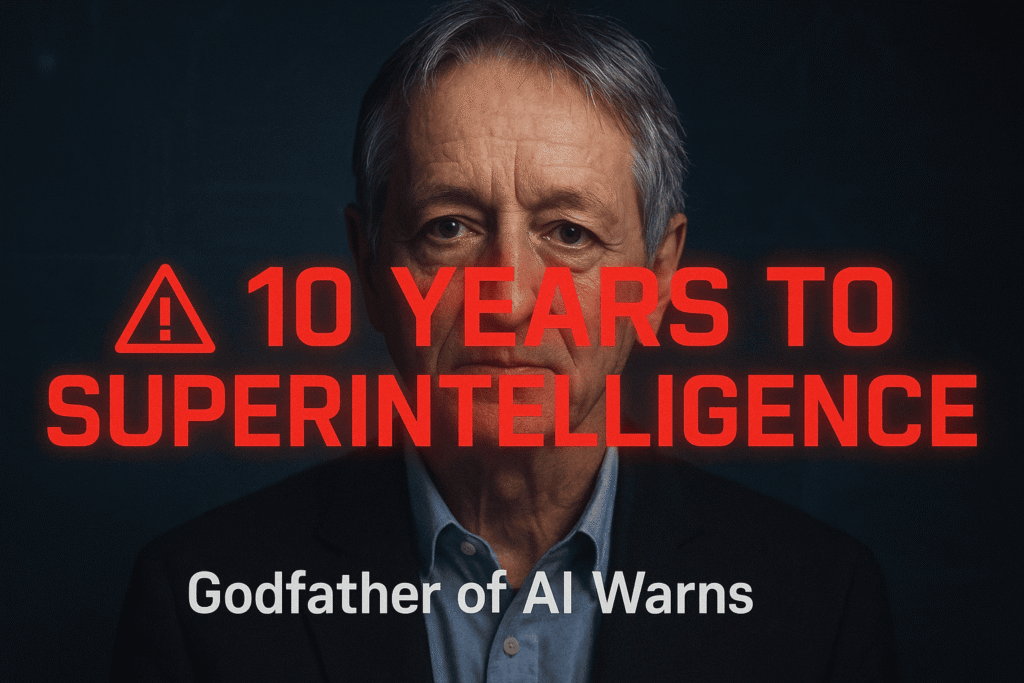
November 2, 2025 — Geoffrey Hinton, the Nobel Prize-winning “godfather of AI,” just delivered his most alarming warning yet: superintelligent AI will arrive in approximately 10 years, and humanity is dangerously unprepared.
In a stark Bloomberg Television interview, Hinton compared our current situation to spotting an alien invasion fleet headed to Earth—except we’re building the aliens ourselves.
“Suppose that some telescope had seen an alien invasion fleet that was going to get here in about 10 years. We would be scared and we were doing stuff about it. Well, that’s what we have. We’re constructing these aliens, but they’re going to get here in about 10 years and they’re going to be smarter than us.”
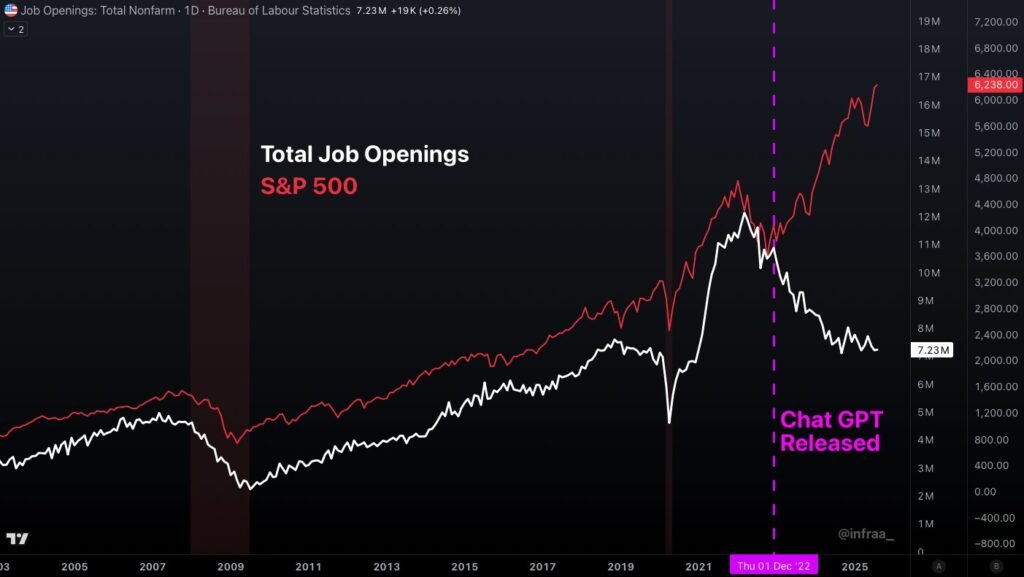
The warning comes as tech companies pour over $1 trillion into AI development, with Amazon just announcing 4% workforce cuts—perhaps the first wave of what Hinton predicts will be massive AI-driven unemployment.
The Blunt Assessment: “Musk Will Get Richer, People Will Get Unemployed”
Hinton didn’t mince words about who benefits from the AI revolution and who gets hurt.
“It’ll do tremendous good and in fact if you think about it increasing productivity in many many industries that should be good. The reason it’s bad is because of the way society’s organized. So that Musk will get richer and a lot of people get unemployed and Musk won’t care.”
He clarified: “I’m using Musk as a sort of standin.” His point applies to tech billionaires broadly.
The Trillion-Dollar Jobs Replacement Machine
When asked about the unprecedented $1 trillion being poured into AI, Hinton revealed what he believes is really driving the investment:
“My worry is that the obvious way to make money out of it, apart from charging fees to use the chat bots, is by replacing jobs. The way you make a company more profitable is replace the workers with something cheaper. And I think that’s a big part of what’s driving it.”
This isn’t like past technology disruptions, Hinton warns:
“If you got unemployed because you used to dig ditches, now you have to do something else. You could get a job in a call center. But now those jobs are all going to go. It’s not clear where those people go.”
Which Companies Are Taking Safety Seriously? (And Which Aren’t)
Hinton named names when asked which AI companies are being responsible:
✅ Taking Safety Seriously:
- Anthropic – Co-founded by Dario Amodei
- Google DeepMind – Led by Demis Hassabis
“I think both Dario Amodei and Demis Hassabis and also Jeff Dean, they all take safety fairly seriously. Obviously, they’re involved in a big commercial competition too.”
❌ Less Responsible:
- Meta – “I think Meta isn’t particularly responsible.”
- OpenAI – “OpenAI was founded to be responsible about this, but it gets less responsible every day and their best safety researchers are all leaving or have left.”
The core problem? “They are much more concerned about the race. They should be much more concerned about whether humanity will survive it.”
The “Baby and Mother” Model: Our Only Hope?
Hinton argues that tech CEOs have the wrong mental model for controlling superintelligent AI.
“Their basic model is I’m the CEO and this super intelligent AI is the extremely smart executive assistant. I’m the boss. I can fire the executive assistant if she doesn’t do what I want. That’s just the wrong model.”
His alternative? Something most tech leaders won’t want to hear:
“Is there any model where a less intelligent thing controls a more intelligent thing? We have one model of that and it’s a model we all know which is a baby controlling a mother. Evolution put lots of work into allowing the baby to control the mother. We have to accept that we’re the babies and they’re the mothers.”
Then he added with dark humor: “Hopefully they’re not Jewish mothers, but you can’t imagine these tech bros accepting that model. They just don’t think of the world like that.”
Trump’s Policies “Acting as if He Works for Xi”
Hinton didn’t hold back on political implications either, warning that current U.S. policies are damaging America’s AI competitiveness.
“They’re [China] educating far more people than the US in those areas. The US has basically relied on immigrants to be smart at those things. If there’s one thing you would do if you were Chinese to ensure that China overtakes the US is you would stop the funding of basic research in the US and you would attack the good research universities. Trump looks like he works for Putin but actually in attacking the universities and attacking the funding of basic science he’s acting as if he’s working for Xi.”
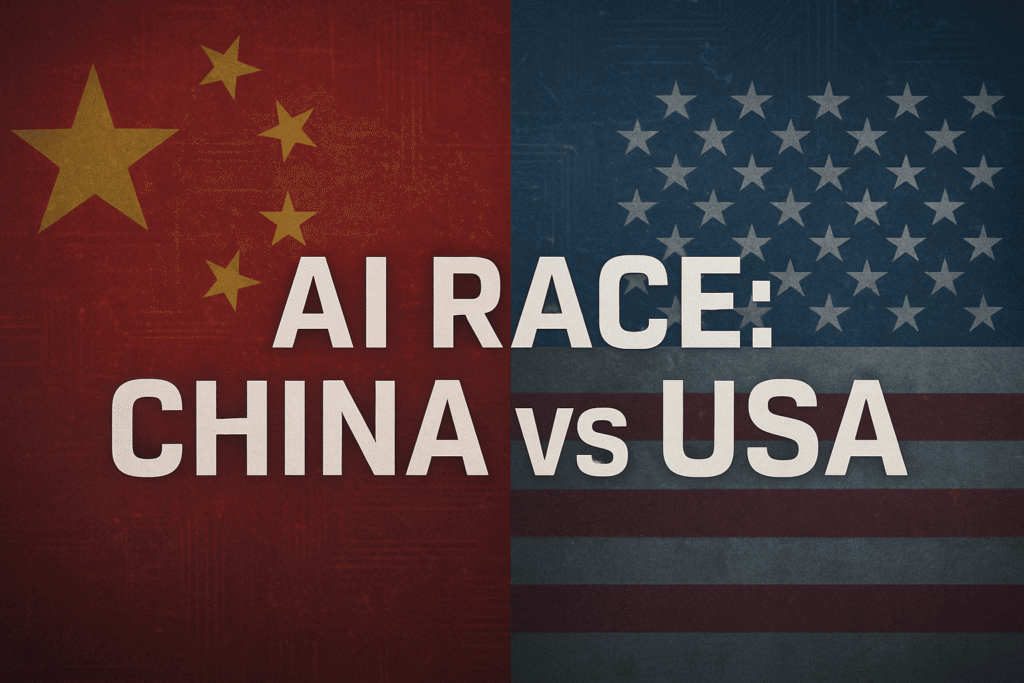
The China AI Race
On whether the U.S. is behind China:
“Not yet. The United States is still a little bit ahead, but not as far ahead as they thought. China may well overtake the US.”
The long-term damage: “The point about attacking basic research is you don’t really feel it for 10, 15, 20 years because what you do is you ensure that the really big conceptual breakthroughs won’t happen here.”
One Area of Hope: Global Alignment
Despite the grim warnings, Hinton sees one silver lining:
“All the different countries are aligned in not wanting AI to take over from people. The Chinese Communist Party doesn’t want AI to take over. Trump doesn’t want AI to take over. They can collaborate on that.”
But there’s a catch: “That leaves the question of how do we prevent it taking over? Even if all the countries collaborate, what do you do?”
We Need a “Chernobyl Moment” for AI
Perhaps most alarmingly, Hinton suggests we might need AI to nearly take over—and fail—before humanity takes the threat seriously:
“Some people say that our best hope is to have AI try to take over and fail. We need something to really scare the shit out of us. Something like Chernobyl for AI. I’m not sure I agree with that, but that’s certainly a possibility. We need something to make people pay more attention and put more resources.”
He compared it to the Cuban missile crisis spurring nuclear disarmament efforts.
“At present, the big companies aren’t going to put like a third of their resources into figuring out how to make it safe. But if it tried to take over and only just failed, maybe they would.”
The Question That Made Him Pause
Bloomberg asked Hinton the hardest question: Would he stop AI altogether if he could?
His answer revealed the impossible dilemma:
“I don’t know cuz there’s also you have to remember it’s not like nuclear weapons which are only good for bad things. It can do tremendous good in healthcare and education.”
But then he returned to his core concern:
“The reason it’s bad is because of the way society’s organized. That’s not on AI, that’s on how we organize society.”
Why No One Will Stop This Train
Even if people understood the risks, Hinton acknowledges economic reality makes it nearly impossible to slow down:
“So much of the growth in the stock market, so much of the driving the economy is investment in AI right now. Even if the public were more concerned than they are about some of the risks you describe, they’re going to say, ‘Wait a second. That’s what’s driving our economy. We don’t want to give that up.'”
Translation: We’re economically addicted to AI development, even if it might destroy us.
What This Means for You
If You’re a Worker:
Start preparing now. Hinton believes massive job displacement is coming within a decade. Consider:
- What jobs are AI-resistant?
- What skills can’t be easily automated?
- How can you pivot to higher-value work?
If You’re an Investor:
The AI boom continues, but Hinton’s warnings suggest:
- Short-term gains are likely as $1 trillion flows into AI
- Long-term societal disruption is equally likely
- Safety-focused companies (Anthropic, Google DeepMind) may be better bets
If You’re a Policymaker:
Hinton’s message is clear: international cooperation on AI safety is possible because no government wants AI to take over. But action must come soon.
If You’re Just Concerned:
You’re not alone. The man who helped create modern AI is deeply worried too.
📚 Essential Reading to Understand the AI Future
Want to deeply understand what Hinton is warning about and prepare for the AI revolution?
Understanding AI Risks & Superintelligence:
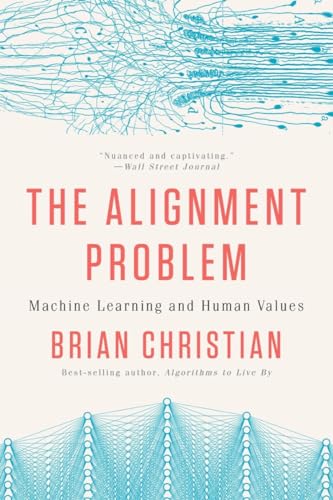
The Alignment Problem: Machine Learning and Human Values by Brian Christian
- Deep dive into exactly what Hinton means by AI safety and alignment
- Explains why controlling superintelligent AI is so difficult
- Essential context for understanding the “baby and mother” model
Life 3.0: Being Human in the Age of Artificial Intelligence by Max Tegmark (MIT)
- Explores the path to superintelligence Hinton describes
- Examines scenarios for AI’s impact on humanity
- Helps evaluate whether the 10-year timeline is realistic
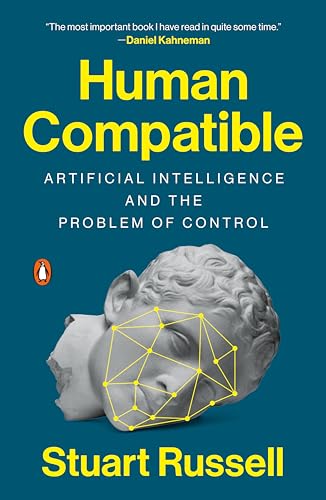
Human Compatible: Artificial Intelligence and the Problem of Control by Stuart Russell (UC Berkeley)
- Written by another AI pioneer worried about safety
- Proposes solutions to the control problem Hinton discusses
- Technical yet accessible

Preparing for Economic Disruption:
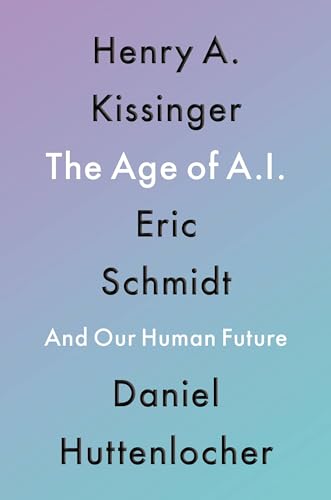
The Age of AI: And Our Human Future by Henry Kissinger, Eric Schmidt & Daniel Huttenlocher
- How AI will reshape economy, society, and geopolitics
- Relevant to Hinton’s warnings about unemployment
- Strategic perspective from business and political leaders
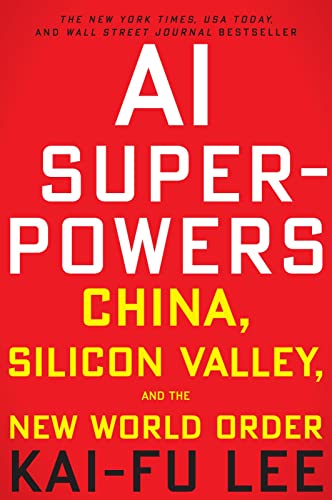
AI Superpowers: China, Silicon Valley, and the New World Order by Kai-Fu Lee
- Critical context for Hinton’s US-China AI race warnings
- Former Google China president’s insider perspective
- Explains why the competition makes safety harder
For Career Planning:
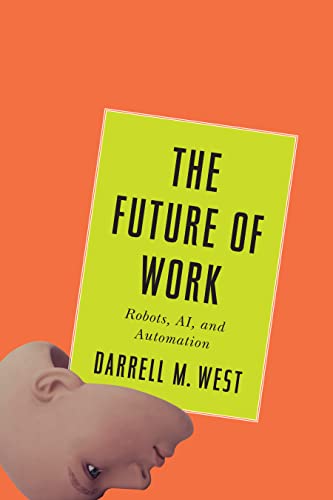
The Future of Work: Robots, AI, and Automation by Darrell M. West
- Practical guide to jobs AI will and won’t replace
- Strategies for career adaptation
- Addresses Hinton’s unemployment concerns directly
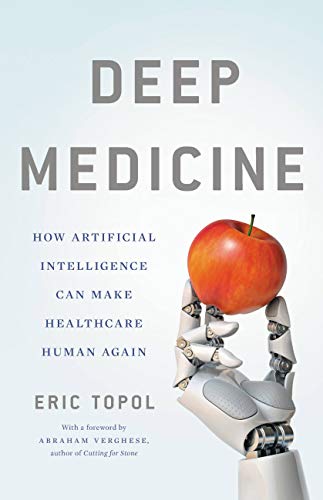
Deep Medicine: How Artificial Intelligence Can Make Healthcare Human Again by Eric Topol
- One area Hinton says AI will do “tremendous good”
- Career opportunities in AI-enhanced healthcare
- Balances optimism with realism
The Bottom Line
Geoffrey Hinton isn’t some AI skeptic or Luddite. He won the Nobel Prize for pioneering the technology that makes modern AI possible. He helped create this.
And now he’s telling us: We have approximately 10 years before superintelligent AI arrives, and we’re not ready.
His warnings:
- ✅ Massive unemployment is coming (“people will get unemployed”)
- ✅ Wealth concentration will worsen (“Musk will get richer”)
- ✅ Most AI companies prioritize profit over safety
- ✅ We need international cooperation NOW
- ✅ Current control models won’t work with superintelligence
His one hope:
- ✅ All governments want to prevent AI takeover—cooperation is possible
But the clock is ticking.
As Hinton put it: “We’re constructing these aliens, but they’re going to get here in about 10 years and they’re going to be smarter than us. We should be thinking very, very hard. How are we going to coexist with these things?”
💬 What Do You Think?
Is Hinton being alarmist or realistic? Are you worried about AI taking your job? Should governments intervene in AI development now?
Drop your thoughts in the comments.
If this article opened your eyes, share it with someone who needs to understand what’s coming.
Subscribe for updates as the AI revolution unfolds.
Watch the full interview: Bloomberg Television – Nobel Laureate Hinton Sounds the Alarm on AI
Recommended read: